
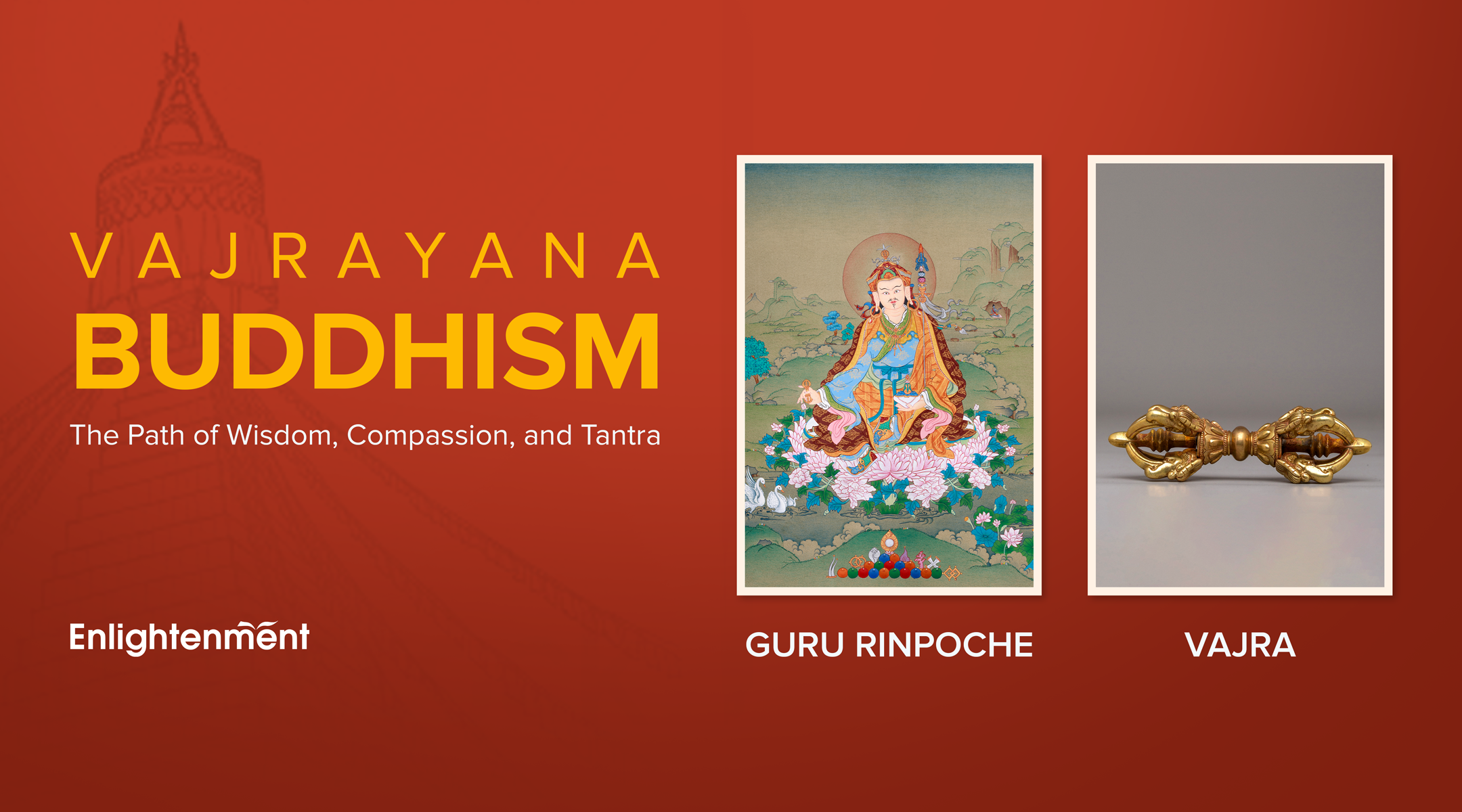
Explore the core teachings, practices, and spiritual significance of Vajrayana Buddhism
Vajrayana Buddhism, commonly referred to as the Diamond Vehicle, is one of the most treasured branches of Tibetan Buddhism, which is characterized by emphasis on the tantric practices and the esoteric doctrines. Vajrayana is known to have a quick way of enlightenment and focuses on changing the body, speech, and mind of the practitioner through sacred rituals, meditation, and visualization. It is claimed to lead to Buddhahood more quickly than other practices since it employs all human experience, both emotional and physical energy, to attain supreme knowledge.
Vajrayana is a form of Buddhism that is based on the teachings of the historical Buddha, Shakyamuni, and it is commonly referred to as the Lightning Vehicle because of its strength and high speed in guiding the followers towards liberation. Yet it is also known to be an esoteric route and is only supposed to be guided by the right people who are mature enough to withstand its powerful practices.
This blog will explore the main teachings, practices, and spiritual values of Vajrayana Buddhism, which will illuminate the role of this potent way to help followers attain awakening and caring.

Click Here To View Our Hand-Painted Vajrapani Thangka
What is Vajrayana Buddhism?
A Direct Path to Enlightenment
Vajrayana is among the three principal traditions of Buddhism, along with Theravada and Mahayana. Although Mahayana is focused on the Bodhisattva ideal, trying to achieve enlightenment in the interest of other people, Vajrayana can be defined as the most straightforward and effective approach towards spiritual awakening.
Vajrayana is a Sanskrit word that is spelled out as vajra, which means diamond or thunderbolt, and yana, which means vehicle or path. The vajra is associated with the inability to destroy the wisdom--the same way as a diamond can not be destroyed, so the wisdom in Vajrayana can not be destroyed. This is the ultimate reality that every Vajrayana practitioner strives to achieve, and yana is the vehicle or the means to achieve that.
Vajrayana has a way to Buddhahood in one life as opposed to other schools of Buddhism, which focus on gradual enlightenment. The potent tantric methods and practices of Vajrayana enable the follower to speed up his/her journey to enlightenment.
Core Teachings of Vajrayana Buddhism
The Union of Wisdom and Compassion
Wisdom and compassion are the core elements of Vajrayana Buddhism. According to Vajrayana, wisdom, the direct knowledge of emptiness (shunyata), is the way to see through the real face of things. Meanwhile, compassion is the power that leads a practitioner to release all sentient beings and set them free.
Vajrayana focuses on the direct experience of these two qualities, which can help the practitioner to become Buddha nature by means of meditation, visualization, and spiritual practices. This wisdom and compassion together are what change the mind and heart of the practitioner so that the practitioner can help others in the process of liberation.

Click Here To View Our Hand-Painted Wisdom Bodhisattva Thangka
The Role of the Guru
The guru (spiritual teacher) plays a very important role in Vajrayana practice. The guru is not a spiritual guide only, but he is believed to be an active personage, who is the personification of the teachings. Vajrayana places a lot of importance on the guru-disciple relationship, viewing the guru as a line of access to the enlightened wisdom of Buddha.
A qualified guru gives initiations (empowerments), which allow the practitioner to experience secrets of teachings and practices that result in enlightenment. In the absence of the guru, it is assumed that one cannot really be able to comprehend the more in-depth practices of Vajrayana.
The Practice of Tantra and Visualization
Tantra, which is a major aspect of Vajrayana, entails the employment of rituals, mantras, and visualizations to have a direct experience of the divine. Vajrayana tantra centers around the practice of deity yoga, and the meditator imagines themselves as a deity (like Avalokiteshvara or Manjushri) in order to inherit the qualities of that deity.
The practitioner develops compassion, wisdom, and purity through visualizations by changing his or her ordinary mind into a divine mind. The practitioner keeps on meditating and imagining, and the deity will be alive in his/her mind, and this process will end up being combined with the Buddha nature.
Besides deity yoga, the yoga practitioners recite mantras, the sacred syllables or phrases, to cleanse the mind and the surroundings. Mantras help calm down the psyche and call on the blessings of the Buddhas and Bodhisattvas.
Vajrayana and the Power of Mantras
The use of mantras is one of the most peculiarity of Vajrayana Buddhism. Mantras are spiritual sounds, syllables, or phrases that are spiritual. The central role in Vajrayana is taking place in the chanting of the mantras in the process of meditation, rituals, and everyday practices. Knowledge of the strength and importance of mantras is necessary for those who follow this way.
What are Mantras?
A mantra is a combination of syllables/words that, when recited, produces a strong effect on the mind and body. The mantras of Vajrayana Buddhism are not just words; they are believed to be the incarnation of divine power and are able to clean up the mind, cure the ill karma, and bring the practitioner into the blessings of Buddha.
The most common mantra in Vajrayana Buddhism is the Om Mani Padme Hum, meaning the jewel in the lotus or Avalokiteshvara, the Bodhisattva of Compassion. This mantra is said to contain the meaning of compassion and wisdom, and reciting it makes the practitioner closer to this.
The Power of Repetition
Chanting mantras repeatedly is a method of changing the mind in Vajrayana. Through the repeated chanting of mantras, in a state of meaning and devotion, the mental state of practitioners shifts, as they leave the state of distraction and confusion to the state of clarity and presence. The mantra can also be used to concentrate the mind into a deep state of meditation just by repeating its sound continuously.

(Photo From Shutterstock)
Mantras in Tantric Practices
Tantric practitioners of Vajrayana use mantras as a central part of their practices. To illustrate, in deity yoga, the individual can imagine himself/herself to be a deity as she/he chants the particular mantra of the deity. The practice assists in personifying the attributes of the deity, including wisdom, compassion, and purity, and assists the practitioner to experience a oneness with the deity.
Mantras are also commonly used in certain empowerment rituals to initiate the practitioner into certain teachings of tantra and to call on the blessings of enlightened beings. These mantras are interpreted as a method of directing the energy of the divine to the practitioner and speeding up their enlightenment journey.
The Role of Mantras in Everyday Life
Vajrayana Buddhism does not consider mantras as something that are only used during meditation; it is used in our day-to-day lives. Mantras are also frequently recited by the practitioners when doing the most basic things, e.g., cooking, walking, or working. This assists in incorporating the spiritual practice into all the spheres of life, reminding the practitioner to keep in mind and concentrate on his/her path, struggling to become a Buddha.
Moreover, the mantra chants are useful in cleansing the environment. Mantras are believed to get rid of negative energies, thereby providing a harmonious and spiritual atmosphere upon which one can practice and meditate.
Key Practices in Vajrayana Buddhism
The Use of Rituals and Empowerments
Vajrayana has rituals at its essence, and each ritual plays a particular part in the spiritual growth of the practitioner. The ceremonies and initiation rituals usually make use of rituals in terms of chanting, offerings, and visualizations. These rituals are linked to the higher spiritual energies, cleanse the mind of the practitioner, and guide him to be closer to enlightenment.
The most important rituals in Vajrayana are known as Empowerments (wang in Tibetan), and a qualified teacher/guru transfers the energy of a specific deity or practice to the disciple. They are powerful instruments of change because empowerments enable practitioners to interact with certain deities and practices.
The Practice of Mandalas
A mandala is a religious geometrical imaginative portrayal of the universe, and in Vajrayana, it is applied as a visual aid to meditation. Mandalas are frequently made as a three-dimensional model of the cosmic order, and they are rarely used without the aid of practitioners who use them in the process of meditation to see the world of the Buddha. With attention to the mandala, the practitioner visualizes himself or herself entering the realm of the Buddha and being united with the awakened energy of the Buddha.

The Role of Deity Yoga
Deity yoga is an important practice in Vajrayana, and in this practice, one visualizes himself/herself as a deity and develops the qualities of this deity through meditation. This ritual assists the practitioner to acquire the virtues of the deity and to overcome his/her human constraints. With time, this visualization will come to reality in the mind of the practitioner, and one will be able to become the enlightened nature of the deity.
Deity yoga is not a mere abstract visualization but the living practice of developing divine attributes of wisdom, compassion, and purity. With repetition, the mind of the practitioner changes, and finally results in the discovery of his or her intrinsic Buddha nature.
Vajrayana’s Approach to Emotions and Physical Energy
Vajrayana Buddhism is special in its approach to emotions and physical energy. Vajrayana accepts these energies and uses them to grow spiritually, unlike other forms of Buddhism, where they might encourage the detachment and renunciation of these energies.
As a case in point, instead of rejecting anger or desire, Vajrayana practitioners are taught to use such energy as spiritual energy through practices like transmutation and rituals. Emotions are not viewed as barriers but as forces that can be transformed into wisdom and compassion, thereby helping in the development of spirituality.
Benefits of Vajrayana Practice
Vajrayana Buddhism has a number of outstanding advantages for those who want to find a quick way to enlightenment. These benefits include:
Rapid Spiritual Advancement: Tantric practices and the empowerments of Vajrayana enable those who follow it to acquire the path to Buddhahood much more quickly than other Buddhist schools do.
Direct Experience of Emptiness: Vajrayana practitioners have the chance to attain direct experience of emptiness through tantric practices and the ultimate realization of the true nature of reality and the breaking of dualistic thinking.
Change of Emotions: Vajrayana has a distinctive philosophy of emotions to enable the followers to utilize their inner strength, which contributes to more peace, compassion, and wisdom.

Click Here To View Our Hand-Painted Vajrayogini Thangka
Conclusion: Vajrayana – The Path to Direct Realization
Vajrayana Buddhism is an effective and transformative way that empowers its practitioners with the means of realizing their Buddha nature so that people will attain the state of enlightenment during their lifetime. Vajrayana offers a direct and fast path through the practice of tantric yoga, deity yoga, and under the guidance of an experienced guru.
Vajrayana is a special and efficient way of spiritual growth for those who want to discover a deeper way of combining wisdom and compassion with the help of rituals, visualizations, and mantras.
By adopting the teachings of Vajrayana, one can convert one's mind, body, and emotions into a pathway of enlightenment, which will eventually lead all creatures to the same awakening.
