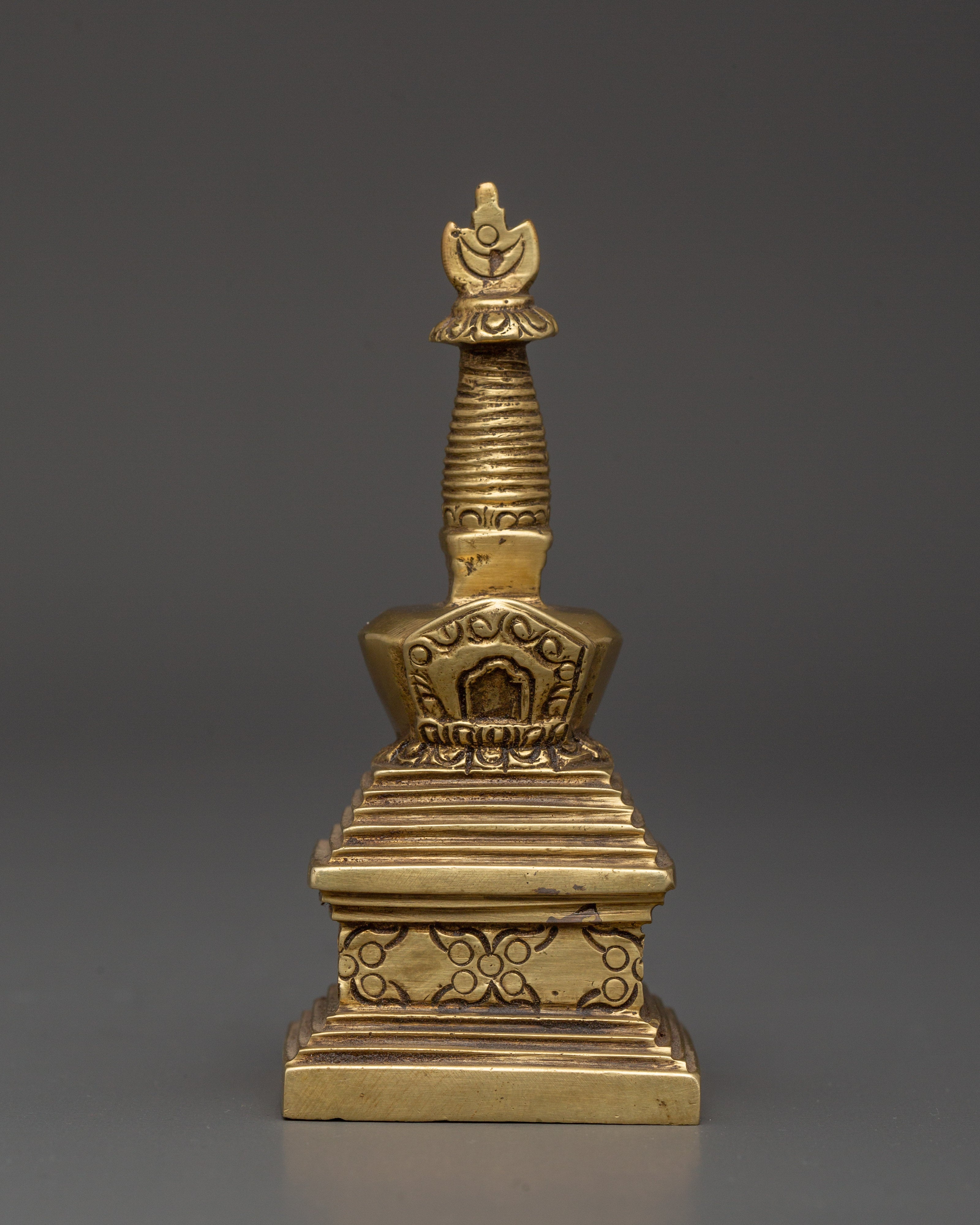
Handcrafted Brass Stupa for Altar and Spiritual Spaces
--------------------------------------------------
Size: 9.5cm(Height) x 4.5cm(Width)
Weight: 0.22kg
Materials: Brass Body
--------------------------------------------------
About Our Ritual Item :
The Handcrafted Brass Stupa for Altar is a magnificently produced piece of Tibetan art that would elevate any altar or spiritual area with its delicate symbolism and craftsmanship. This stupa measures 9.5 cm in height, 4.5 cm in width, and weighs 0.22 kg. It is manufactured of high-quality brass, assuring both longevity and timeless beauty. The design of this stupa embodies the Buddha's teachings and the path to enlightenment, making it an ideal addition to any sacred space or meditation area.
The Brass Stupa is intricately designed with symbolic motifs that reflect Buddhist philosophy. The stupa's layered structure represents the teachings of the Buddha, with the top portion symbolizing the pinnacle of spiritual awakening. The brass body of the stupa is smooth and polished, giving it a timeless appeal that reflects the Buddha's wisdom and compassion. The stupa's base is adorned with intricate carvings, enhancing its aesthetic appeal while symbolizing the foundation of Buddhist teachings and the stability they bring to spiritual practices.
This Handcrafted Brass Stupa for Altar is not just a decorative item; it is a spiritual symbol that brings focus, peace, and balance to your meditation or altar space. The stupa is traditionally used to represent the Buddha’s wisdom, the journey toward enlightenment, and the offering of prayers and blessings. Whether displayed as part of an altar, used in meditation, or simply as an inspiring piece in your home, this brass stupa serves as a powerful reminder of the Buddha's teachings and the spiritual path toward inner peace and enlightenment.
Introduction To Stupa :
Before Buddhism, great teachers were buried in mounds. Some were cremated, but sometimes they were buried in a seated, meditative position. The mound of earth covered them up. Thus, the domed shape of the stupa came to represent a person seated in meditation, much as the Buddha was when he achieved Enlightenment and knowledge of the Four Noble Truths. The base of the stupa represents his crossed legs as he sat in a meditative pose. The middle portion is the Buddha’s body, and the top of the mound, where a pole rises from the apex surrounded by a small fence, represents his head. Before images of the human Buddha were created, reliefs often depicted practitioners demonstrating devotion to a stupa.
How to set up your own Buddhist Shrine?
• Find a clean, quiet, and uncluttered spot
• Set up an altar table, and cover it with an altar cloth that calls to you
• Place your sacred item at the center
• If you want a more elaborate altar, you can put a Stupa as well.