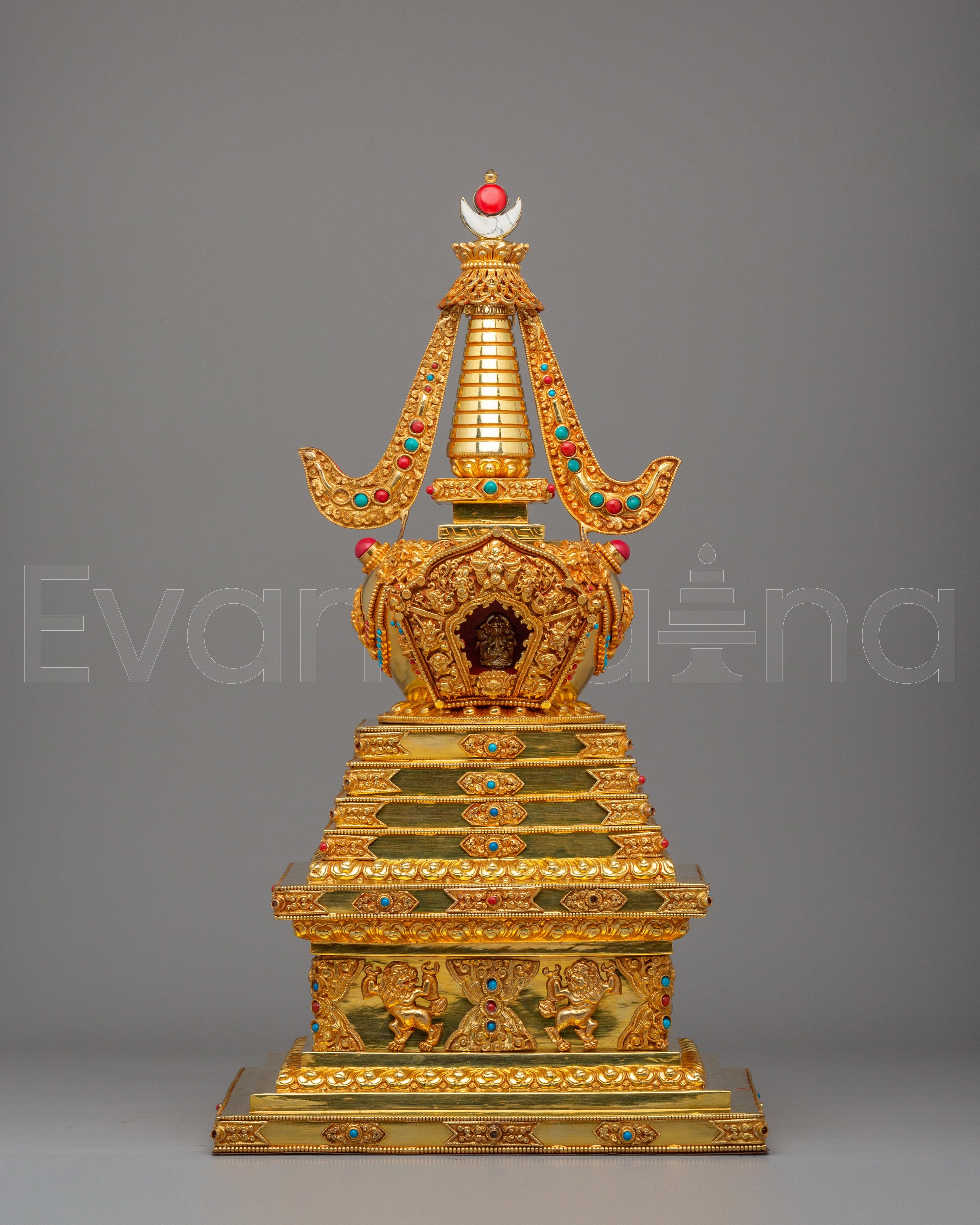
Himalayan Enlightenment Stupa | Spiritual Decor for Meditation and Altars
------------------------------------------------
Size: 47cm(Height) x 26.5cm(Length) x 26.5cm(Width)
Weight: 3.63 kg
Materials: Copper Body, 24K Gold Plated, Handcarved Gemstone
------------------------------------------------
About Our Product
The Himalayan Enlightenment Stupa is a powerful symbol of peace, enlightenment, and spiritual growth. Standing at 47 cm tall, 26.5 cm in length, and 26.5 cm in width, with a weight of 3.63 kg, this stupa is crafted from copper and plated with 24K gold. It is beautifully adorned with hand-carved gemstones, each representing wisdom, protection, and spiritual energy. The use of precious metals and gemstones enhances its spiritual significance, making it a highly revered artifact for meditation spaces, altars, and sacred rooms. The vibrant gemstones reflect purity, balance, and enlightenment, contributing to the stupa's divine presence.
In Tibetan Buddhist tradition, stupas represent the Buddha’s mind and the journey to enlightenment. The Himalayan Enlightenment Stupa embodies these sacred teachings through its intricate design and rich symbolism. Its gold-plated copper body represents the wisdom of the Buddha, while the layers of the stupa symbolize the stages of spiritual awakening. The gemstones, placed carefully in the structure, symbolize divine guidance and protection. The story of the Enlightenment Stupa traces back to the Buddha’s enlightenment under the Bodhi tree. After his awakening, he instructed his followers to create stupas to embody his teachings and inspire others on their path to peace. These stupas served as reminders of victory over suffering, ignorance, and the obstacles that hinder spiritual growth.
This Himalayan Enlightenment Stupa carries not only beauty but profound spiritual meaning. It serves as a reminder of the triumph of wisdom over ignorance and the continuous journey towards inner peace. Whether placed on an altar or used in spiritual practices, this stupa brings sacred energy to any space, guiding practitioners toward a deeper connection with themselves and the universe. It stands as the perfect embodiment of spiritual victory, inner peace, and enlightenment.
Introduction of Stupa
Before Buddhism, great teachers were buried in mounds. Some were cremated, but sometimes they were buried in a seated, meditative position. The mound of earth covered them up. Thus, the domed shape of the stupa came to represent a person seated in meditation, much as the Buddha was when he achieved Enlightenment and knowledge of the Four Noble Truths. The base of the stupa represents his crossed legs as he sat in a meditative pose. The middle portion is the Buddha’s body, and the top of the mound, where a pole rises from the apex surrounded by a small fence, represents his head. Before images of the human Buddha were created, reliefs often depicted practitioners demonstrating devotion to a stupa.