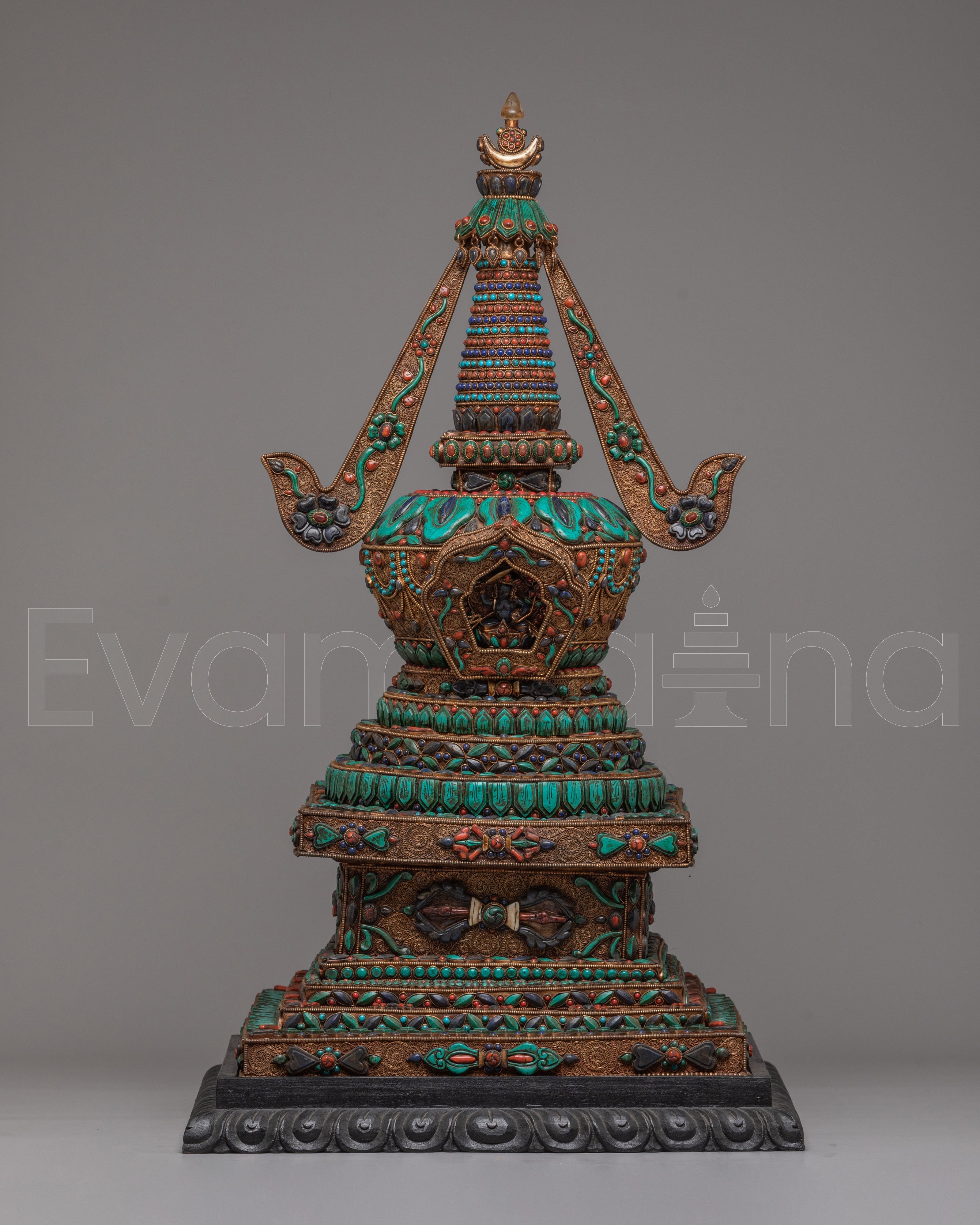
Handcrafted Sacred Buddhist Stupa for Meditation and Rituals
------------------------------------------------
Size: 68cm(Height) x 39.5cm(Width)
Weight: 9.59 kg
Materials: Copper Body, Gemstone, Gold Plated, Handcarved Gemstone, Wood, Crystal
------------------------------------------------
About Our Product
This handcrafted sacred Tibetan stupa measures 38 cm in height and 19.5 cm in width, with a weight of 1.71 kg, making it ideal for placement on a meditation altar, home shrine, or spiritual space. Crafted with a copper body and finished with gold and silver plating, the stupa is adorned with carefully placed gemstones that enhance its sacred appearance. The use of traditional materials reflects authentic Tibetan craftsmanship and enduring Buddhist spiritual traditions.
The design of this Tibetan stupa follows classical Buddhist iconography. The rounded dome symbolizes the enlightened mind of the Buddha, while the square base represents stability and spiritual foundation. The rising spire signifies the path toward enlightenment and spiritual growth. Gemstones embedded throughout the stupa symbolize clarity, compassion, and blessings, adding depth to its ritual and symbolic meaning.
Designed as spiritual meditation altar decor, this sacred Tibetan stupa brings a sense of calm and positive energy into any space. Placing it in a home altar, meditation room, or shrine supports quiet reflection and prayer. Whether used for daily spiritual practice or displayed as sacred decor, this Tibetan stupa represents protection, enlightenment, and inner peace.
Introduction of Stupa
Prior to Buddhism, great teachers were interred in mounds. While some were cremated, others were sometimes buried in a seated, meditative posture, covered by an earth mound. Consequently, the domed shape of the stupa came to represent a person seated in meditation, much like the Buddha when he attained Enlightenment and understood the Four Noble Truths. The stupa's base symbolizes his crossed legs in a meditative pose, the middle portion represents the Buddha’s body, and the top of the mound, from which a pole rises surrounded by a small fence, signifies his head. Before human images of the Buddha were created, reliefs often depicted practitioners demonstrating devotion to a stupa.