Traditional Spiritual Protector Guru Shapdum Statue | 8 Sacred Forms of Guru Rinpoche
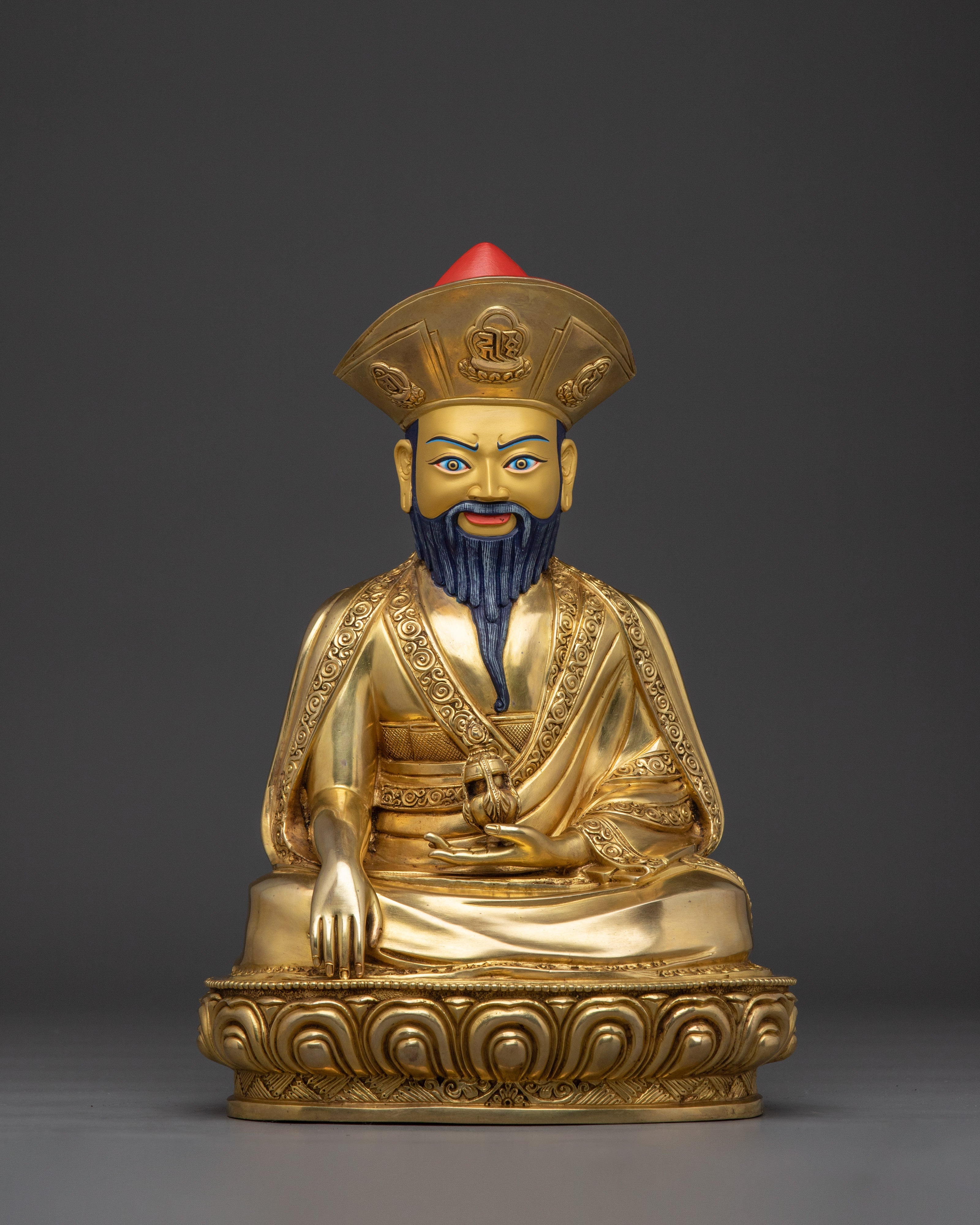
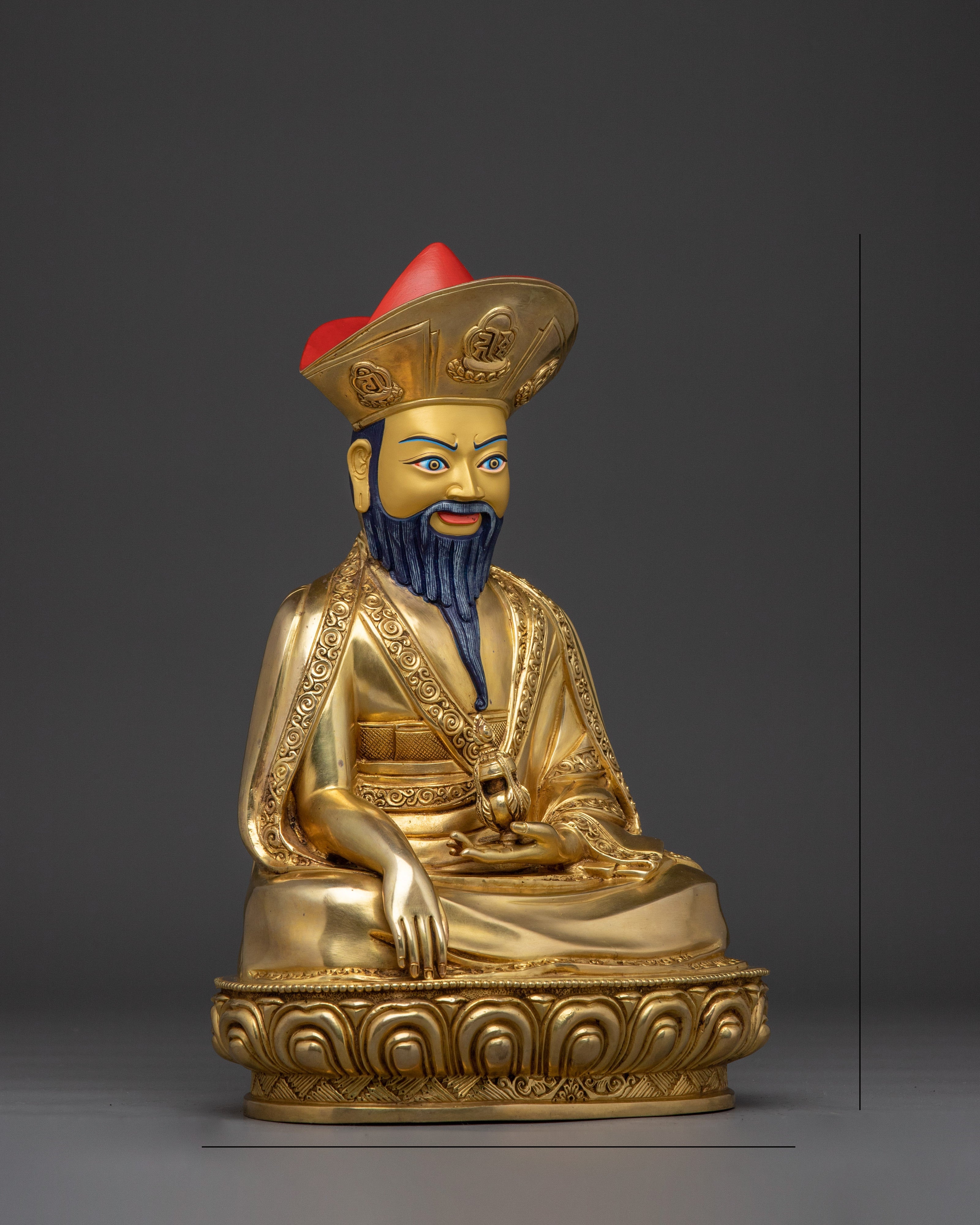
Spiritual Protector Guru Shapdum, depicting the Eight Manifestations of Guru Rinpoche, stands 14 inches (35.5 cm) tall with a base width of 9.6 inches (24.5 cm) and weighs approximately 4.29 kilograms. It is handcrafted from a copper body, 24K gold gilding, and gold and acrylic paintings. Each manifestation embodies a unique aspect of Padmasambhava’s enlightened activity—ranging from peaceful to wrathful forms—making this piece a powerful addition to any Buddhist altar or meditation space. A stunning example of sacred Himalayan artistry and spiritual devotion.
Guru Shapdum is depicted seated in a meditative posture atop a lotus throne, which symbolizes purity and spiritual elevation. He wears a distinctive, elaborately carved lama hat, often with a red tip, signifying his high spiritual authority and monastic status. His attire consists of ornate monastic robes, often with detailed patterns, representing his mastery of Buddhist teachings and his role as a lineage holder. A white beard is a notable feature in his depictions, highlighting his wisdom and venerable age. His right hand is extended over the knee in the earth-touching mudra (bhumisparsha), a gesture symbolizing the calling of the earth to witness his realization and spiritual accomplishments. His left hand holds a vase (often a long-life vase), resting in his lap, representing spiritual abundance, longevity, and the nectar of immortality.
Size: 14”/35.5cm (Height) x 9.6”/24.5cm (Base)
Weight: 4.29 kg
Material: 24K Gold Gilded, Gold & Acrylic Paintings, Copper Body
Guru Shapdum, also known as Zhabdrung Rinpoche, is a highly revered figure in Vajrayana Buddhism, particularly within the Bhutanese tradition. He is a form of Guru Padmasambhava (Guru Rinpoche), considered the "Second Buddha" and the great tantric master who established Vajrayana Buddhism in Tibet and Bhutan. Guru Shapdum embodies the union of wisdom and compassion, the heart of Vajrayana Buddhist practice. He is often depicted alone or in union with his consort, representing the inseparability of method (kindness) and wisdom, an essential teaching for attaining enlightenment in tantric Buddhism.