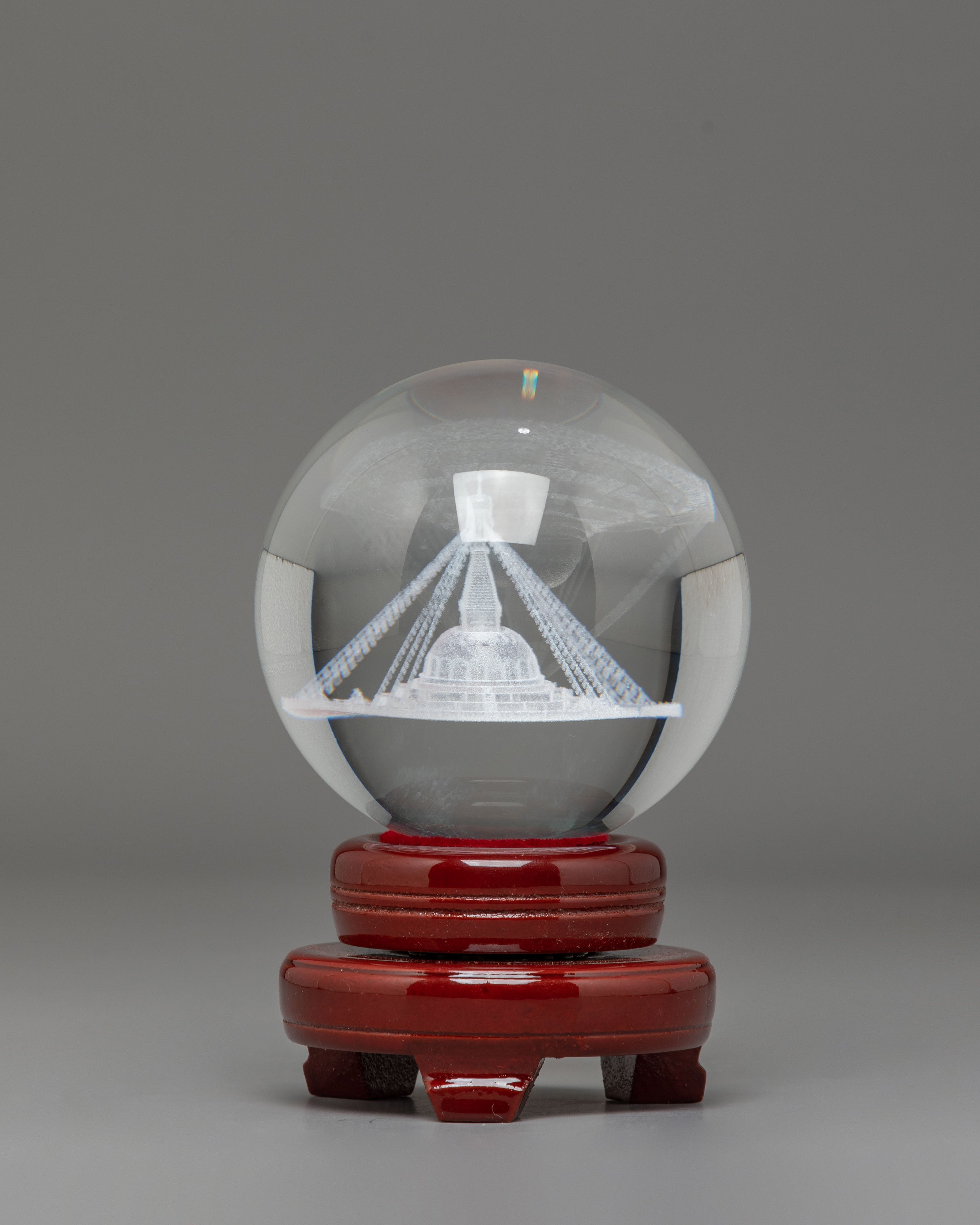
Spiritual Crystal Ball | Engraved Stupa Glass Art for Home Decor
-----------------------------------------------------
Size: 14.5cm(Height) x 10cm(Width)
Weight: 1.36kg
Materials: Wooden Base, Glass
----------------------------------------------------
About Our Stupa:
Illuminate your space with the serene elegance of this Stupa Crystal Ball, a stunning representation of spiritual beauty and craftsmanship. Measuring 14.5cm in height and 10cm in width, and weighing 1.36kg, this exquisite piece features a crystal ball with intricate engravings of a stupa design. The crystal ball rests on a beautifully crafted wooden base, creating a perfect balance of strength and grace. The design features detailed etchings of the sacred stupa, a symbol of enlightenment and spiritual awakening.
The stupa, carefully etched into the crystal's surface, represents the path to enlightenment and is a revered symbol in Buddhist traditions. The clarity and precision of the engravings capture the essence of peace and spiritual connection, making this piece more than just a decorative object. The crystal's luminous quality, especially when illuminated, brings intricate details to life, creating a calming, ethereal effect in any room.
Perfect for use in meditation spaces, living rooms, or as a centerpiece on your altar, this Stupa Crystal Ball is not just a work of art but also a meaningful symbol of tranquility and inner peace. The combination of its elegant wooden base and the beautiful glass ball with finely crafted motifs makes it an ideal gift for those who appreciate spiritual symbolism and fine craftsmanship.
Introduction To Stupa :
Before Buddhism, great teachers were buried in mounds. Some were cremated, but sometimes they were buried in a seated, meditative position. The mound of earth covered them up. Thus, the domed shape of the stupa came to represent a person seated in meditation, much as the Buddha was when he achieved Enlightenment and knowledge of the Four Noble Truths. The base of the stupa represents his crossed legs as he sat in a meditative pose. The middle portion is the Buddha’s body, and the top of the mound, where a pole rises from the apex surrounded by a small fence, represents his head. Before images of the human Buddha were created, reliefs often depicted practitioners demonstrating devotion to a stupa.