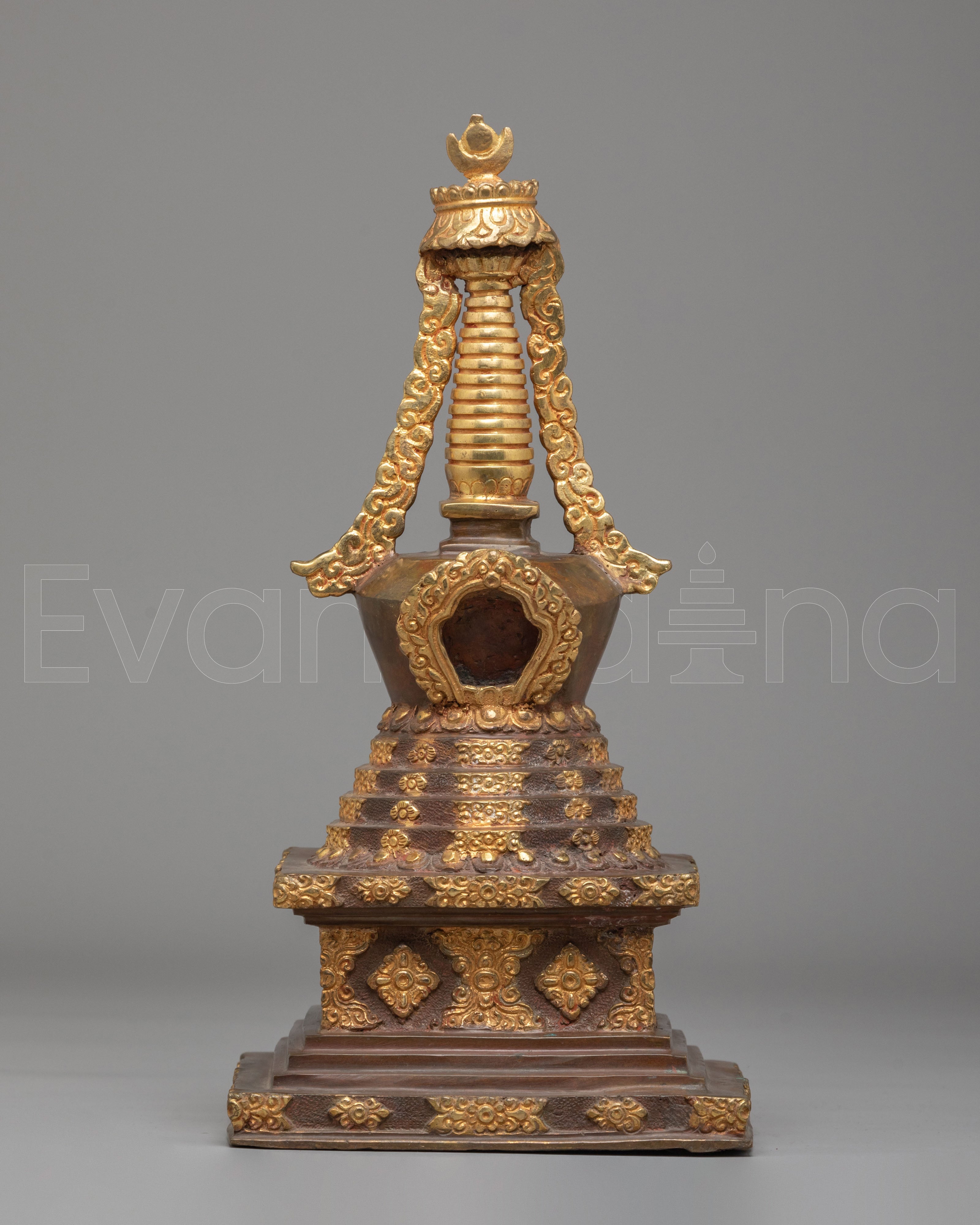
Handmade Stupa-Symbol-of-Peace-and-Spirituality | Meditation Altar Decor
------------------------------------------------
Size: 31cm(Height) x 15.5cm(Width)
Weight: 2.77 kg
Materials: Acrylic Color, 24K Gold Plated, Copper Body
------------------------------------------------
About Our Product
The Stupa Symbol of Peace and Spirituality is a stunning handcrafted piece that embodies the essence of Tibetan Buddhism, combining intricate craftsmanship with deep spiritual meaning. This stupa, crafted from copper and adorned with 24K gold plating, features beautiful acrylic color accents, making it not only a meaningful symbol but also a striking decorative item. The stupa’s elegant design embodies harmony, peace, and enlightenment, making it ideal for both meditative spaces and spiritual collections.
The stupa’s design incorporates sacred Buddhist motifs that represent peace, spiritual growth, and protection. It is carefully crafted to reflect the serene energy that a stupa brings to its surroundings, inviting a sense of calm and tranquility. The gold-plated accents highlight the sacred nature of this piece, making it a perfect representation of the Buddhist path to inner peace and enlightenment. This stupa can be placed on altars, meditation spaces, or any environment seeking spiritual balance.
This beautiful Tibetan stupa is not just a decorative piece but a powerful symbol of peace, offering spiritual resonance and protection to all who encounter it. Whether you're seeking a meaningful addition to your home, a gift for a fellow spiritual seeker, or a centerpiece for your meditation practice, the Stupa of Peace and Spirituality is an exceptional choice that will inspire serenity and mindfulness.
Introduction of Stupa
Before Buddhism, great teachers were buried in mounds. Some were cremated, but sometimes they were buried in a seated, meditative position. The mound of earth covered them up. Thus, the domed shape of the stupa came to represent a person seated in meditation, much as the Buddha was when he achieved Enlightenment and knowledge of the Four Noble Truths. The base of the stupa represents his crossed legs as he sat in a meditative pose. The middle portion is the Buddha’s body, and the top of the mound, where a pole rises from the apex surrounded by a small fence, represents his head. Before images of the human Buddha were created, reliefs often depicted practitioners demonstrating devotion to a stupa.