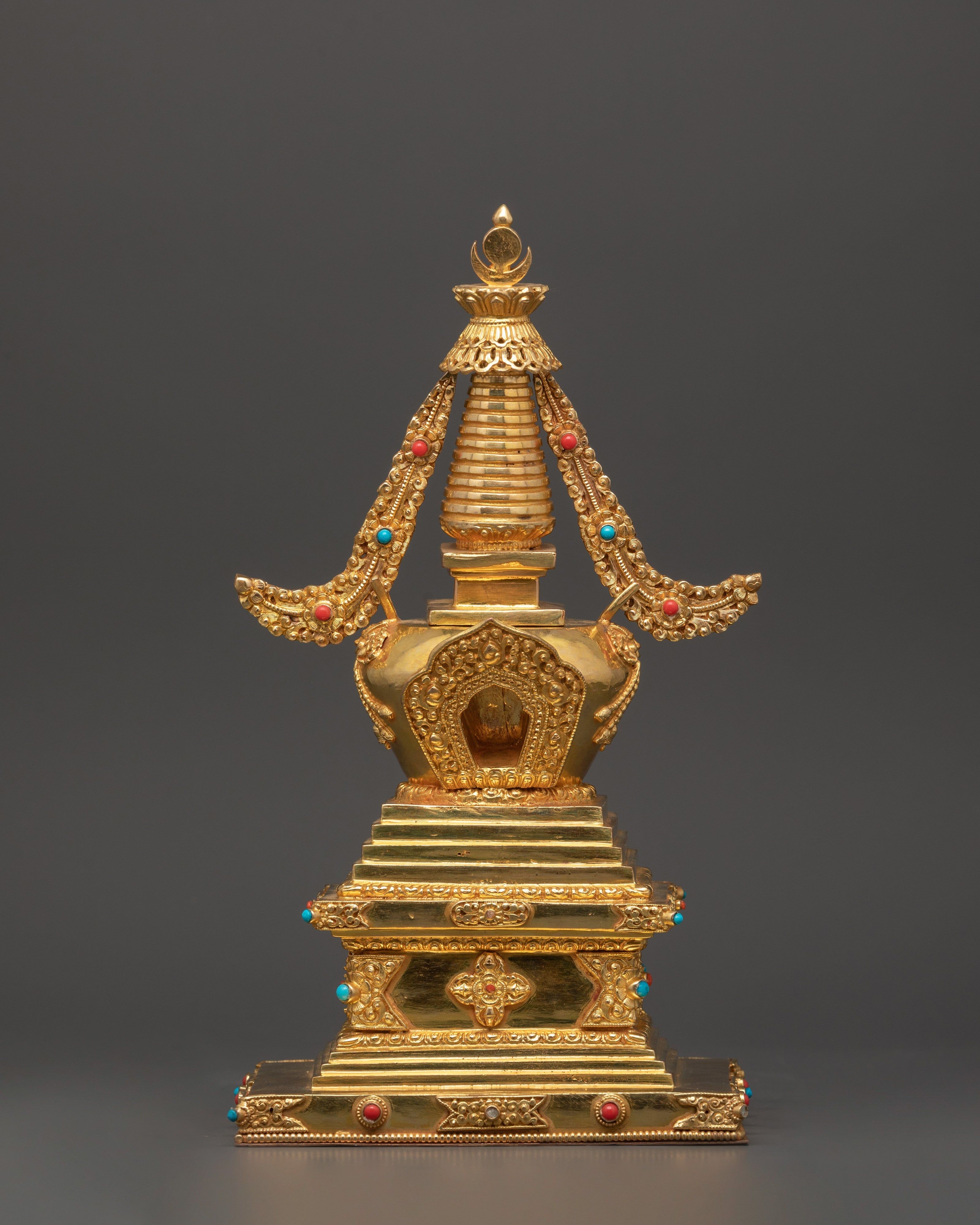
Sacred Tibetan Stupa Design | Spiritual Buddhist Decor with Coral & Turquoise
--------------------------------------------------
Size: 29.5cm(Height) x 16cm(Width)
Weight: 1.35kg
Materials: Copper Body, Gold Plated, Artificial Stone: Coral, Turquoise
--------------------------------------------------
About Our Ritual Item :
This Traditional Tibetan Stupa Art is a stunning piece that embodies the spiritual essence of Tibetan Buddhist culture. Meticulously crafted from copper with a beautiful gold-plated finish, the stupa features intricate carvings and symbolic motifs that convey profound spiritual meanings. The towering spire and ornate design reflect the sacred path toward enlightenment, while the detailed base represents the stable foundation of spiritual practice. Every curve and design element is imbued with sacred significance, representing protection, peace, and the interconnectedness of all beings.
The addition of artificial coral and turquoise stones enhances the stupa's aesthetic, bringing vibrant color and energy into your space. Coral is often associated with vitality and emotional healing, while turquoise is considered a stone of spiritual protection and balance. Together, these stones create a harmonious energy flow that is believed to promote positive transformations and spiritual growth. These stones also add a touch of elegance, elevating the stupa’s divine beauty. The stupa is not merely a decorative object but a powerful spiritual symbol that fosters an atmosphere of calm and contemplation.
Perfect for display in home altars, meditation spaces, or sacred shrines, this stupa is more than just an art piece – it’s a spiritual companion. Its intricate craftsmanship and symbolic significance make it a meaningful gift for those seeking to deepen their connection to Tibetan Buddhist teachings or simply looking for an elegant piece of spiritual decor. Whether you place it on a shelf, altar, or table, it will undoubtedly become a focal point that radiates positive energy, mindfulness, and sacred blessings.
Introduction To Stupa :
Before Buddhism, great teachers were buried in mounds. Some were cremated, but sometimes they were buried in a seated, meditative position. The mound of earth covered them up. Thus, the domed shape of the stupa came to represent a person seated in meditation, much as the Buddha was when he achieved Enlightenment and knowledge of the Four Noble Truths. The base of the stupa represents his crossed legs as he sat in a meditative pose. The middle portion is the Buddha’s body, and the top of the mound, where a pole rises from the apex surrounded by a small fence, represents his head. Before images of the human Buddha were created, reliefs often depicted practitioners demonstrating devotion to a stupa.
How to set up your own Buddhist Shrine?
• Find a clean, quiet, and uncluttered spot
• Set up an altar table, and cover it with an altar cloth that calls to you
• Place your sacred item at the center
• If you want a more elaborate altar, you can put Stupa as well.