Dzambhala Thangka Collection
29 products
Showing 25 - 29 of 29 products
Dzambhala: The Wealth Deity of Compassion and Abundance
Dzambhala, also known as Jambhala, is revered in Vajrayana Buddhism as the embodiment of wealth, prosperity, and the compassionate support of spiritual practice. He is not merely a god of material wealth but a protector who ensures the availability of resources to cultivate dharma and benefit all sentient beings. Practitioners invoke Dzambhala to remove poverty, obstacles, and scarcity, creating conditions conducive to both spiritual and worldly well-being. His golden or yellow-hued form symbolizes richness, generosity, and the fertile energy of enlightened abundance.
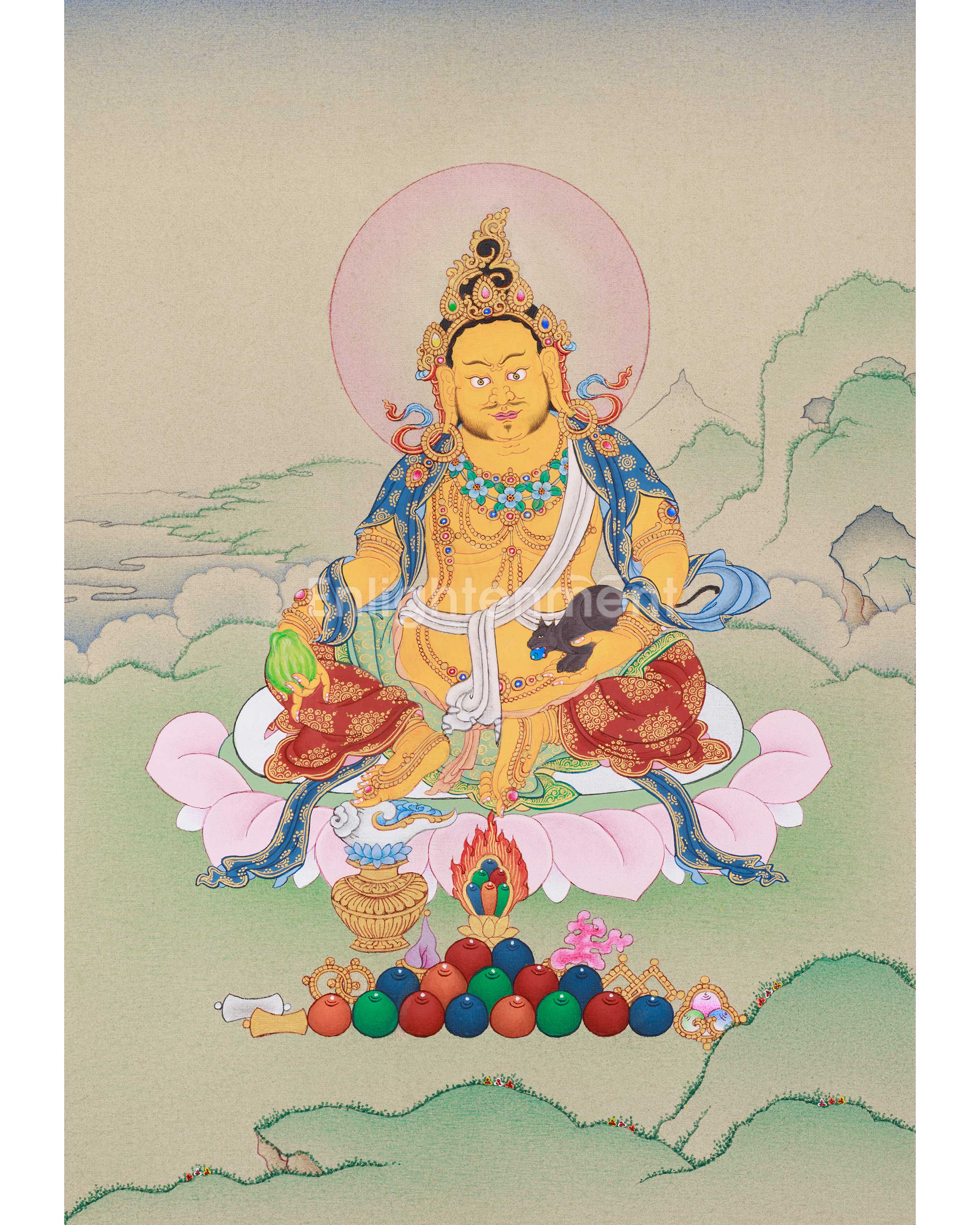
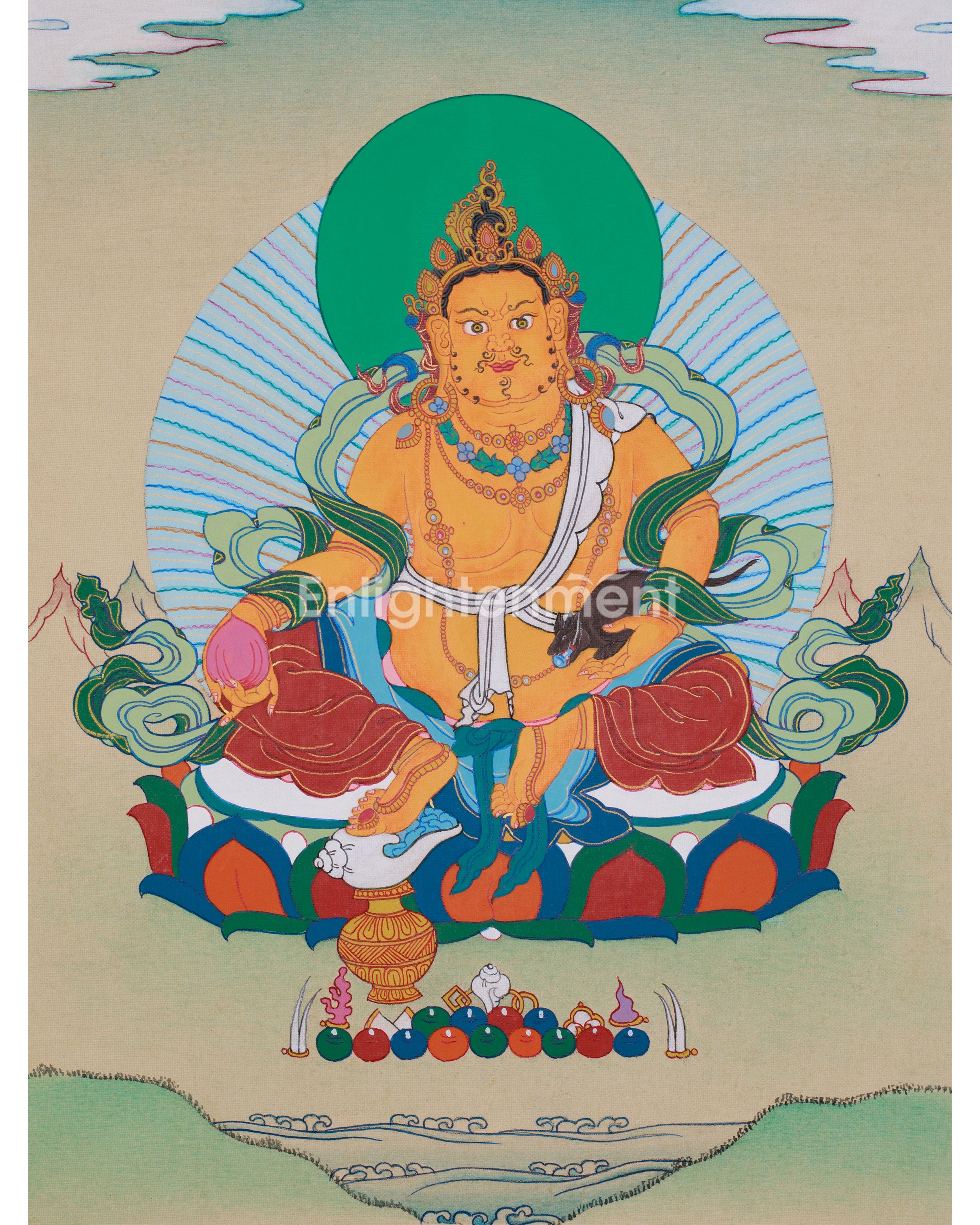
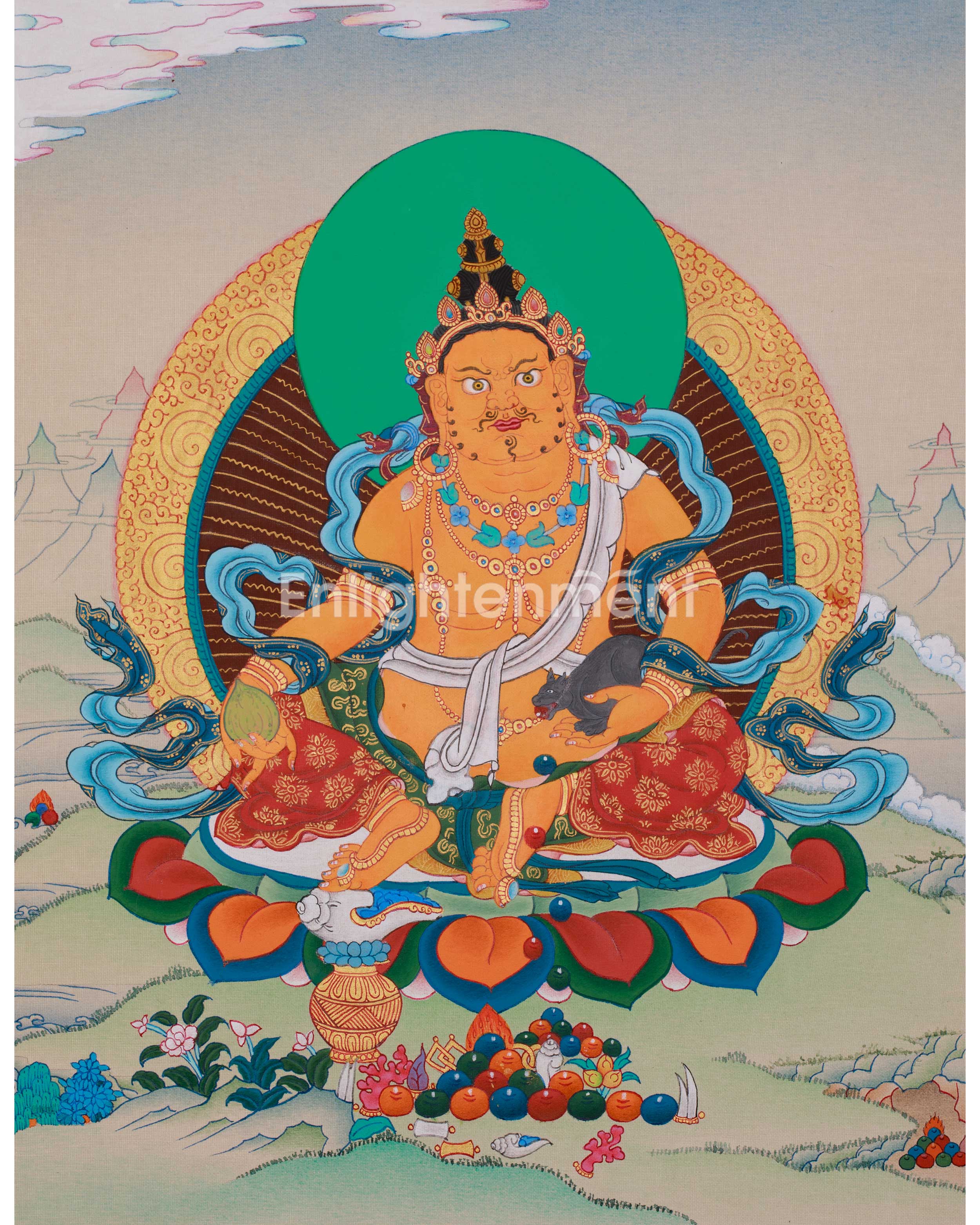
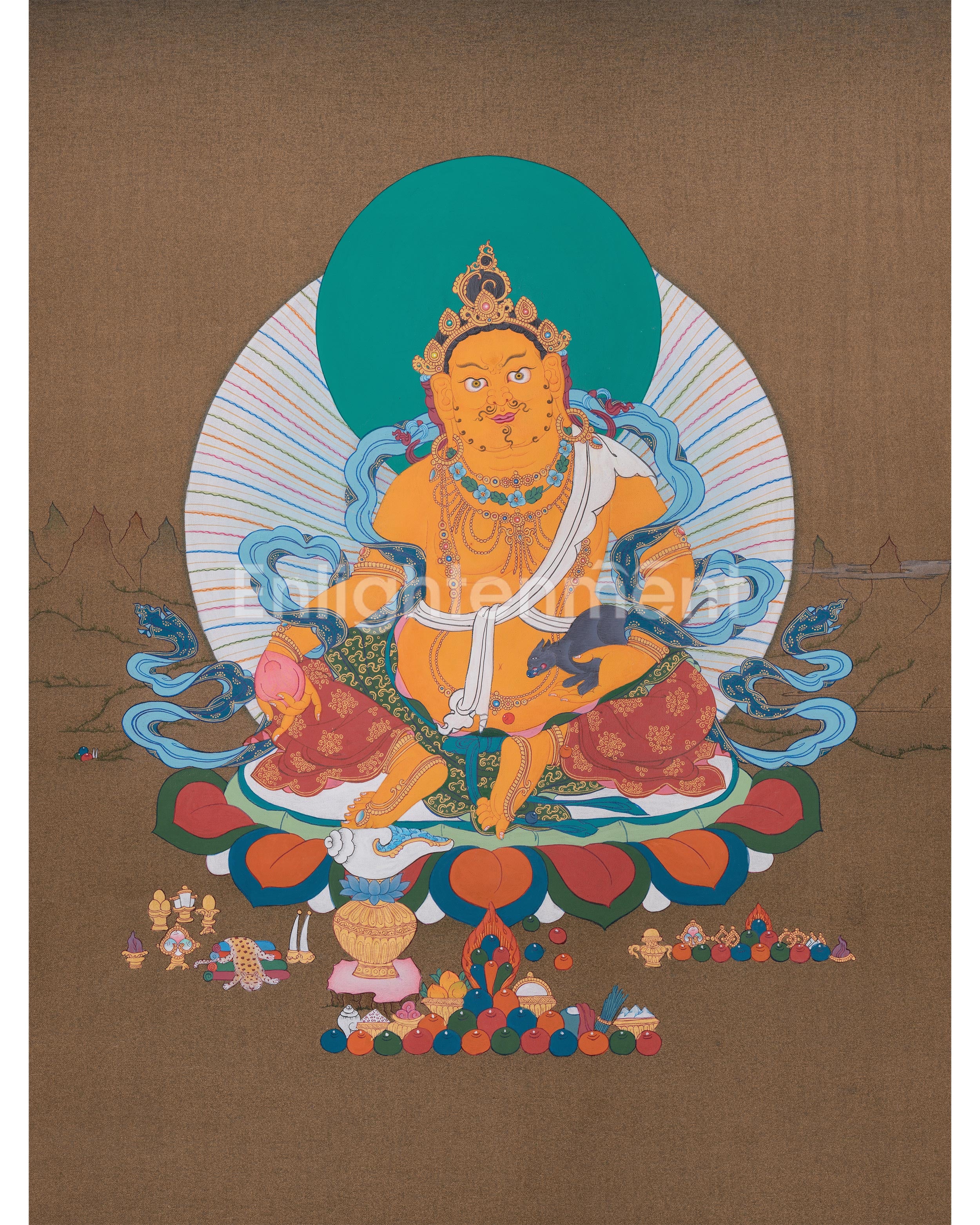
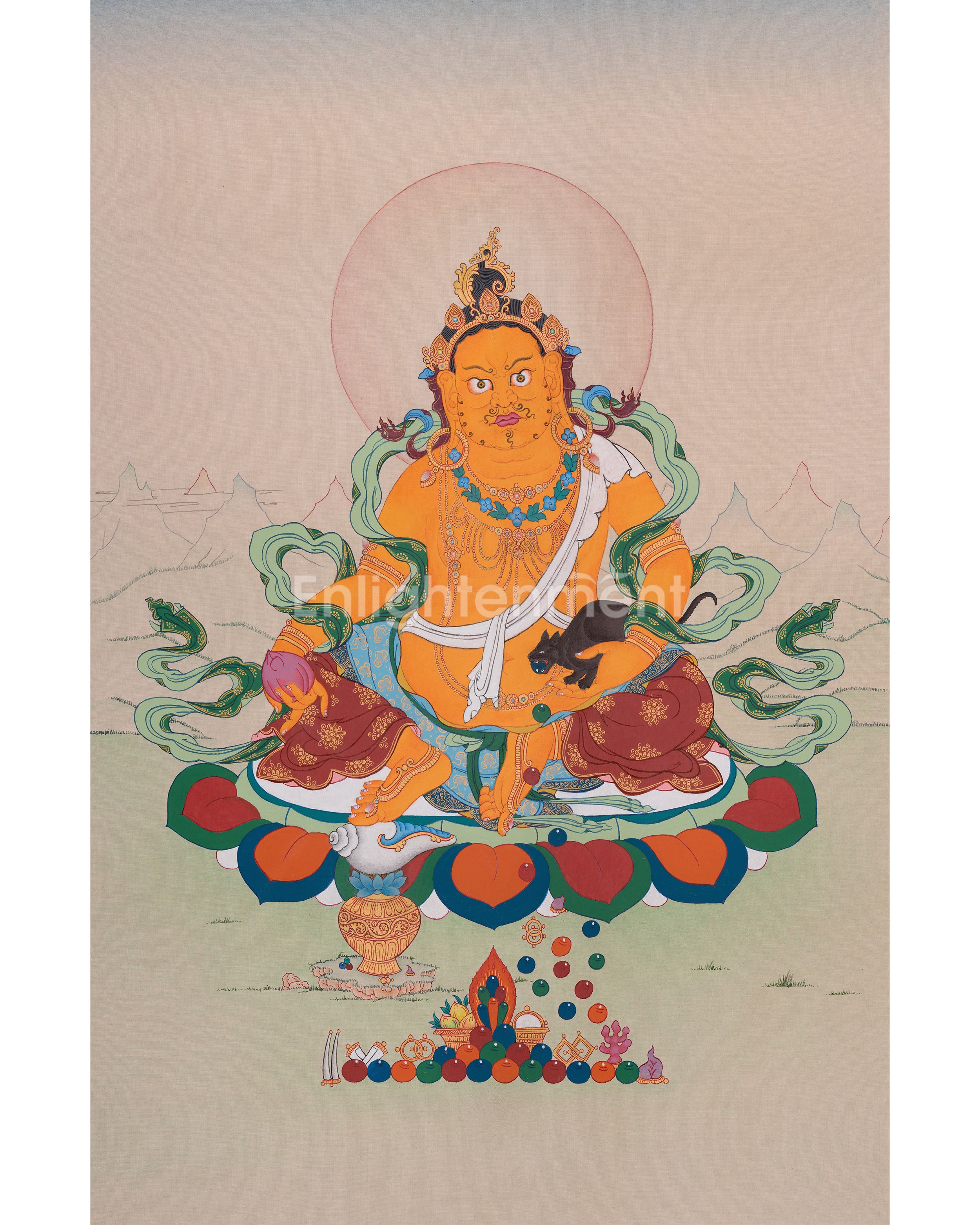
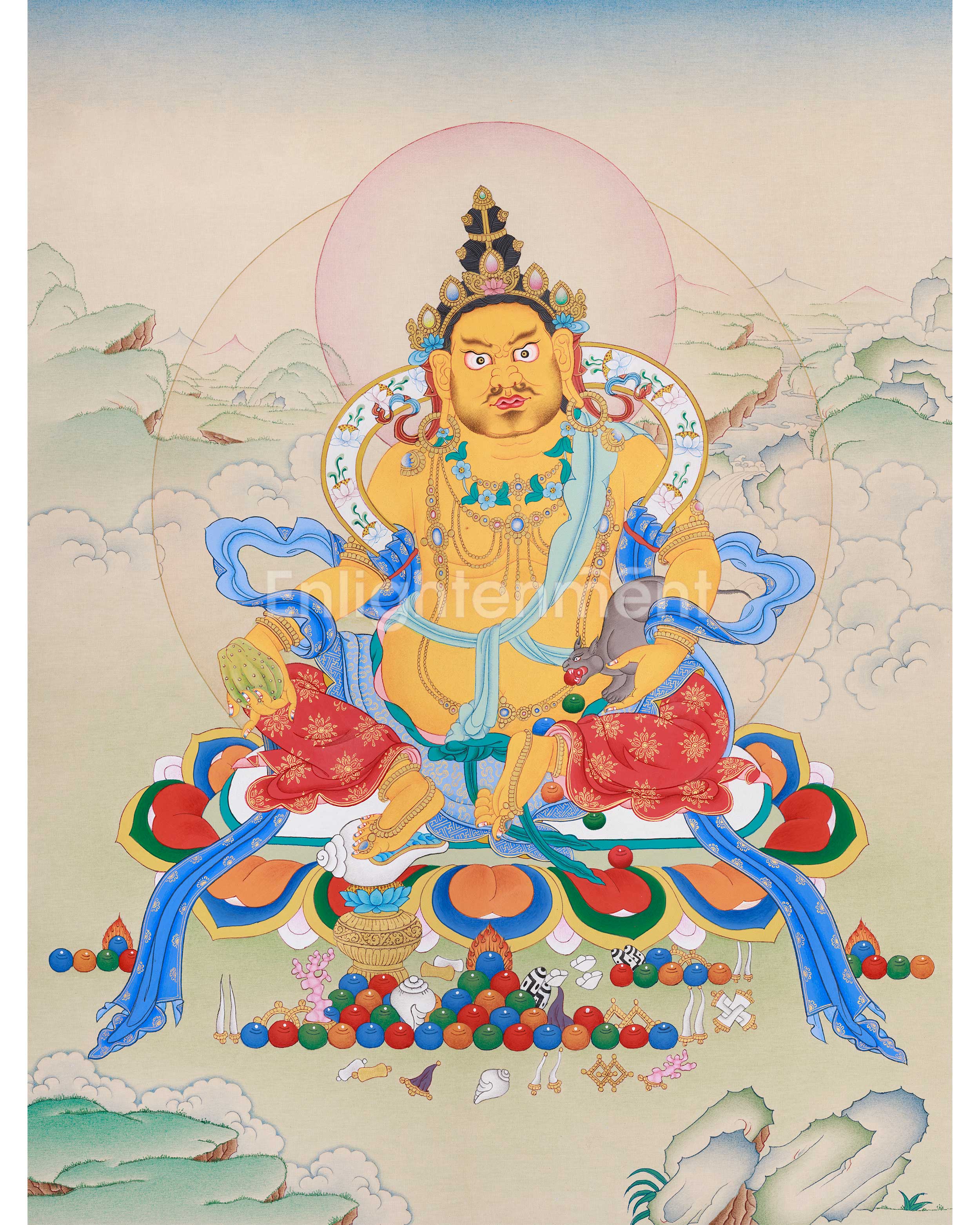
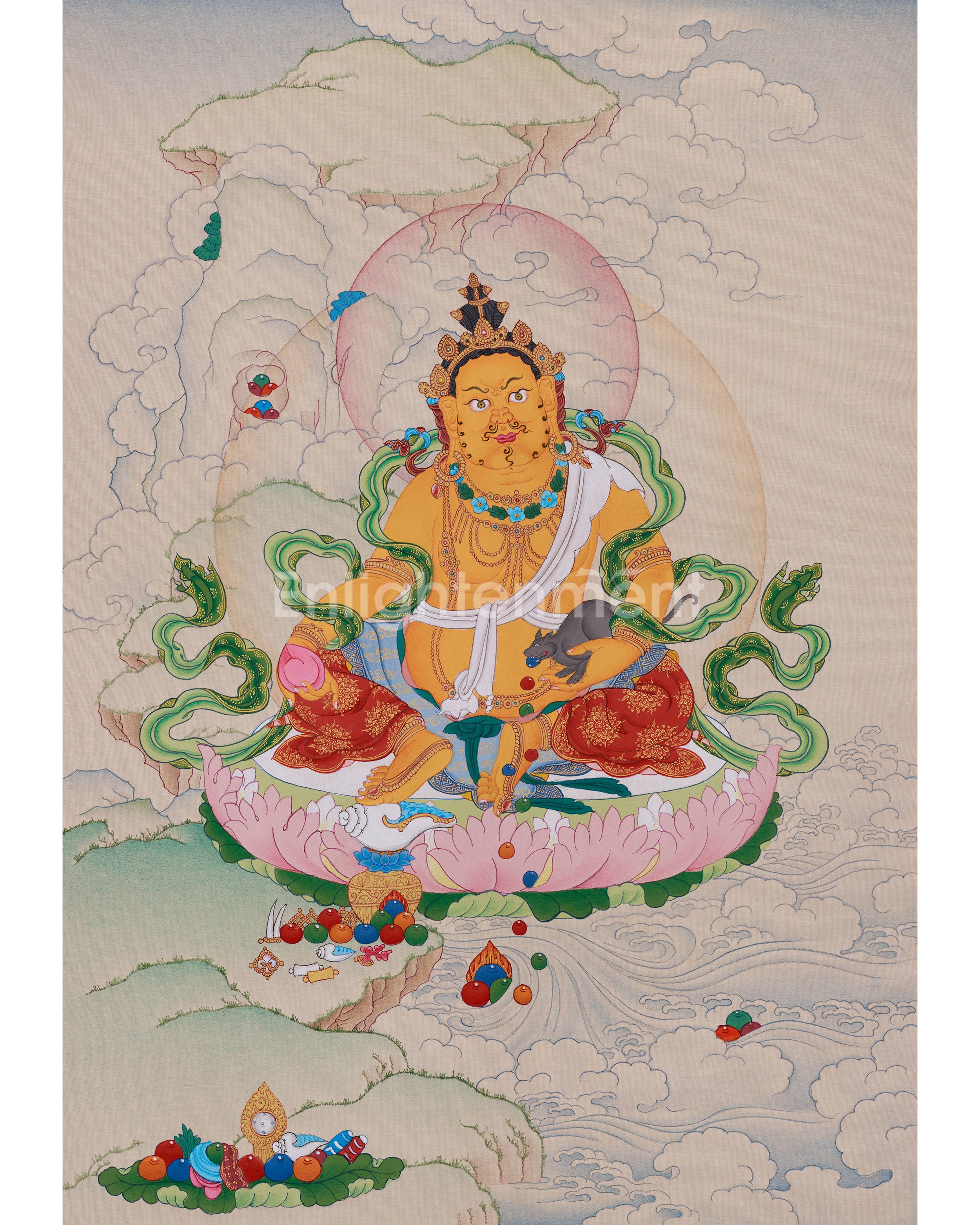
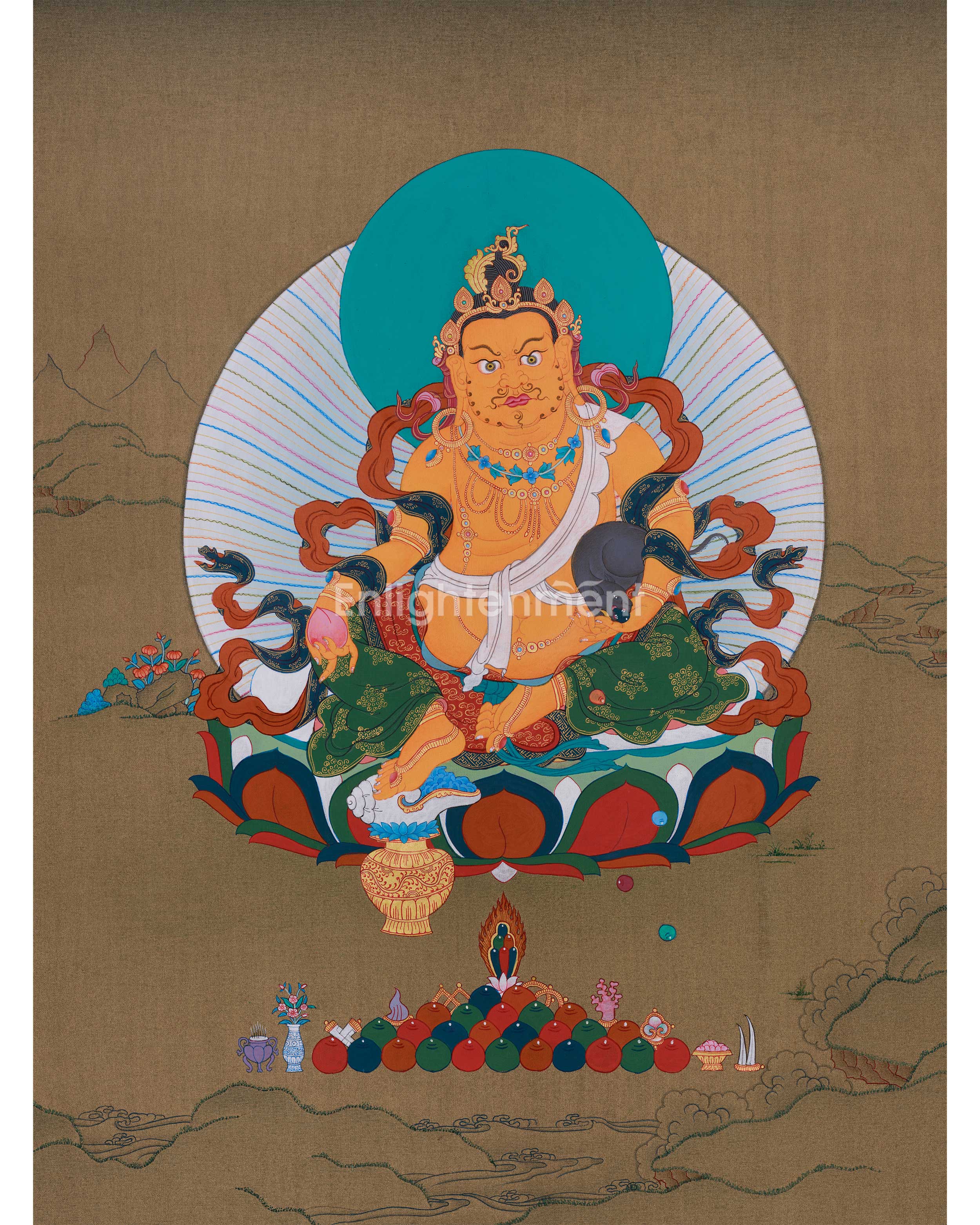
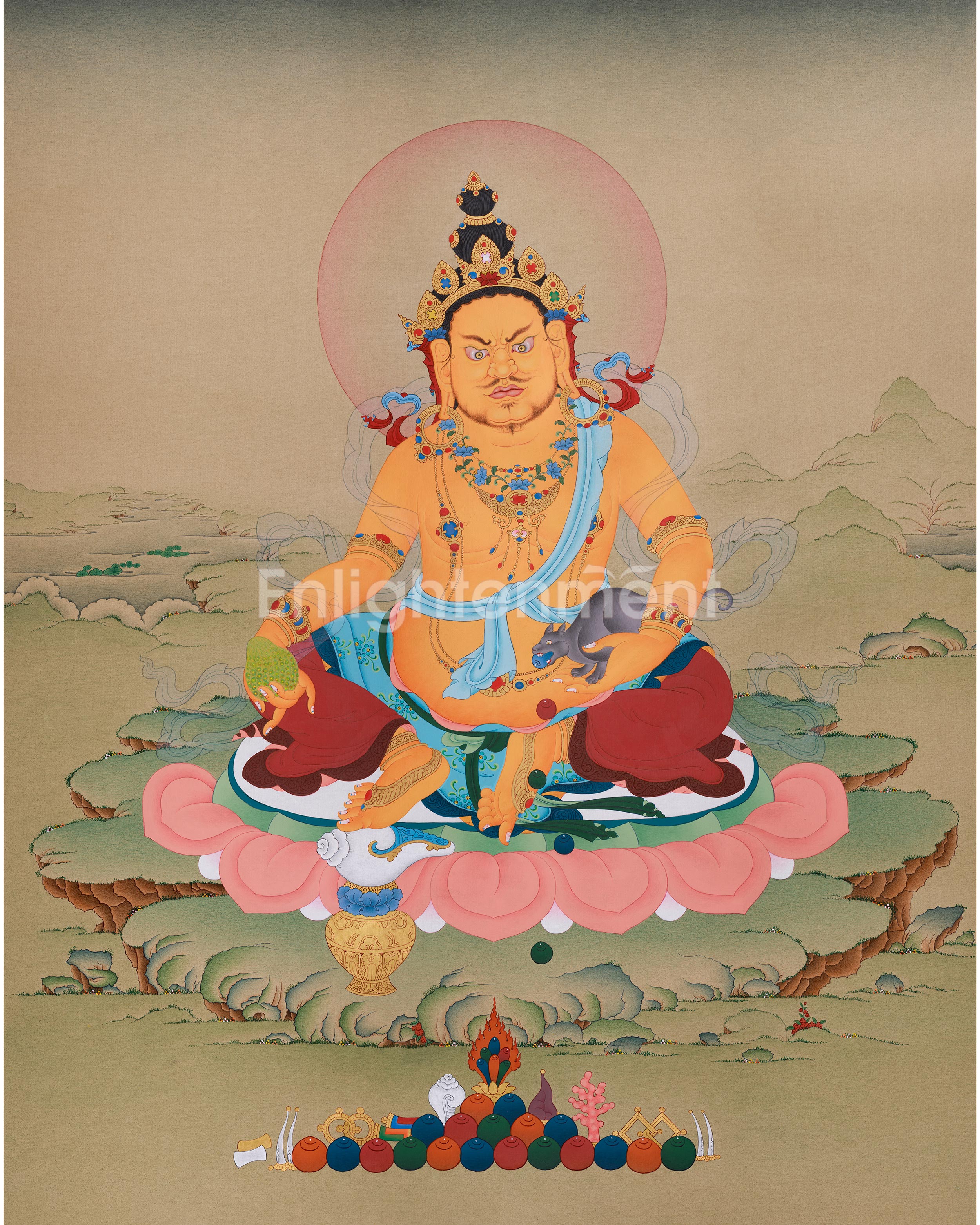
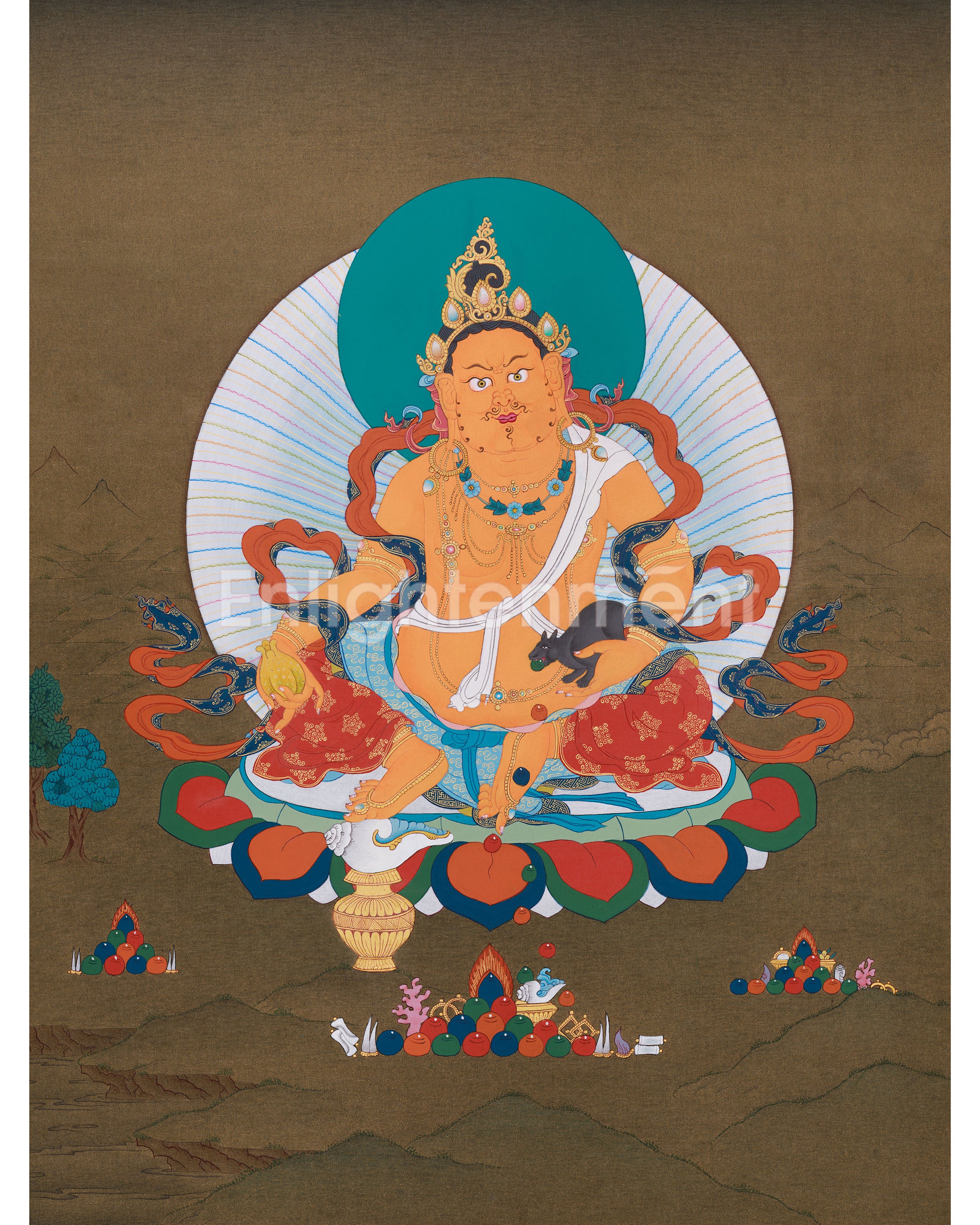
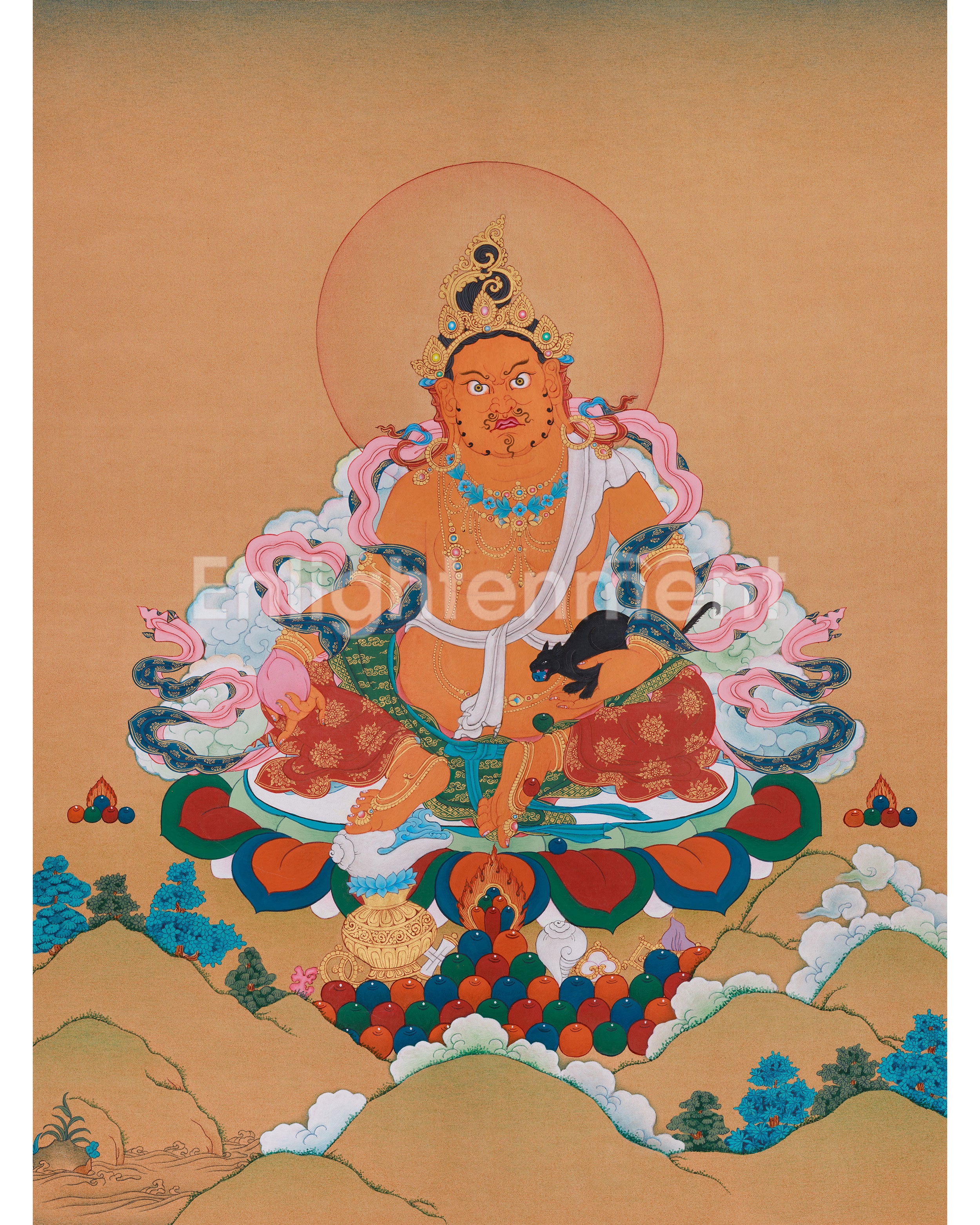
The Thangka portrays Dzambhala seated majestically upon a lotus throne, radiating vibrant energy and surrounded by symbolic offerings and protective elements. His expression conveys both authority and benevolence, reflecting mastery over worldly and spiritual resources. Every element of his iconography communicates the principles of abundance, generosity, and the transformative power of wealth when aligned with compassion and dharma.
Iconography and Symbolism
Golden Body (Richness of Mind and Spirit): Dzambhala’s golden color signifies the enlightened wealth of generosity and spiritual prosperity. It reflects both material abundance and the richness of dharmic activity that benefits all beings.
5-Jewelled Crown: The crown of five jewels represents mastery over the five wisdoms and the integration of enlightened qualities. It denotes Dzambhala’s full realization and his ability to distribute blessings in all forms - material, spiritual, and protective.
Royal Ease Posture: His seated posture demonstrates calm authority and readiness to respond with compassion. It reflects confidence, alertness, and the ability to bestow wealth and abundance skillfully.
Utapala Garland: The garland of utpala flowers signifies spiritual growth, protection, and auspiciousness. It represents Dzambhala’s role in nurturing the practitioner’s spiritual and worldly prosperity.
Mongoose Spitting Jewels: Dzambhala holds a mongoose that spits out jewels, symbolizing the wealth of merit, resources, and spiritual attainments. It represents the flow of blessings that remove scarcity and support dharma practice.
Citron Fruit in Granting Mudra: The citron fruit symbolizes generosity, wealth, and the direct offering of resources to those in need. Held in the granting mudra, it represents Dzambhala’s active role in bestowing abundance.
Conch Shell and Vase: The conch and vase denote auspiciousness, long life, and spiritual treasures. They symbolize Dzambhala’s capacity to provide both material and spiritual sustenance to practitioners.
Lotus Seat: The lotus symbolizes purity and the flourishing of dharma amidst the challenges of samsara. Dzambhala’s lotus seat signifies that enlightened wealth operates in the world without being tainted by attachment or greed.
Calm Yet Commanding Expression: Dzambhala’s face conveys benevolence, wisdom, and authority. His gaze inspires confidence in the power of enlightened wealth to create favorable conditions for spiritual practice and worldly well-being.
Dzambhala and the Practice of Abundant Compassion
Dzambhala teaches that wealth, when aligned with dharma and compassion, becomes a tool for liberation. He removes obstacles, enhances resources, and harmonizes circumstances so that practitioners can focus on spiritual growth. By invoking Dzambhala, one cultivates both generosity and mindfulness, understanding that true abundance supports not only worldly needs but also the flourishing of wisdom, virtue, and compassionate activity.
This Thangka ultimately reveals that abundance is a manifestation of awakened energy. Dzambhala embodies the principle that wealth, generosity, and resources, when guided by enlightened intention, can transform life conditions, enabling both material stability and spiritual progress. His presence inspires confidence that all positive forces can be aligned with liberation and compassionate action.