Samantabhadra Thangka Collection
2 products
Showing 1 - 2 of 2 products
Samantabhadra: The Primordial Bodhisattva of Practice and Wisdom
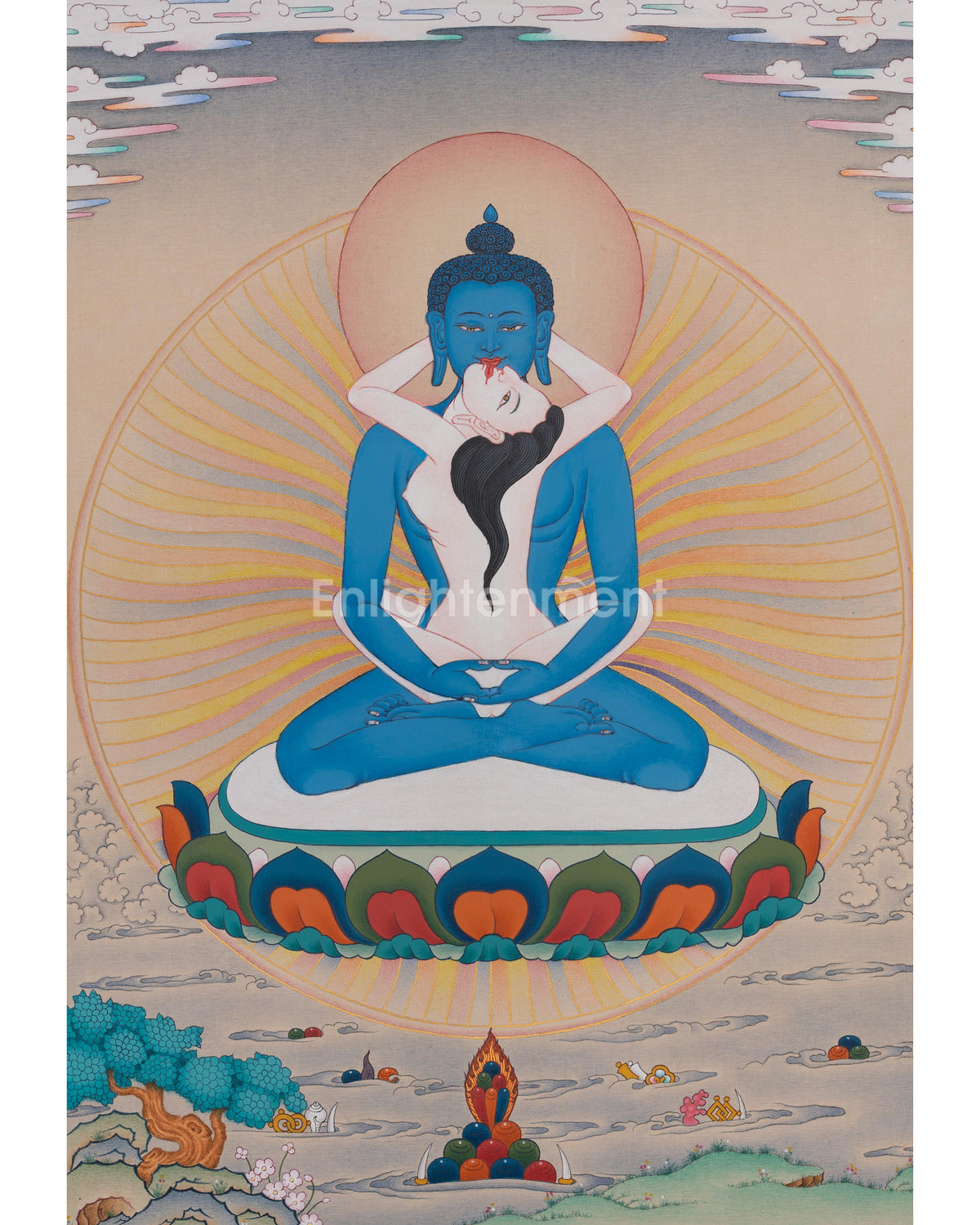
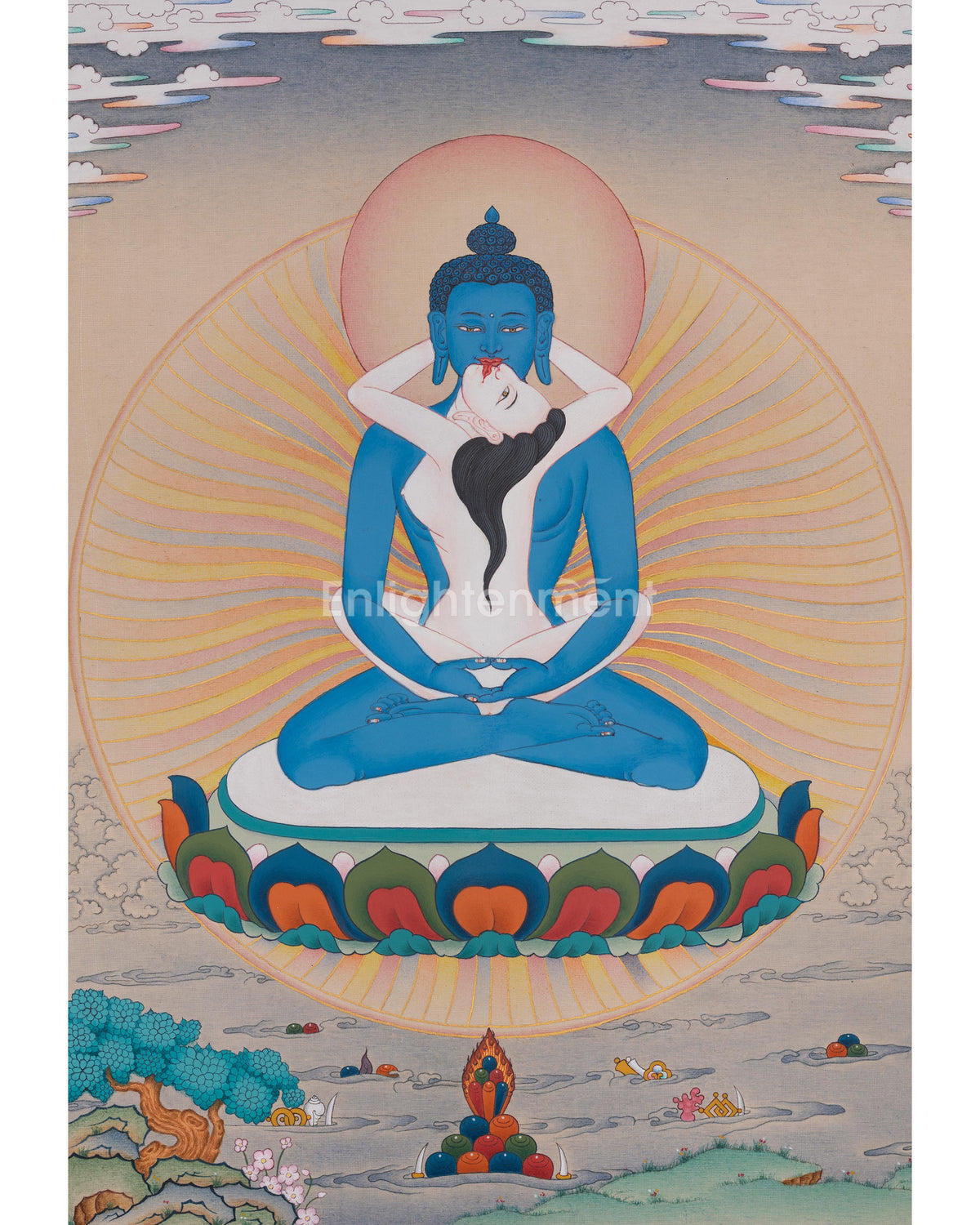
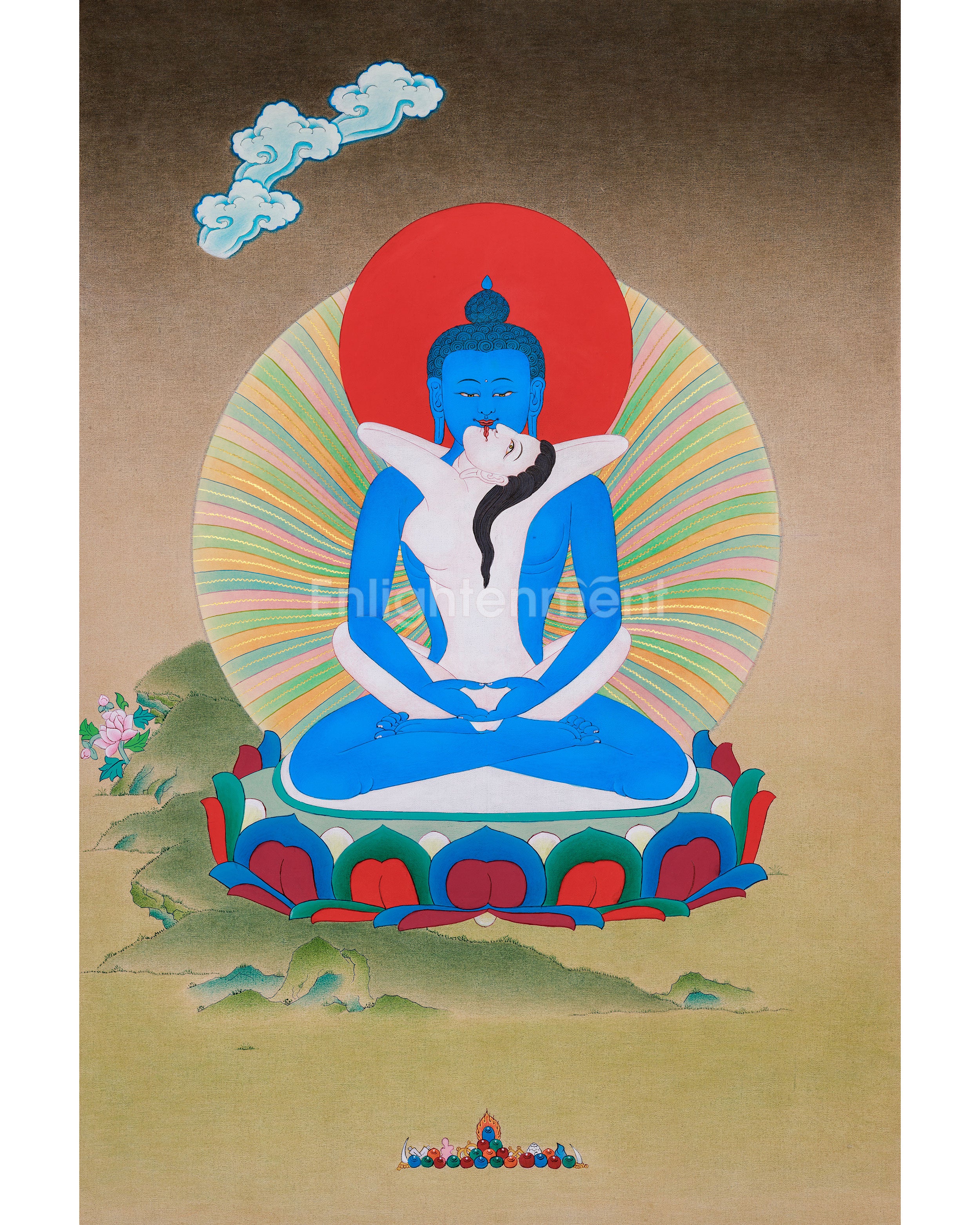
Samantabhadra, commonly known as the Bodhisattva of Universal Virtue, is a major figure in Mahayana and Vajrayana Buddhism. He leads beings toward the realization of enlightenment by embodying the values of practice, meditation, and moral behaviour. Samantabhadra, which is frequently combined with Vajradhara in thangkas, symbolizes the compassionate and dynamic activity of the enlightened mind, enhancing the wisdom of the original Buddha. His name is a reflection of his unending promises to help all living things and his dedication to the Dharma's timeless precepts.
Samantabhadra is highly regarded in Buddhist practice for his capacity to encourage meditation, good behaviour, and disciplined action. He is regarded as the archetype of the Bodhisattva path, proving that insight-driven action is crucial and that wisdom alone is insufficient. As a tool for meditation and devotion, a Samantabhadra Thangka reminds practitioners of the importance of incorporating moral conduct, focus, and selfless deeds into daily life.
Iconography and Symbolism
Typically, Samantabhadra is shown sitting in a lotus or meditative position, frequently perched atop a lotus or other mythological creature, surrounded by symbolic elements that represent his attributes and teachings:
A Halo: Samantabhadra's halo represents both his bright purity of mind and his awakened nature. It suggests that all beings are impacted by his activities, which are intimately linked to enlightenment.
Blue Body: Samantabhadra is frequently depicted with a deep blue complexion, signifying the clarity of an enlightened mind and the boundless scope of learning.
Meditating Posture: Samantabhadra is depicted in a meditative posture, frequently seated in the vajra or lotus position, to represent stability, concentration, and the harmonious balance of body, speech, and mind in spiritual practice.
Lotus Seat: Samantabhadra's lotus represents purity and the capacity to transcend the world's vices. It is a reminder that moral behaviour and good deeds can flourish even in difficult situations.
Moon Disc: The moon disc behind Samantabhadra represents calm, tranquillity, and the clarity of a contemplative mind. It draws attention to how serene and unwavering his enlightened presence is.
Samantabhadra and the Path of Bodhisattva Practice
Samantabhadra embodies the integration of wisdom and action, reminding practitioners that the path to enlightenment requires both understanding and effort. His image encourages ethical conduct, meditation, and altruistic activity as inseparable aspects of the Bodhisattva path. Samantabhadra meditation encourages practitioners to cultivate endurance, diligence, and patience while maintaining a foundation of compassion for all living things.
A Samantabhadra Thangka is more than just a picture; it is a manual for moral behaviour, cultivating meditation, and fulfilling unending vows. In order to embody virtue in all facets of life, practitioners are reminded to align thought, speech, and action with the Dharma by reflecting on its form and symbolism. His presence in practice promotes self-assurance, clarity, and a caring dedication to the welfare of all sentient beings.