Machig Labdron Thangka Collection
1 product
Showing 1 - 1 of 1 product
Machig Labdron: The Fearless Mother of Chöd Practice
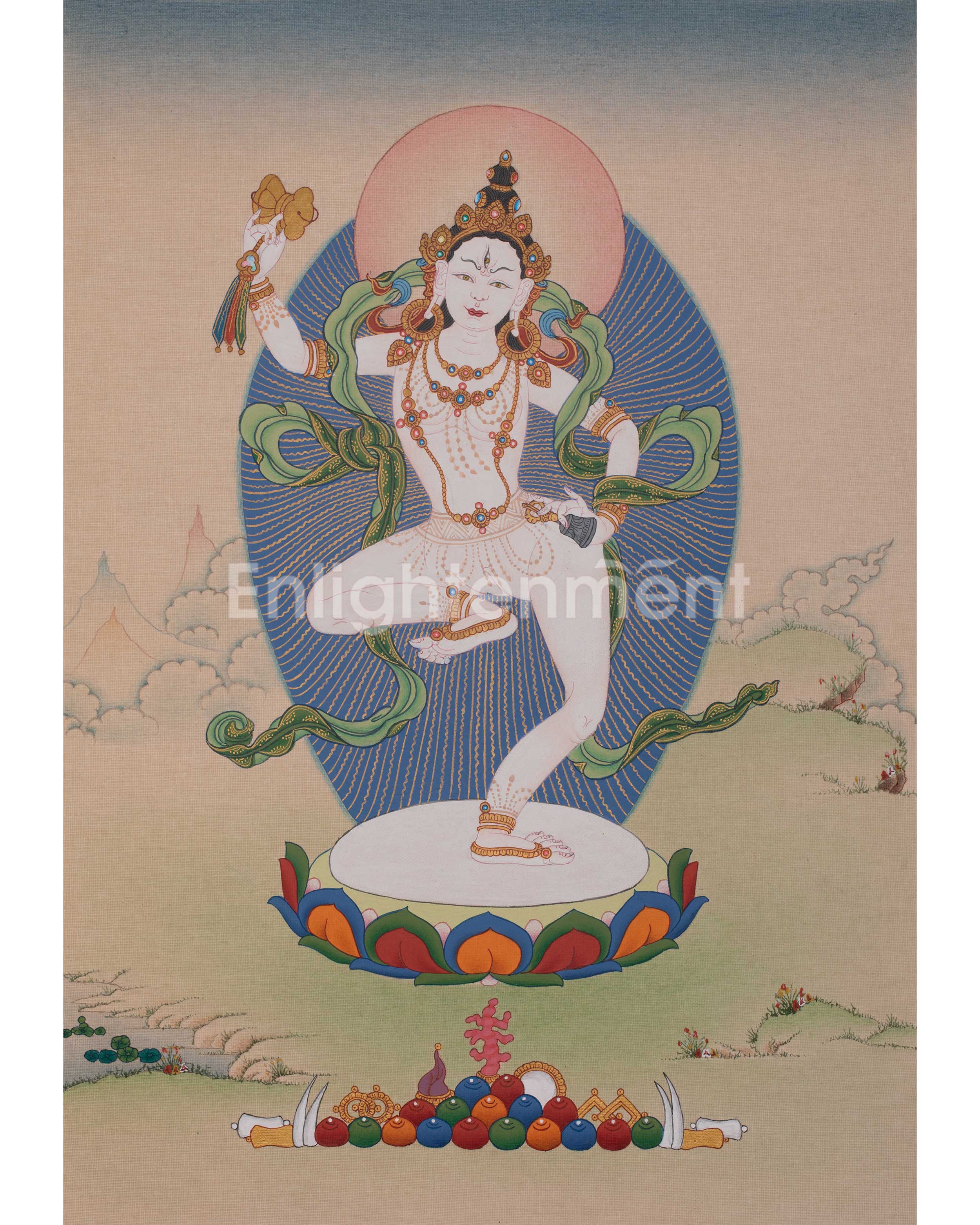
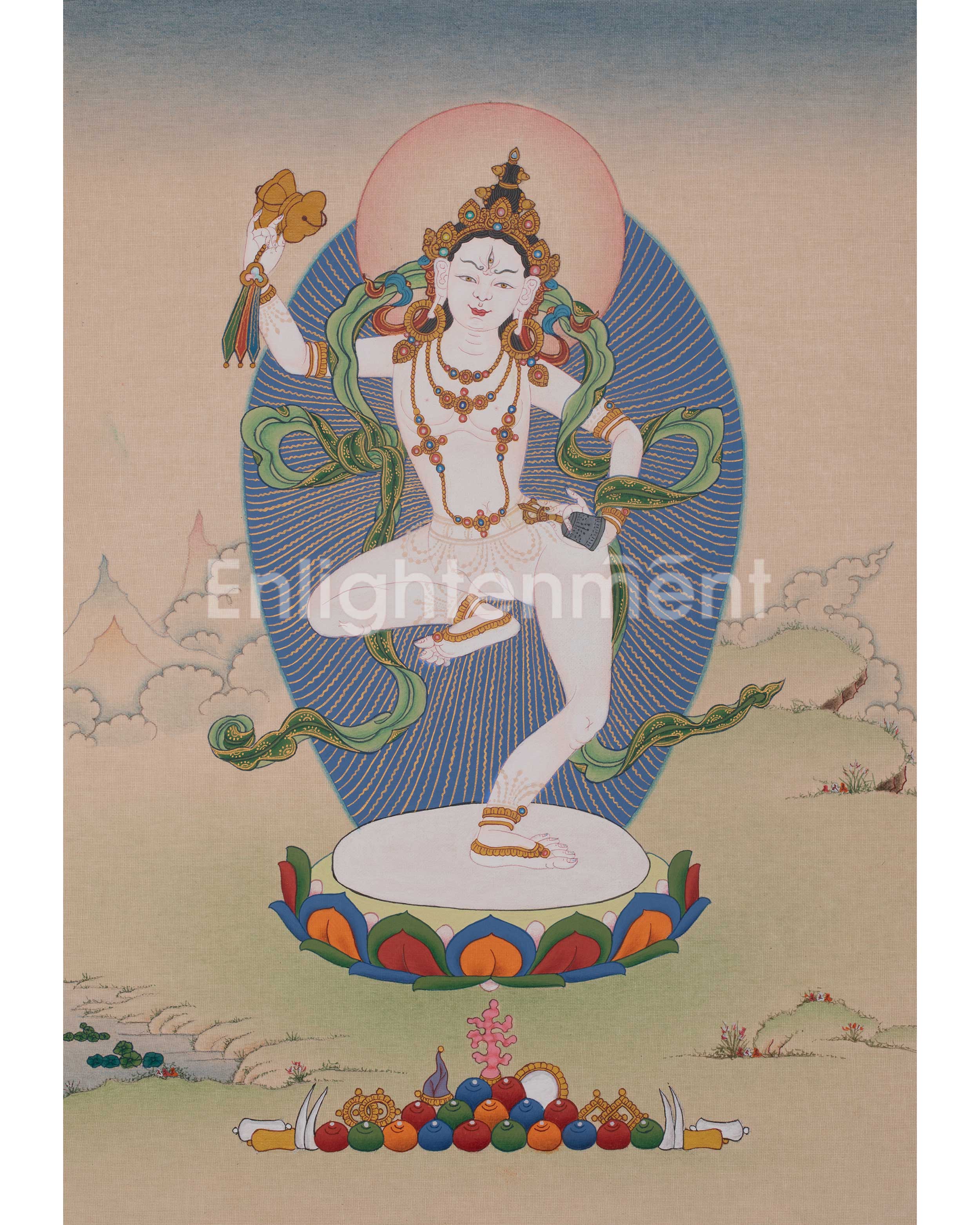
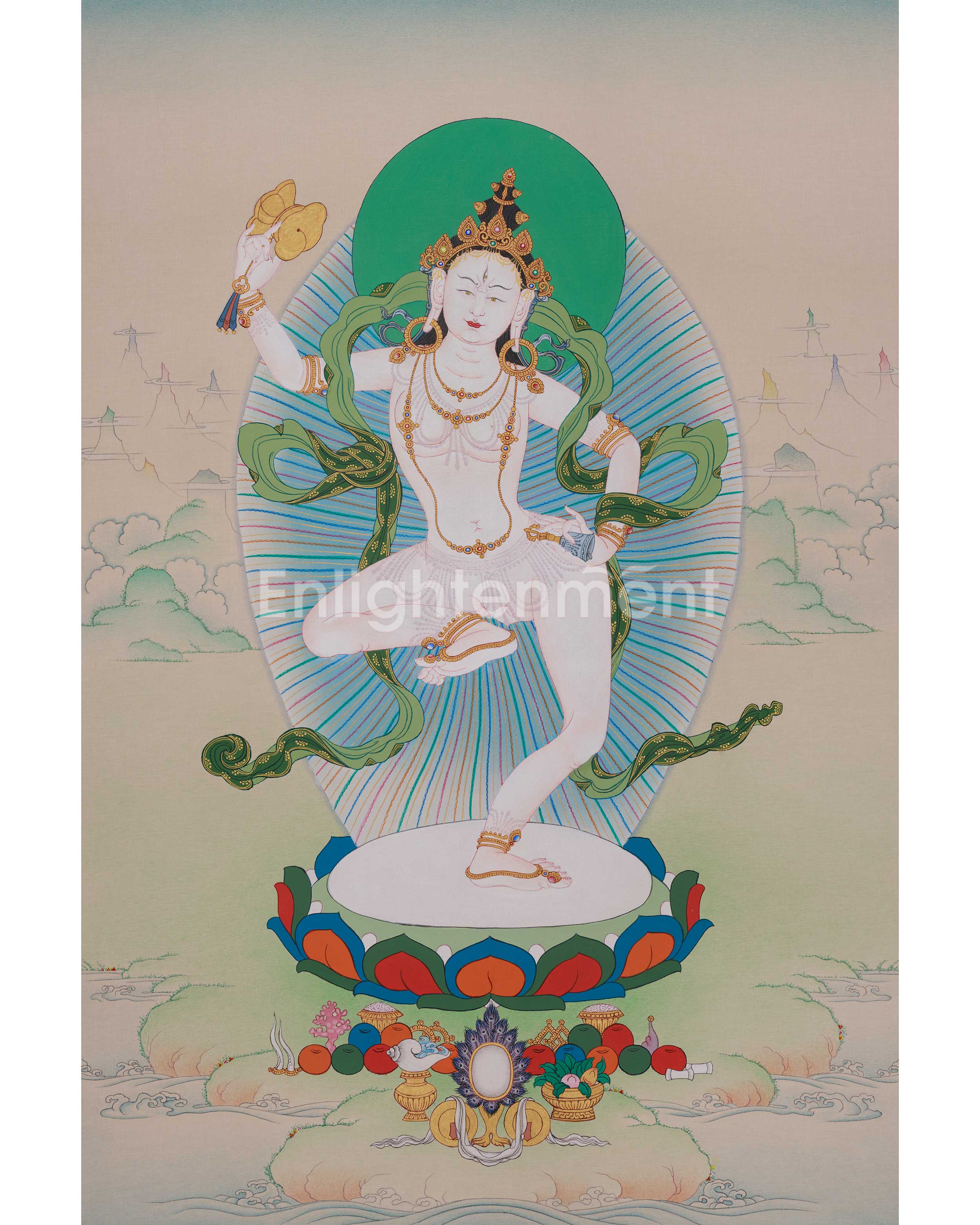
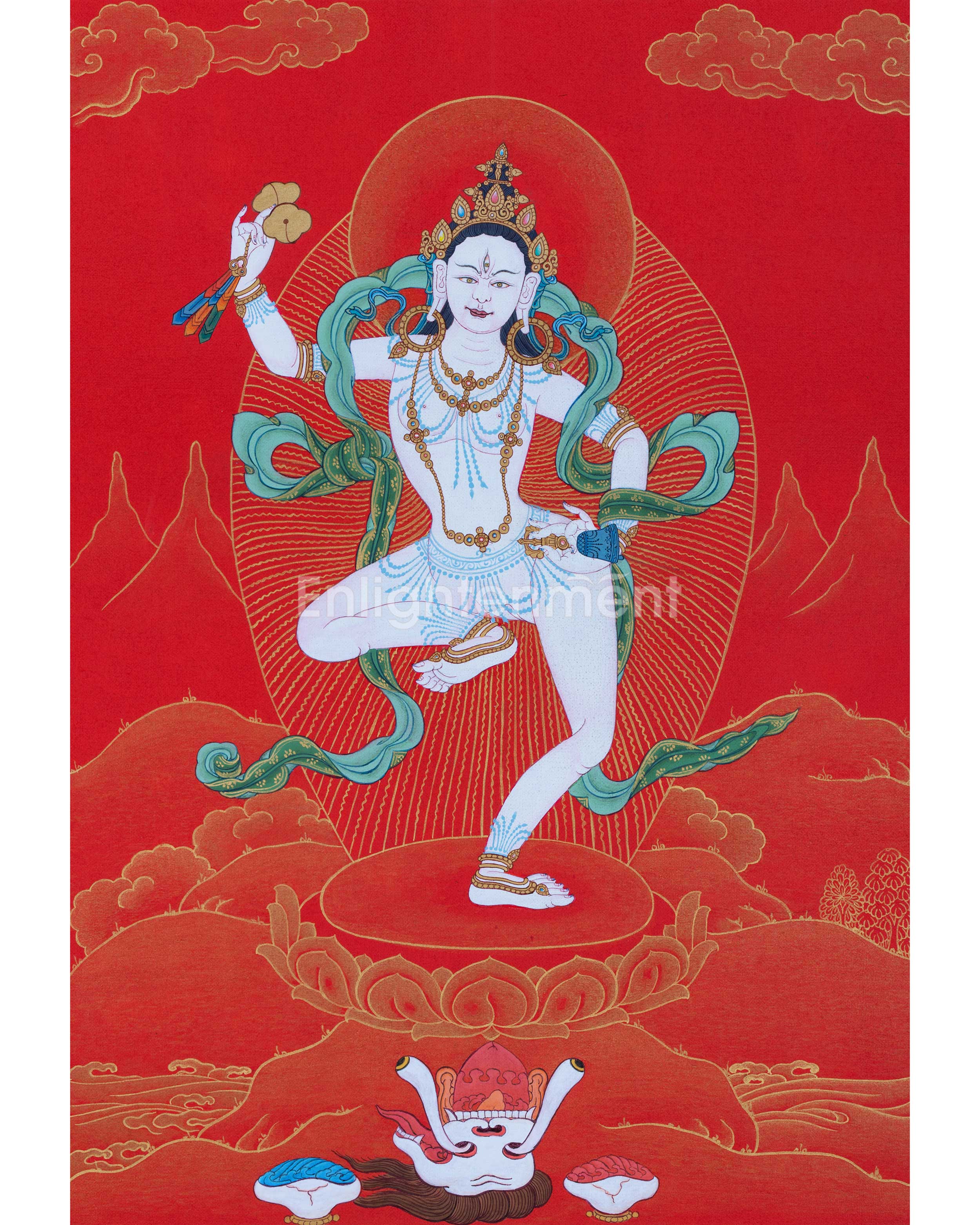
Machig Labdron is a highly revered female master in Tibetan Buddhism, known for her profound contributions to the Chöd practice. She embodies the qualities of fearlessness, compassion, and transformative wisdom, guiding practitioners to confront their inner obstacles and attachments. Her white form symbolizes clarity, purity, and the peaceful aspect of enlightenment, while her dynamic posture reflects the active engagement of skillful means in spiritual practice. Meditating on Machig Labdron encourages practitioners to release fear, ego-clinging, and delusions, cultivating insight and devotion on the path toward liberation.
The Thangka captures Machig Labdron’s radiant presence and spiritual authority, emphasizing both her serene wisdom and her active, empowering energy. The halo behind her signifies her enlightened mind, radiating clarity and protection, while the lotus seat symbolizes purity and the blossoming of spiritual insight. The intricate details of her ornaments, implements, and flowing garments convey her mastery over inner and outer obstacles. This artwork functions as a visualization tool, helping practitioners connect with her energy, deepen meditative practice, and embody courage, compassion, and clarity in daily life.
Iconography and Symbolism
Damaru (Hand Drum): Held in her raised right hand, the damaru symbolizes the rhythmic sound of wisdom that cuts through ignorance. It represents the impermanence of all phenomena and the continuous cycle of creation and dissolution, central to Chöd practice.
Semi-Wrathful Expression: Machig Labdron’s expression blends serenity with controlled wrath, illustrating the use of fierce compassion. This expression signifies her ability to remove obstacles and dispel ignorance without harm, guiding practitioners toward liberation with determination and skillful means.
Radiant White Body: Her pure white body represents clarity, purity, and the awakened mind. It reflects her mastery over negative emotions and afflictions, serving as a visual cue for the aspirant to cultivate inner calm, resilience, and clarity of perception.
Bell: Held in her left hand, the bell complements the damaru, symbolizing wisdom and emptiness. Together, the damaru and bell illustrate the inseparability of method and insight, the core principle of tantric practice.
Legs in Dancing Posture: Her dynamic stance, with legs in a dancing posture, signifies the active engagement of spiritual energy. It conveys her readiness to act for the benefit of sentient beings, illustrating that enlightened wisdom is inseparable from compassionate activity.
Moon Disc: Positioned beneath her feet, the moon disc represents serenity, cooling insight, and reflective clarity. It emphasizes the peaceful and stabilizing aspects of her power, guiding practitioners toward balanced awareness.
Lotus Seat: The lotus signifies purity and spiritual awakening, emerging unstained from the murky waters of samsara. It represents the blossoming of insight amidst worldly challenges, encouraging devotees to rise above distractions and attachments.
Ornamentation and Scrollwork: The intricate jewelry, crown, and surrounding scrollwork represent auspiciousness, spiritual protection, and the sacred transmission of the teachings. These details reinforce the Thangka’s role as a visualization tool and a focus for meditation practice.
Machig Labdron and Spiritual Practice
The Thangka serves as a powerful guide for practitioners, encouraging meditation on fearlessness, non-attachment, and the integration of wisdom and method. Engaging with her image helps develop discernment, compassion, and the ability to skillfully navigate obstacles in life. The Thangka emphasizes that true wisdom is inseparable from ethical action and compassionate engagement.
By meditating on Machig Labdron, devotees cultivate clarity of mind and purity of heart, aligning themselves with the path of liberation. The serene yet powerful imagery provides a visual focal point, reinforcing understanding and inspiring spiritual growth. This Thangka is not merely an artwork; it is a sacred tool for transformation, offering guidance, protection, and insight to all who engage with it sincerely.