Palden Lhamo Thangka Collection
2 products
Showing 1 - 2 of 2 products
Palden Lhamo: The Wrathful Protectress and Guardian of the Dharma
Palden Lhamo is one of the most revered female Dharma protectors in Tibetan Buddhism, honored as a fierce guardian of the teachings and a powerful embodiment of enlightened activity. Known as the only female among the traditional Eight Great Dharma Protectors, she appears in a wrathful form not out of anger but from profound compassion that acts decisively to remove obstacles and protect practitioners. Her terrifying appearance symbolizes fearless wisdom that destroys ignorance and safeguards the path to liberation. Especially associated with protection, karmic purification, and unwavering spiritual commitment, Palden Lhamo represents the active force of enlightened compassion.
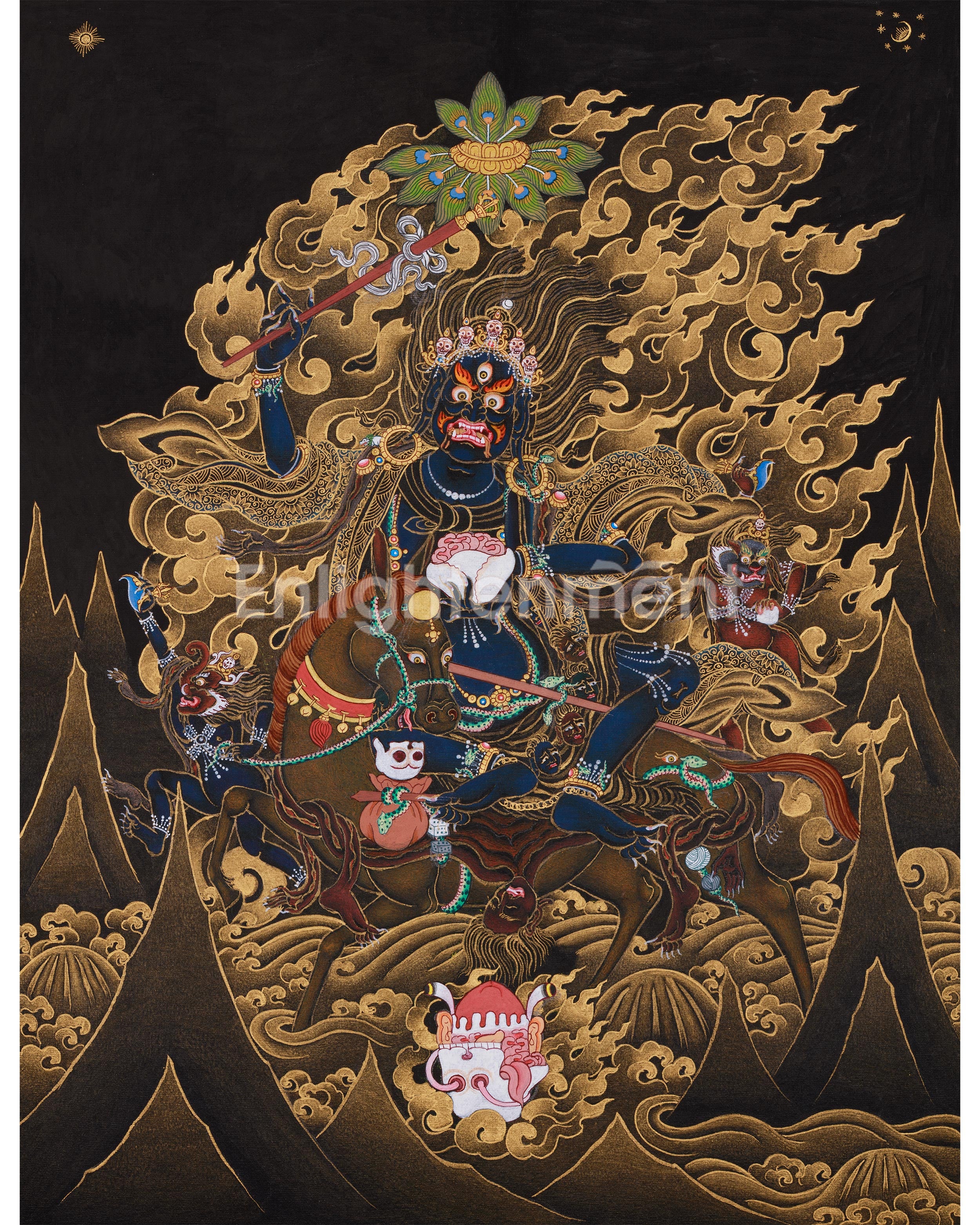
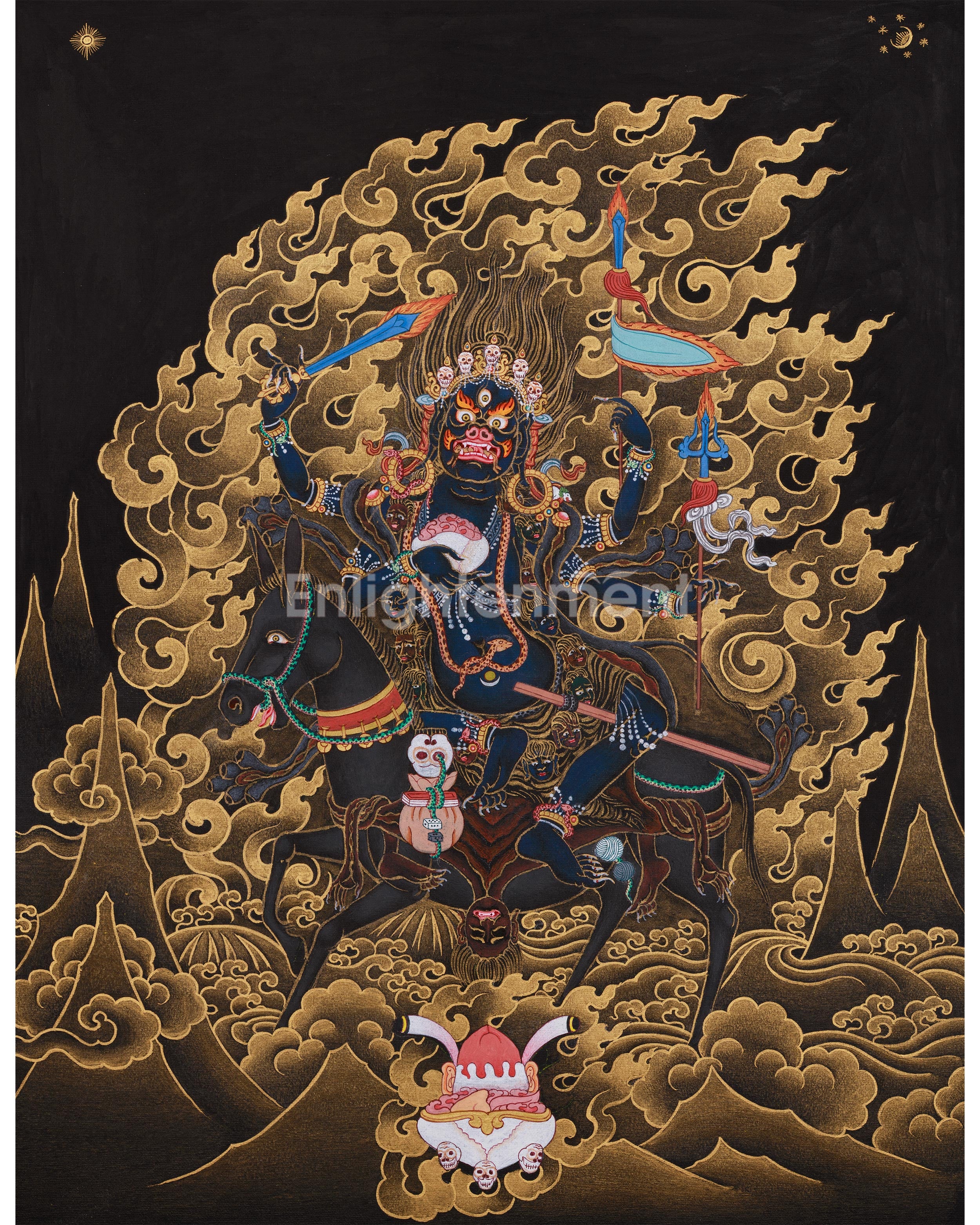
The Thangka depicts Wrathful Palden Lhamo riding through blazing wisdom flames upon her sacred mount, moving across the vast expanse of existence while subduing obstructing forces. Her dark blue body symbolizes boundless space and the limitless nature of awakened awareness. Every attribute she carries expresses transformation, protection, and the unstoppable movement of enlightened energy. Though fierce in form, Palden Lhamo ultimately reminds practitioners that compassion sometimes appears in wrathful ways to preserve truth and guide beings toward awakening.
Iconography and Symbolism
Flames of Wisdom: The swirling flames surrounding Palden Lhamo represent the blazing energy of enlightened wisdom that burns away ignorance, attachment, and all obscurations. These flames symbolize purification and the fierce compassion that transforms negativity into awakening.
Five Skull Crown: The crown of five skulls symbolizes the transformation of the five poisons - ignorance, desire, anger, pride, and jealousy - into the Five Wisdoms. It reflects complete mastery over samsaric existence and awakened realization.
Flaming Sword: Raised in her hand, the sword symbolizes penetrating wisdom that cuts through illusion, confusion, and harmful forces. The flames surrounding the blade emphasize wisdom in active motion, destroying obstacles at their deepest level.
Trident: The trident represents mastery over body, speech, and mind, as well as transcendence of the three poisons. It also symbolizes enlightened power extending across all dimensions of experience.
Skull Cup: Held as a sacred ritual object, the skull cup symbolizes the transformation of negative emotions and ego into enlightened awareness. Rather than representing destruction, it signifies the complete purification and offering of all obscurations.
Wrathful Expression: Her fierce face and intense gaze symbolize compassionate wrath directed toward ignorance and suffering rather than living beings. Her expression reflects unwavering determination to protect practitioners and uphold the Dharma.
Dice: The dice symbolizes karmic destiny and the unpredictable nature of worldly existence. Their presence reminds practitioners that enlightenment transcends chance and arises through wisdom and awakened intention.
Thread Ball: The thread ball represents karmic connection, continuity, and the interwoven nature of all causes and conditions. It symbolizes how enlightened activity guides beings through the complex web of existence toward liberation.
Palden Lhamo and the Path of Fearless Protection
Palden Lhamo teaches that compassion is not always soft or comforting in appearance. Sometimes the path requires fierce clarity, unwavering courage, and the strength to remove what obstructs awakening. Her wrathful manifestation reminds practitioners to remain steadfast in their commitments, transform difficult circumstances into opportunities for growth, and trust the protective power of wisdom.
This Thangka ultimately reveals that enlightened protection arises not from fear but from awakened compassion. Palden Lhamo embodies the fierce love that refuses to abandon beings to confusion and suffering. Her presence encourages practitioners to move forward with courage, preserve the integrity of their spiritual path, and recognize that even the most intense forms of wisdom arise from compassion.