Tsongkhapa Thangka Collection
1 product
Showing 1 - 1 of 1 product
Tsongkhapa Thangka: The Founder of the Gelug Tradition
Tsongkhapa, also known as Je Tsongkhapa, is one of Tibet’s most revered Buddhist masters, celebrated as the founder of the Gelug school. He is recognized for his extraordinary scholarship, profound meditation, and uncompromising dedication to ethical discipline. His teachings emphasize the integration of wisdom (prajna) and compassion (karuna) with strict adherence to monastic codes, making him a central figure in Tibetan Buddhism. The Tsongkhapa Thangka serves as a visual homage to his life, his spiritual accomplishments, and the enduring legacy of his teachings. By meditating upon this image, practitioners cultivate mindfulness, devotion, and clarity of understanding.
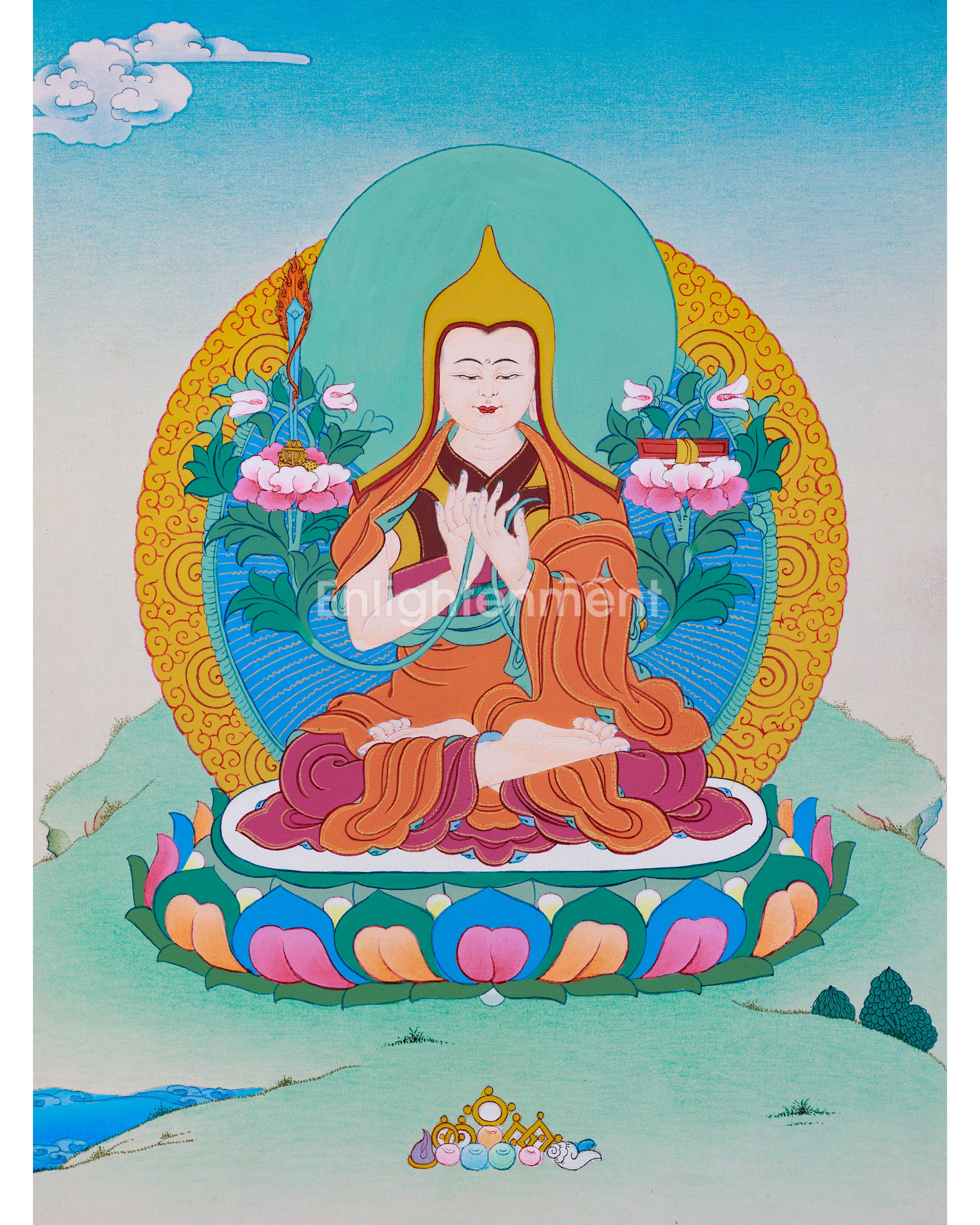
The Thangka portrays Tsongkhapa seated upon a fully bloomed lotus, symbolizing purity, spiritual awakening, and detachment from worldly attachments. His crossed-leg posture reflects stable meditation, composure, and the mastery of contemplative practices. The halo surrounding his head radiates spiritual light, signifying his enlightened state and the transcendental awareness emanating from his realized mind. The yellow Gelug hat, unique to this lineage, marks him as the founder and underscores his role as a teacher, emphasizing both wisdom and ethical discipline. The wisdom sword he holds in his right hand symbolizes the cutting of ignorance and delusion, while the Prajnaparamita text on a lotus in his left hand represents mastery of Buddhist philosophy and the perfection of wisdom.
Iconography and Symbolism
Halo: The halo encircling Tsongkhapa’s head represents his radiant wisdom and enlightened mind. It conveys the power of clarity and spiritual illumination, emphasizing that his teachings are a beacon for all sentient beings.
Yellow Gelug Hat: This distinctive yellow hat identifies Tsongkhapa as the Gelug founder. It signifies doctrinal authority, disciplined study, and the application of ethical conduct, marking the central principles of his tradition.
Wisdom Sword: Held in his right hand, the sword symbolizes discernment and the ability to cut through ignorance. It reflects the penetrating insight that reveals the ultimate nature of reality.
Wisdom Book (Prajnaparamita): The book resting on a lotus in his left hand embodies perfect wisdom, representing his profound knowledge of emptiness and Buddhist philosophy. The lotus signifies purity and the unfolding of insight.
Buddhist Robe: The monastic robes Tsongkhapa wears represent adherence to Vinaya rules, ethical conduct, and renunciation. The intricate details of the fabric highlight Tibetan craftsmanship and the care devoted to depicting the spiritual master.
Tsongkhapa and the Path of Study and Practice
Tsongkhapa’s Thangka serves as more than a visual tribute; it is a meditation aid that connects the practitioner to the qualities of wisdom, discipline, and ethical clarity. By contemplating the Thangka, meditators are reminded of the importance of integrating study, reflection, and ethical conduct in their spiritual journey. Each symbolic element reinforces the union of wisdom and method, encouraging a balanced approach to Buddhist practice.
This visual representation also acts as an inspirational guide for scholars and practitioners alike, embodying the ideals of meticulous study, ethical mindfulness, and deep meditation. The Thangka encourages viewers to emulate Tsongkhapa’s dedication, cultivating insight into the nature of reality while engaging in compassionate action. Through devotion and study, practitioners are invited to awaken their own inner wisdom, following the example set by this great Gelug master.