Vajrakilaya Thangka Collection
2 products
Showing 1 - 2 of 2 products
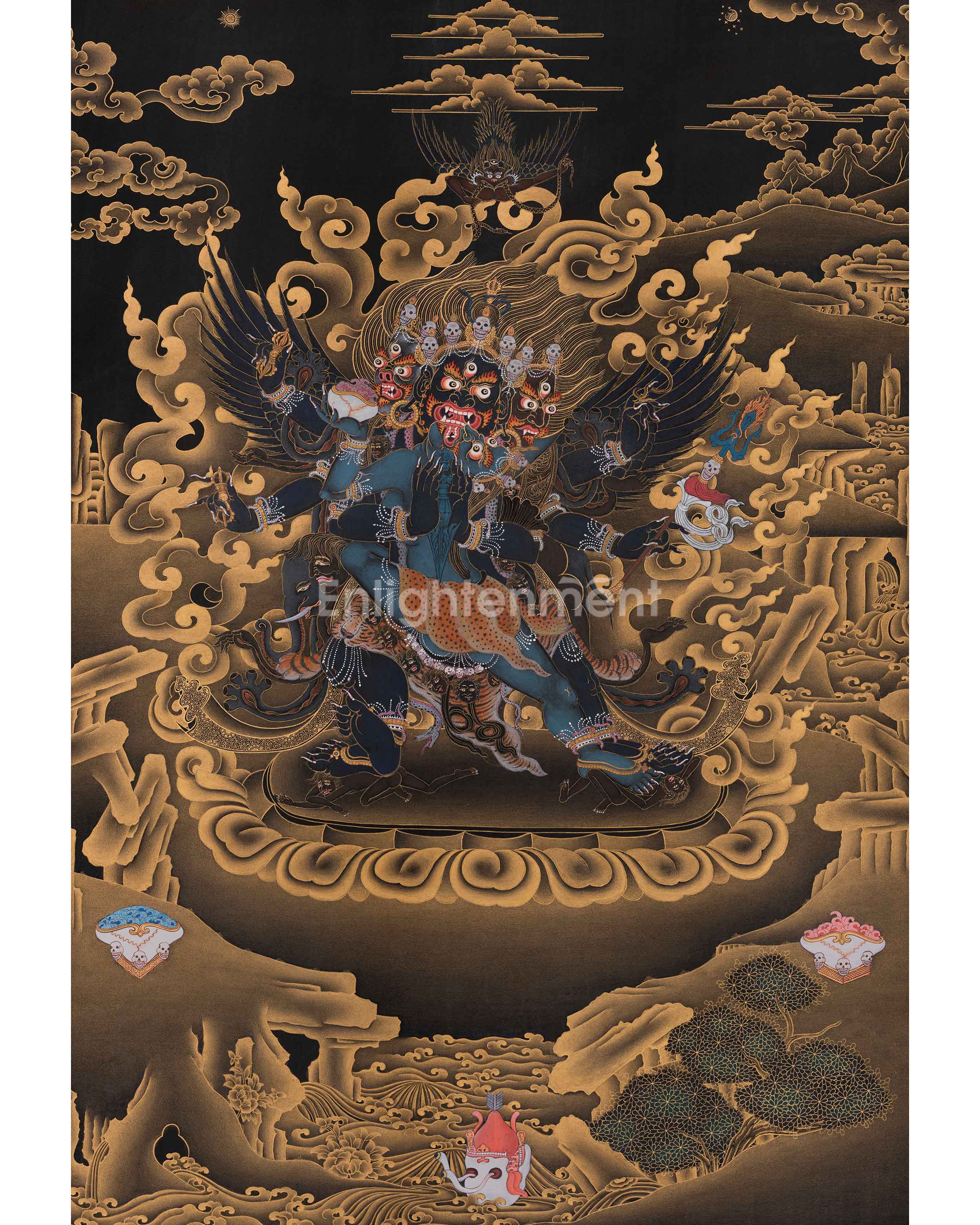
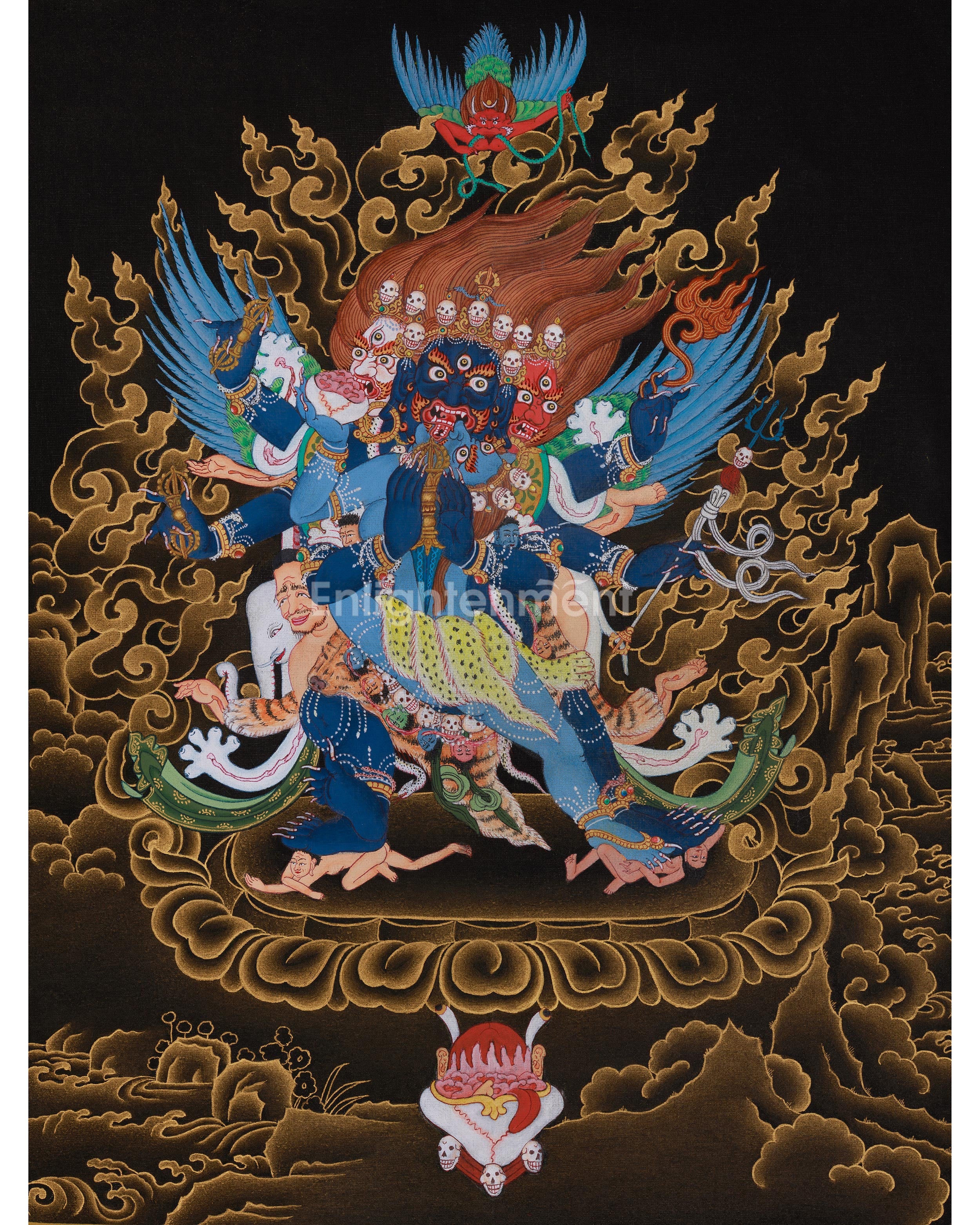
Vajrakilaya Thangka: The Wrathful Protector of Obstacles
Vajrakilaya, also known as Vajrakumara, is the wrathful manifestation of enlightened activity in Vajrayana Buddhism. He embodies the indestructible power of the vajra to cut through obstacles, negativity, and karmic hindrances, enabling practitioners to progress swiftly on the path to awakening. His fierce form is not a symbol of anger but of compassionate determination, illustrating the necessity of wisdom and energy to overcome ignorance and attachment. The dark-blue hue of Vajrakilaya signifies emptiness, clarity, and the transformation of delusions into enlightened awareness. Meditating upon this deity fosters courage, determination, and unwavering focus, essential for transformative spiritual practice.
In the Thangka, Vajrakilaya is depicted in a dynamic dancing posture over subdued figures, representing the defeat of ego, afflictive forces, and external obstacles. He wears tiger and elephant skins symbolizing strength and fearlessness, and his multiple arms hold sacred implements such as the ritual dagger (kila), trident, and vajra, each embodying specific aspects of enlightened activity. The nine-pronged vajra in one hand signifies mastery over the nine aspects of obstacles, while the skull cup filled with offerings reflects the transmutation of negative energies into wisdom and compassion. His crown, adorned with five skulls, represents the conquest of the five afflictions: ignorance, desire, anger, pride, and envy. Flames surround Vajrakilaya, illustrating the blazing, purifying energy of his enlightened activity.
Iconography and Symbolism
Five-Pronged Vajra – Represents the indestructible nature of enlightened wisdom, the power to cut through ignorance, and the mastery of the five buddha families’ wisdoms.
Nine-Pronged Vajra – Denotes complete mastery over all forms of obstacles, both internal and external, guiding practitioners toward realization.
Skull Cup (Kapala) – Symbolizes the transformation of negative emotions and obscurations into the nectar of wisdom and skillful means.
Ritual Dagger (Kila) – A central symbol of Vajrakilaya, used to bind and remove spiritual obstacles, symbolizing unwavering determination in practice.
Trident – Represents the union of body, speech, and mind, and the destruction of the three poisons: attachment, aversion, and ignorance.
Elephant Skin (Upper Body) – Signifies strength, fearlessness, and the stability of mind required to overcome inner and outer obstacles.
Tiger Skin (Lower Body) – Symbolizes courage, mastery over passions, and the capacity to tread the challenging path without fear.
Three Heads (Red, Blue, White) – Reflect the integration of wrathful, compassionate, and enlightened qualities, balancing the forces of action, wisdom, and awareness.
Garuda and Flames – Illustrate the transcendent power to overcome negativity and the protective energy that safeguards practitioners.
Consort Figures – Represent the inseparable union of wisdom and method, essential for effective tantric practice and transformation of obstacles into enlightenment.
Transforming Obstacles Through Vajrakilaya
Meditating on Vajrakilaya activates the practitioner’s inner strength, determination, and clarity. His dynamic posture and wrathful energy demonstrate that true spiritual progress requires direct engagement with obstacles, both external and internal. Practitioners learn to confront fear, attachment, and delusions with fearless compassion and resolute insight, transforming hindrances into catalysts for growth. Vajrakilaya embodies the principle that enlightened activity manifests most effectively when courage and wisdom operate in unison.
The Thangka serves as a powerful tool for visualization and spiritual empowerment. Engaging with Vajrakilaya’s image enables practitioners to align their energy with his transformative force, attracting protective influences and creating auspicious conditions for practice. By contemplating his iconography and performing associated meditations, one can cultivate resilience, sharpen focus, and ultimately manifest the liberation of self and others, embodying the fearless, compassionate activity that defines the enlightened path.