1000-Armed Chenrezig Thangka Collection
6 products
Showing 1 - 6 of 6 products
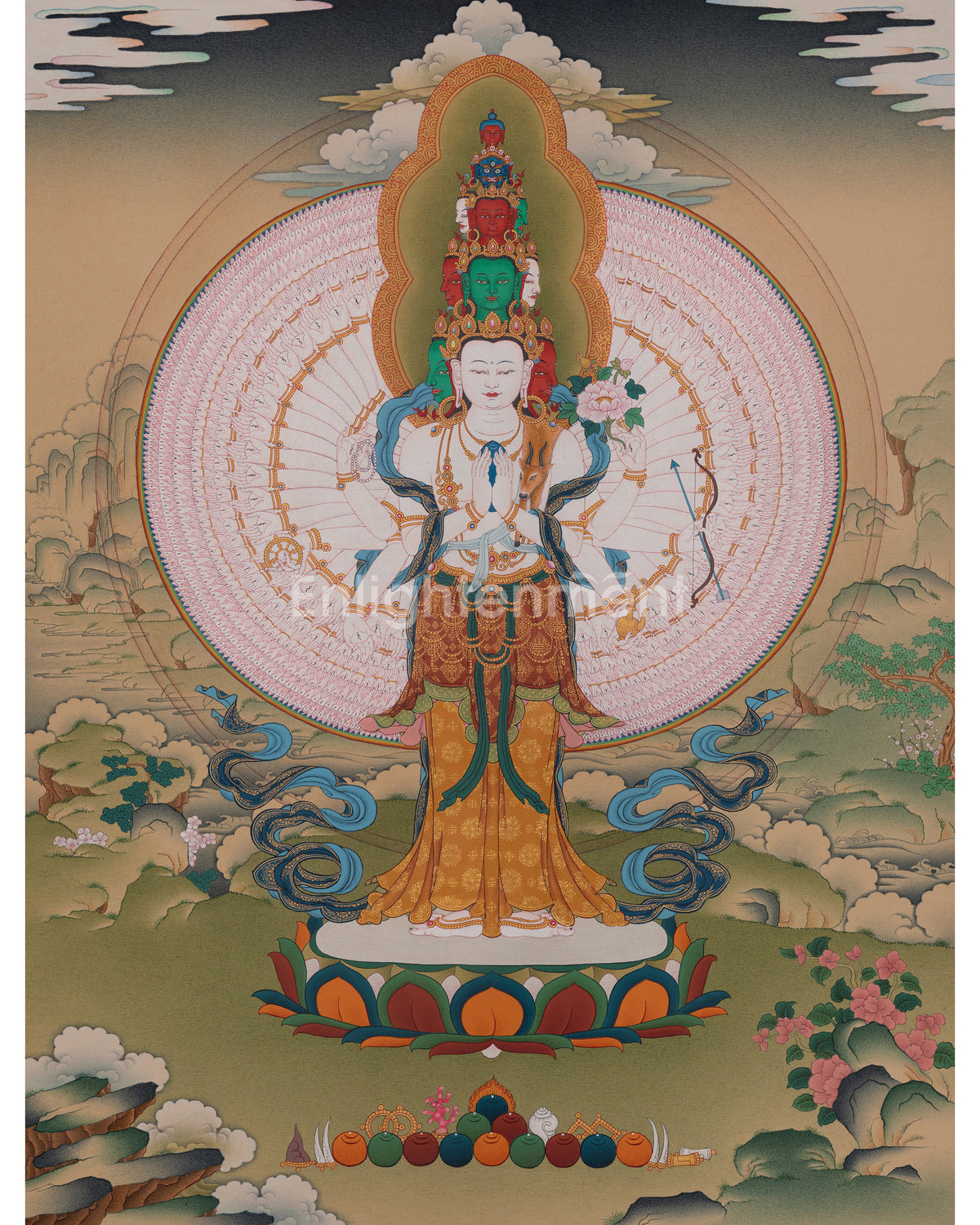
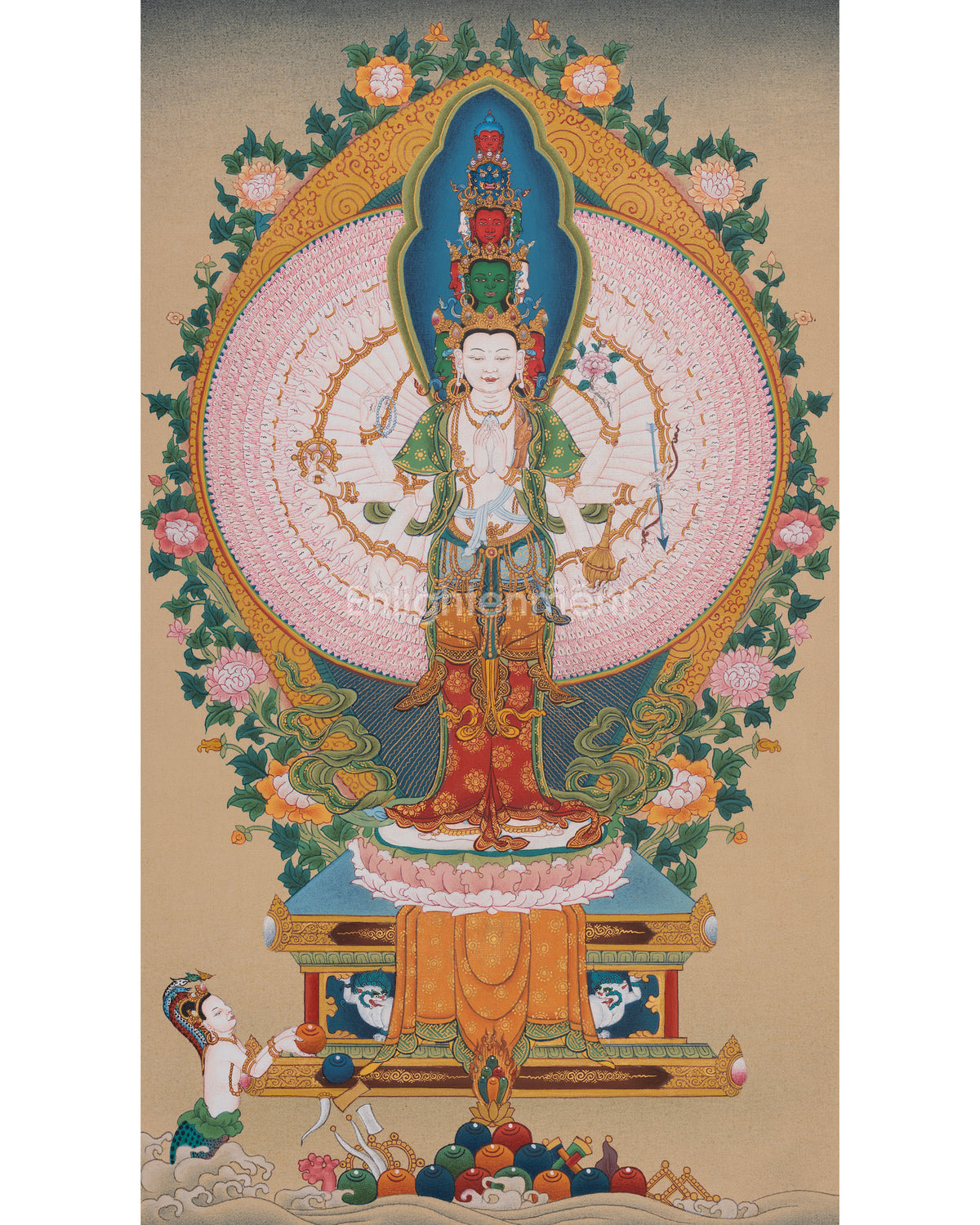
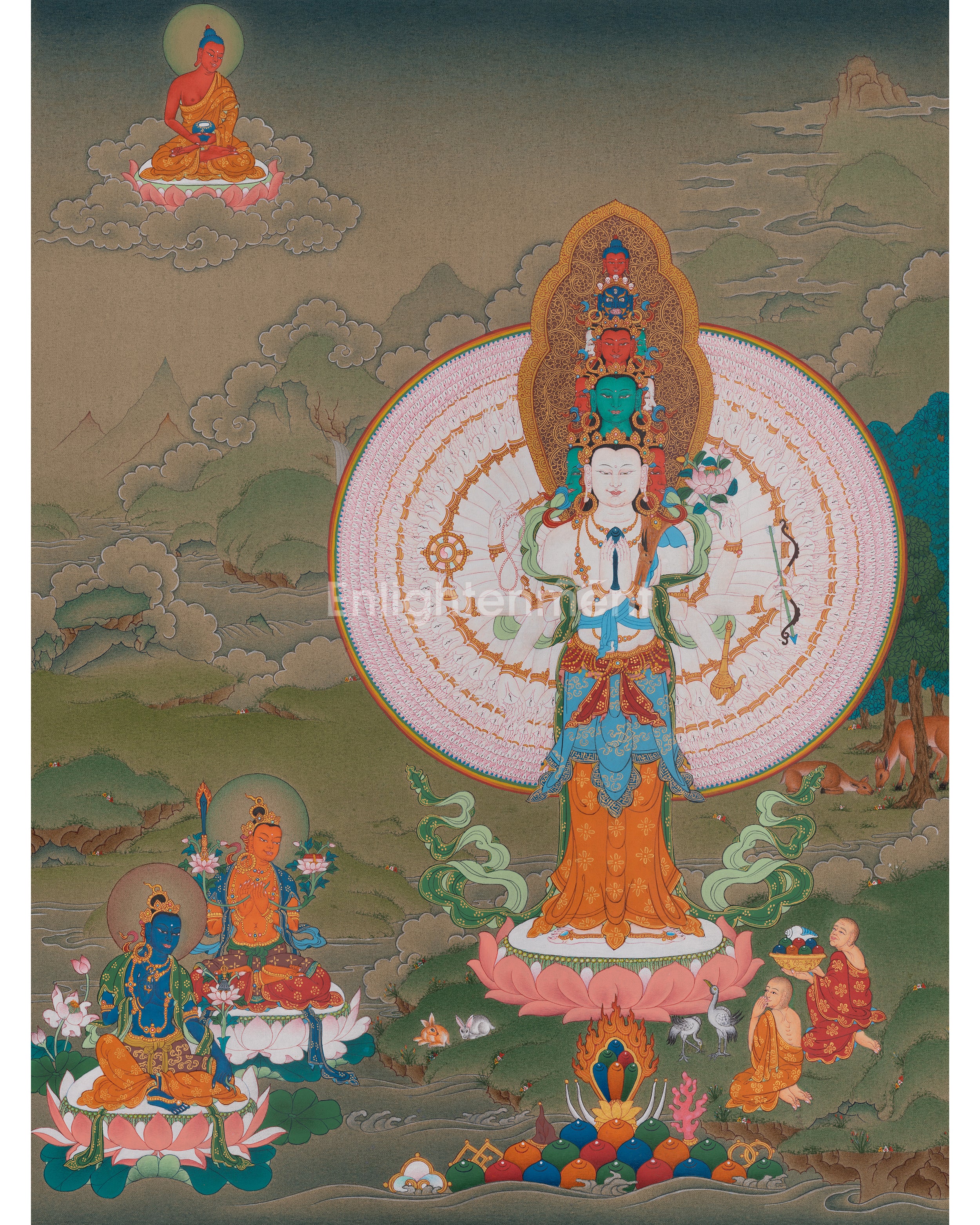
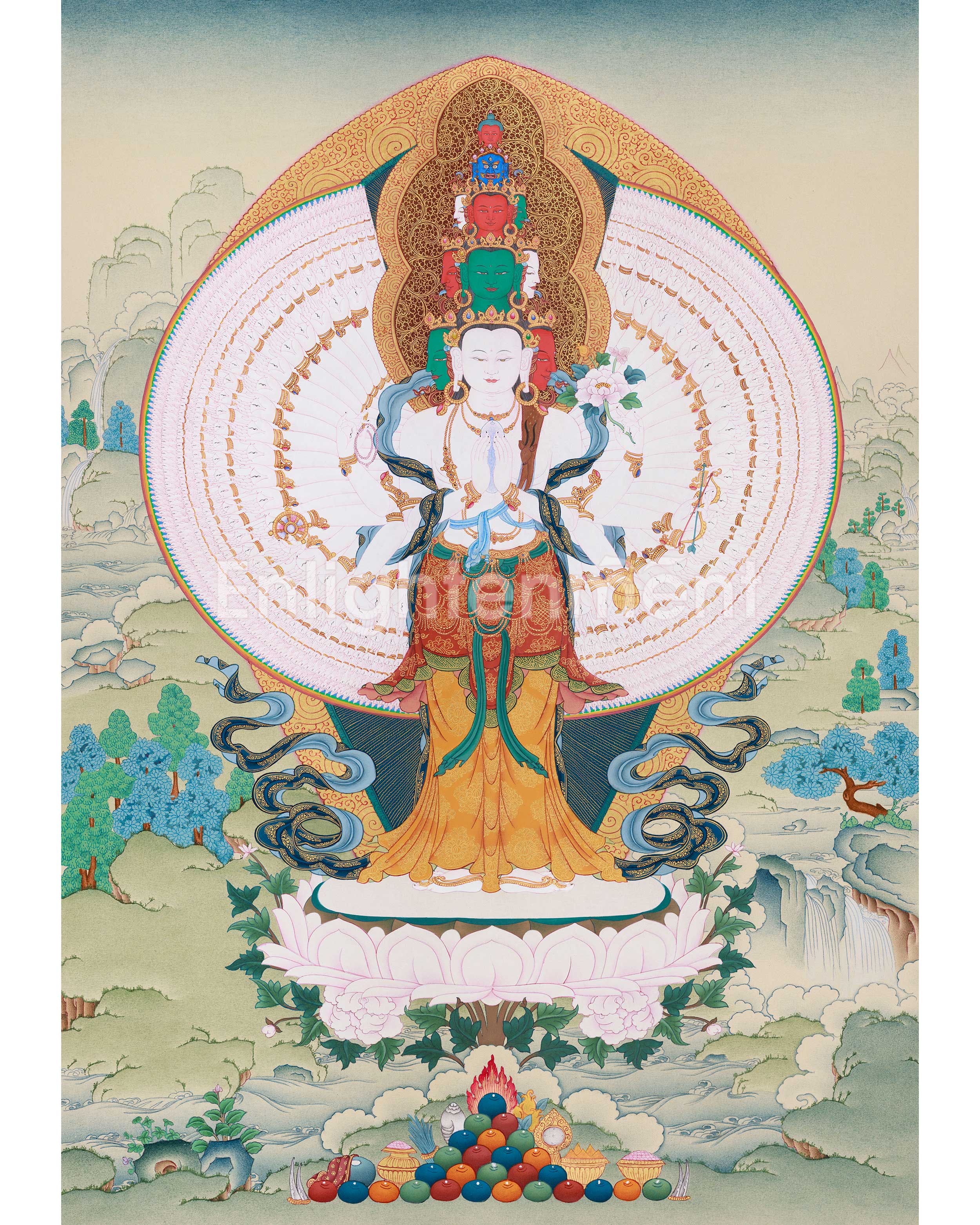
1000-Armed Chenrezig: The Bodhisattva of Infinite Compassion
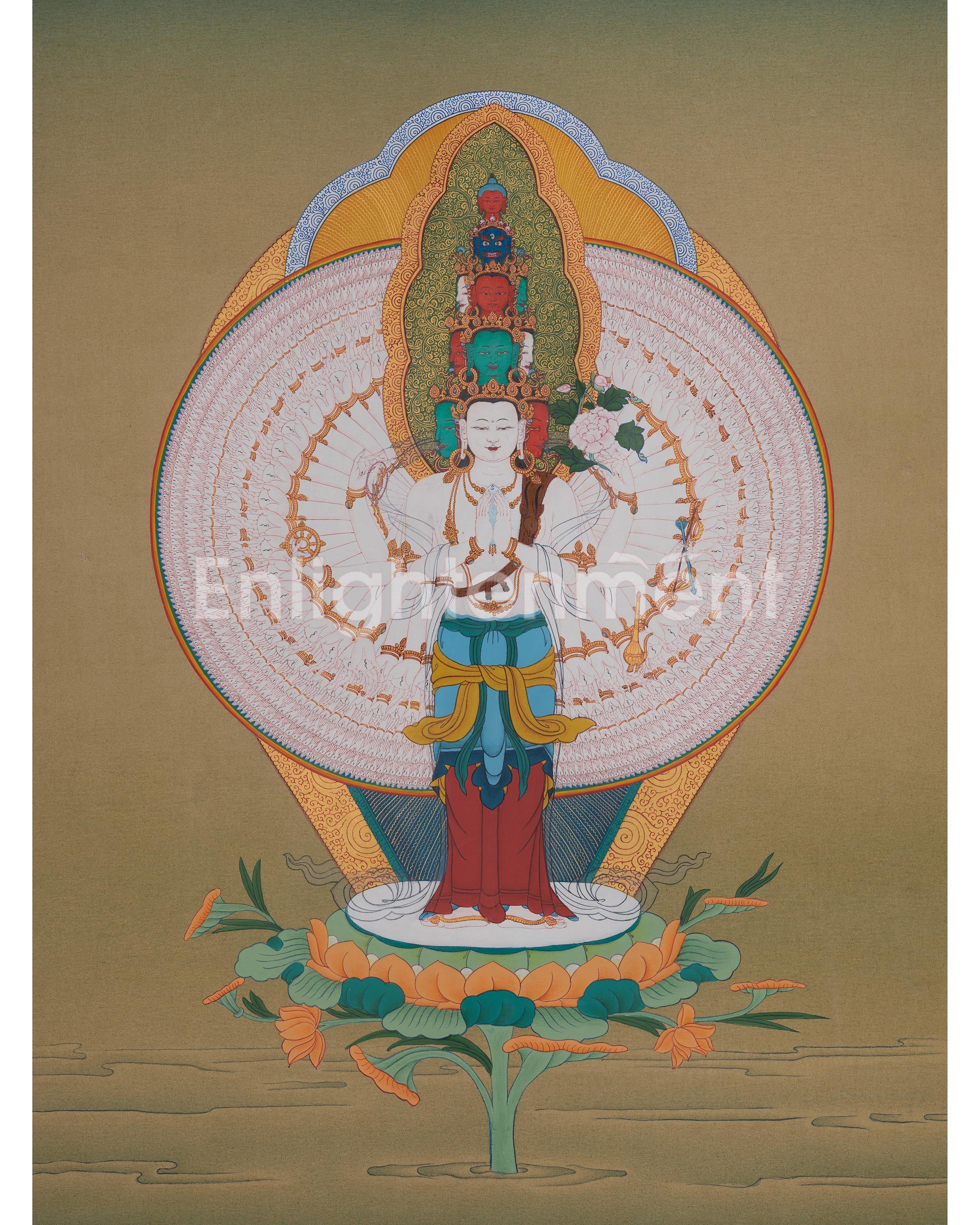
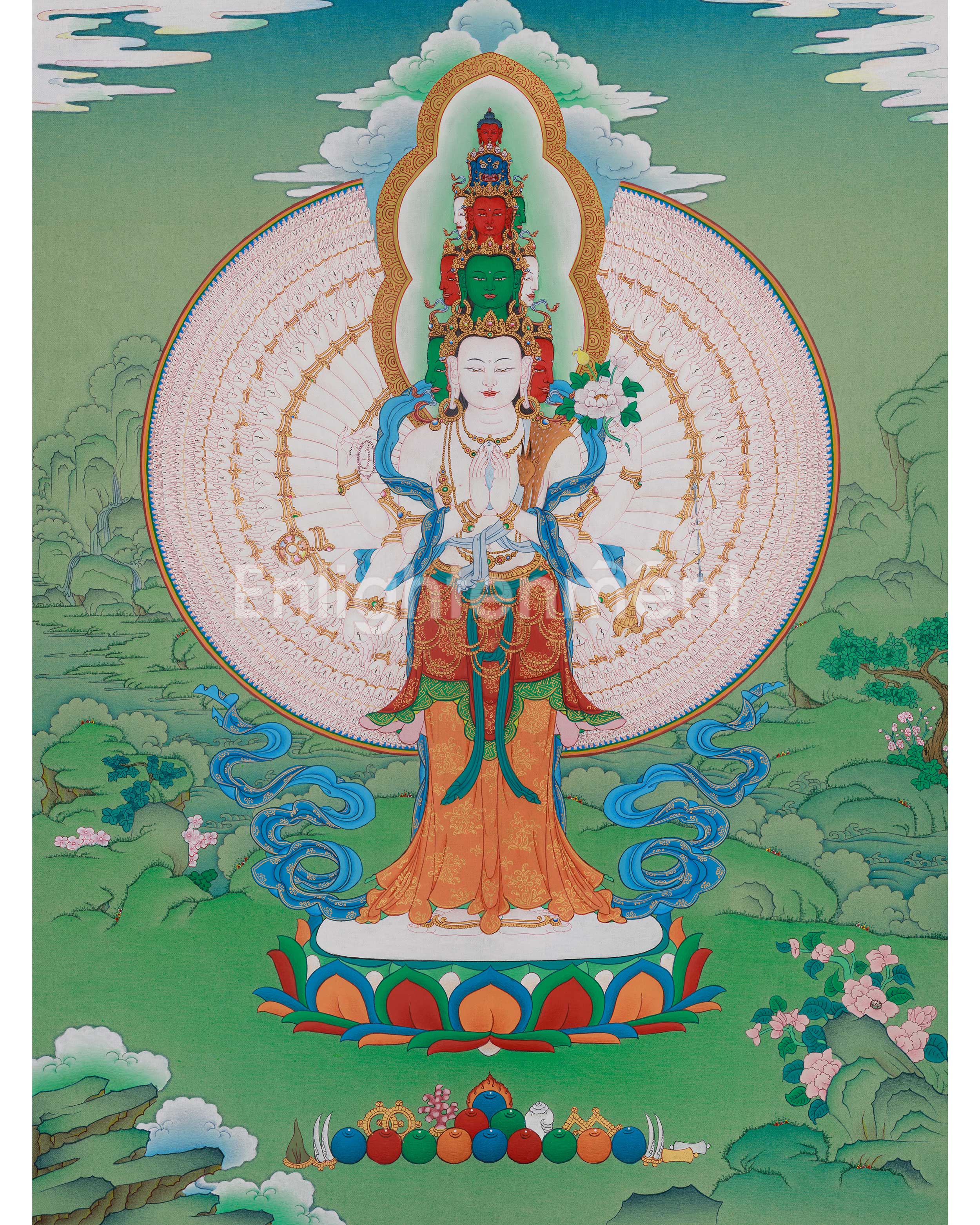
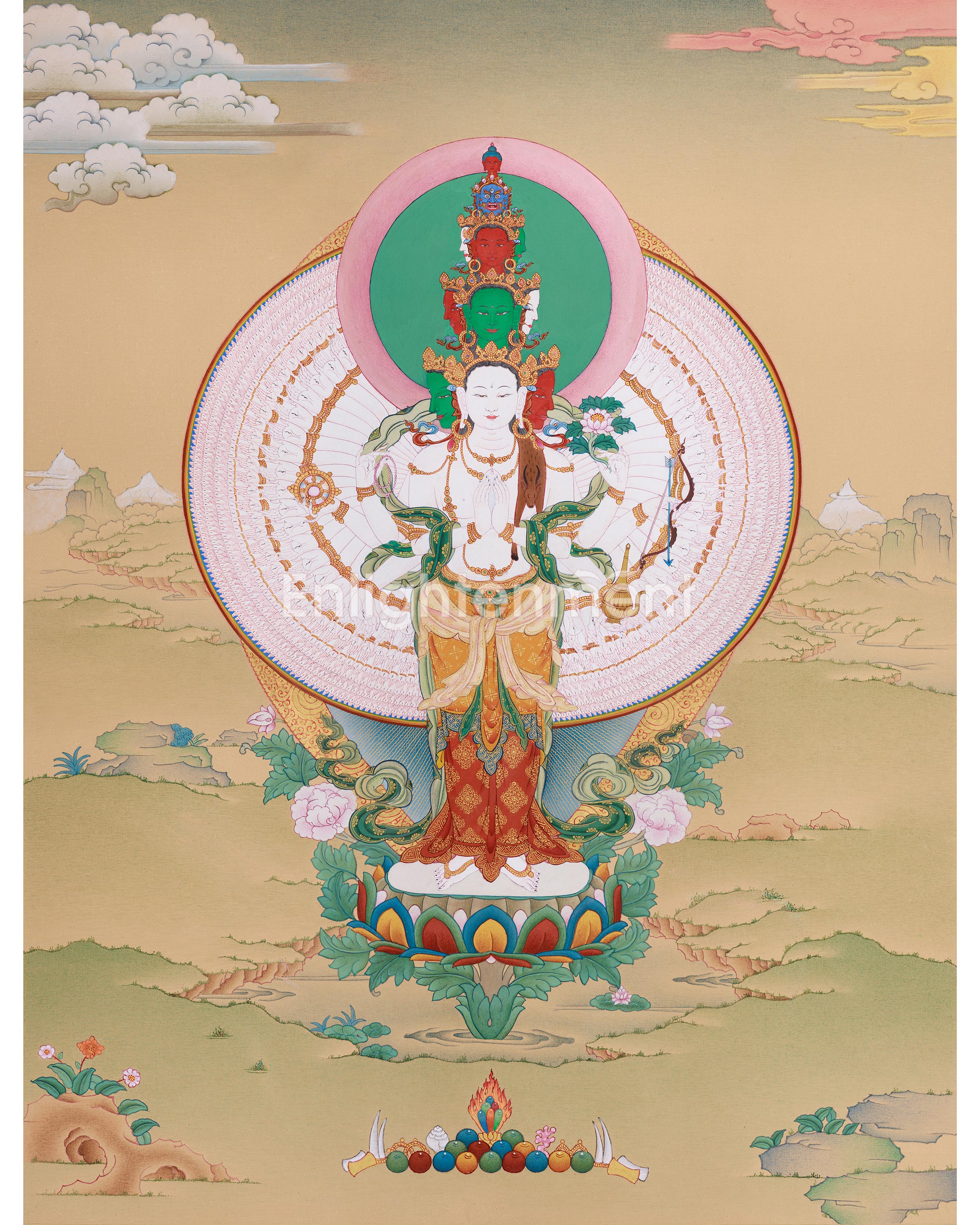
1000-Armed Chenrezig, also known as Avalokiteshvara, is the Bodhisattva of Compassion in Mahayana and Vajrayana Buddhism. He embodies the boundless compassion of all Buddhas and dedicates himself to aiding all sentient beings. Chenrezig’s name means “Lord Who Looks Down with Compassion,” reflecting his vigilance over the suffering of beings and his readiness to respond to their needs. The thousand arms represent his ability to extend help in countless ways, and the eyes on each hand symbolize his wisdom to perceive the suffering of all beings simultaneously.
In Buddhist practice, 1000-Armed Chenrezig is revered as the protector and guide of practitioners seeking to cultivate compassion, patience, and loving-kindness. His Thangka serves as a powerful meditative and devotional tool, inspiring those who view or meditate on it to embody the same altruistic qualities. By connecting with Chenrezig, devotees learn to cultivate the intention to help others and to recognize the interdependence of all life.
Iconography and Symbolism
The 1000-Armed Chenrezig is depicted with multiple heads and arms, each element carrying symbolic meaning that conveys the scope of his compassion and skillful activity:
Eleven Faces: Chenrezig’s eleven faces represent his ability to perceive and respond to suffering in all directions. Each face reflects a different aspect of compassionate awareness, from serenity to fierce determination in overcoming obstacles to help beings.
1000 Arms with Eyes: Each of the thousand arms is equipped with an eye on the palm. This symbolizes his ability to simultaneously see and reach out to all beings who need aid. The hands themselves represent skillful action, while the eyes signify insight into the nature of suffering.
Crystal Rosary: Often held in one of his hands, the crystal rosary (mala) represents continuous practice, the accumulation of merit, and devotion to the Dharma. It encourages practitioners to maintain mindfulness and compassion throughout their lives.
Dharma Wheel: The wheel symbolizes the teaching of the Buddha and the turning of the Dharma. Chenrezig’s association with the Dharma Wheel emphasizes that compassionate action is inseparable from the wisdom of the Buddha’s teachings.
Vase: The vase, usually filled with nectar, represents spiritual abundance, longevity, and the capacity to fulfill the wishes of sentient beings. It is a symbol of his blessings and the inexhaustible nature of his compassion.
Bow and Arrow: The bow and arrow signify the precision and skill of his actions. They remind practitioners that compassion must be accompanied by skillful means to effectively relieve suffering.
Deer Skin and Lotus Seat: The deer skin draped beneath him symbolizes renunciation, purity, and the serene environment suitable for meditation. The lotus seat represents purity and the ability to rise above defilements, indicating that compassionate activity is grounded in enlightened wisdom.
Granting Mudra: One of his hands often forms the gesture of granting, symbolizing his readiness to bestow blessings, protection, and guidance upon all beings.
Moon Disc: The moon disc behind Chenrezig represents serenity, clarity, and the illuminating power of compassion. It emphasizes the calm and wise aspect of his enlightened activity.
1000-Armed Chenrezig and the Practice of Compassion
1000-Armed Chenrezig embodies the ideal of selfless service and universal compassion. Meditating on him helps practitioners develop bodhicitta, the sincere wish to attain enlightenment for the benefit of all beings. His thousand arms represent the limitless ways compassion can reach out to help, while the eyes in his hands show wisdom that sees the suffering of every being. This image reminds practitioners that true compassion is not only a feeling but also an active response guided by wisdom, patience, and skillful means.
A 1000-Armed Chenrezig Thangka serves as a powerful support for visualization, prayer, and meditation practice. Practitioners may imagine receiving blessings from his many hands and peaceful faces, allowing the mind to open toward empathy, kindness, and inner healing. When placed in a shrine or meditation space, the Thangka becomes a daily reminder to embody compassion in thought, speech, and action. Through contemplating Chenrezig, devotees are encouraged to see that compassion has no limit and that helping others is an essential part of the path to liberation.