Hevajra Thangka Collection
3 products
Showing 1 - 3 of 3 products
Hevajra: The Supreme Union of Wisdom and Compassion
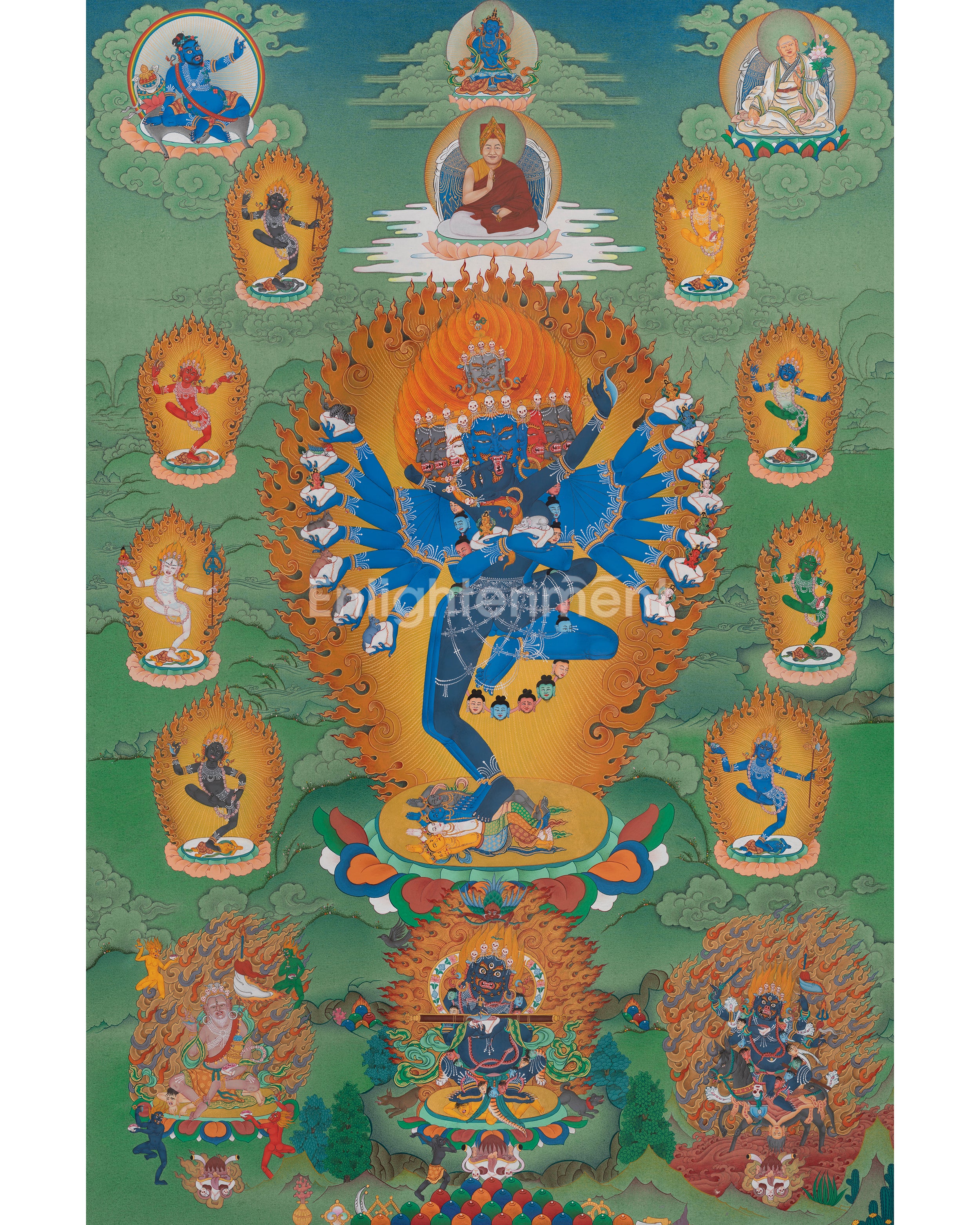
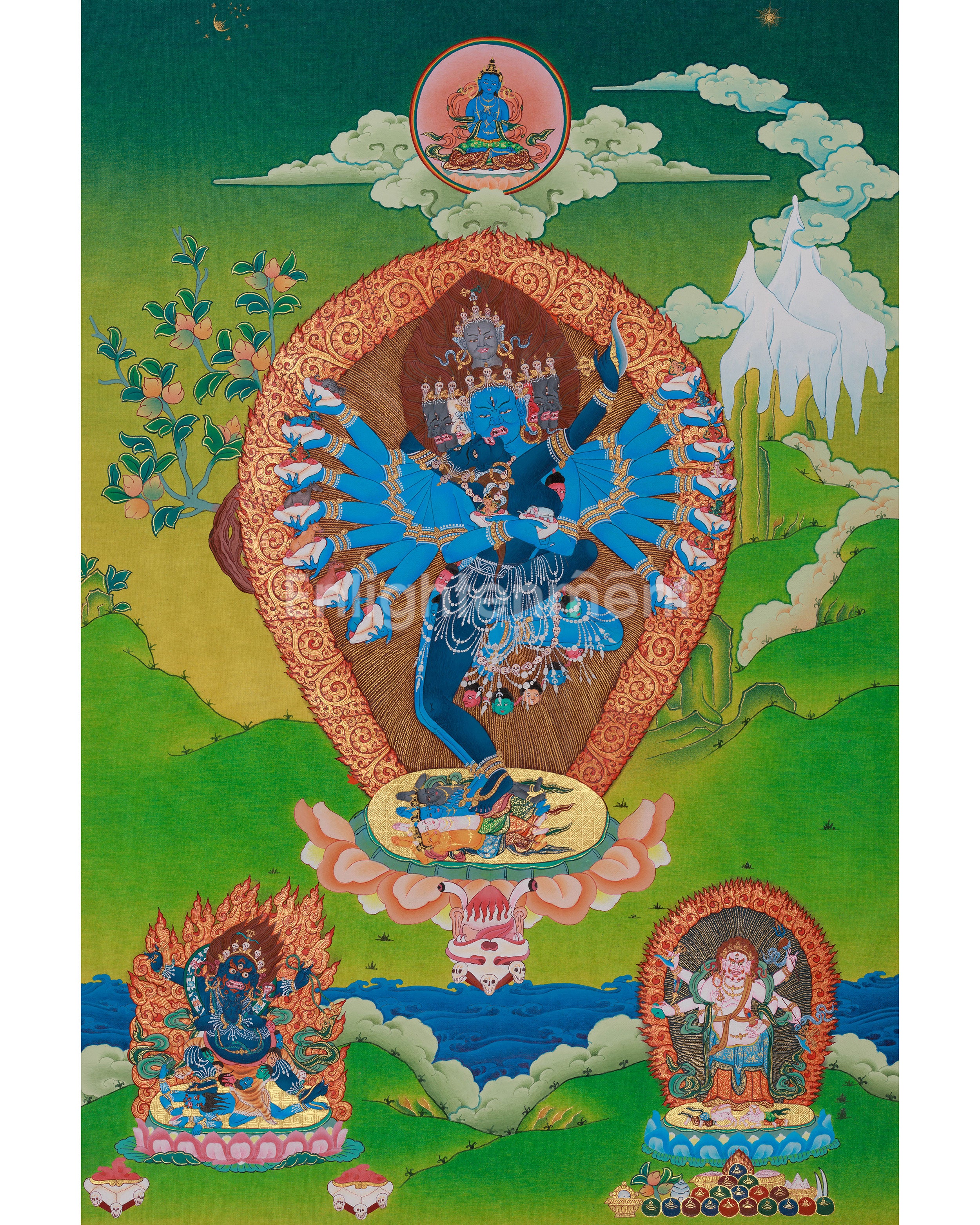
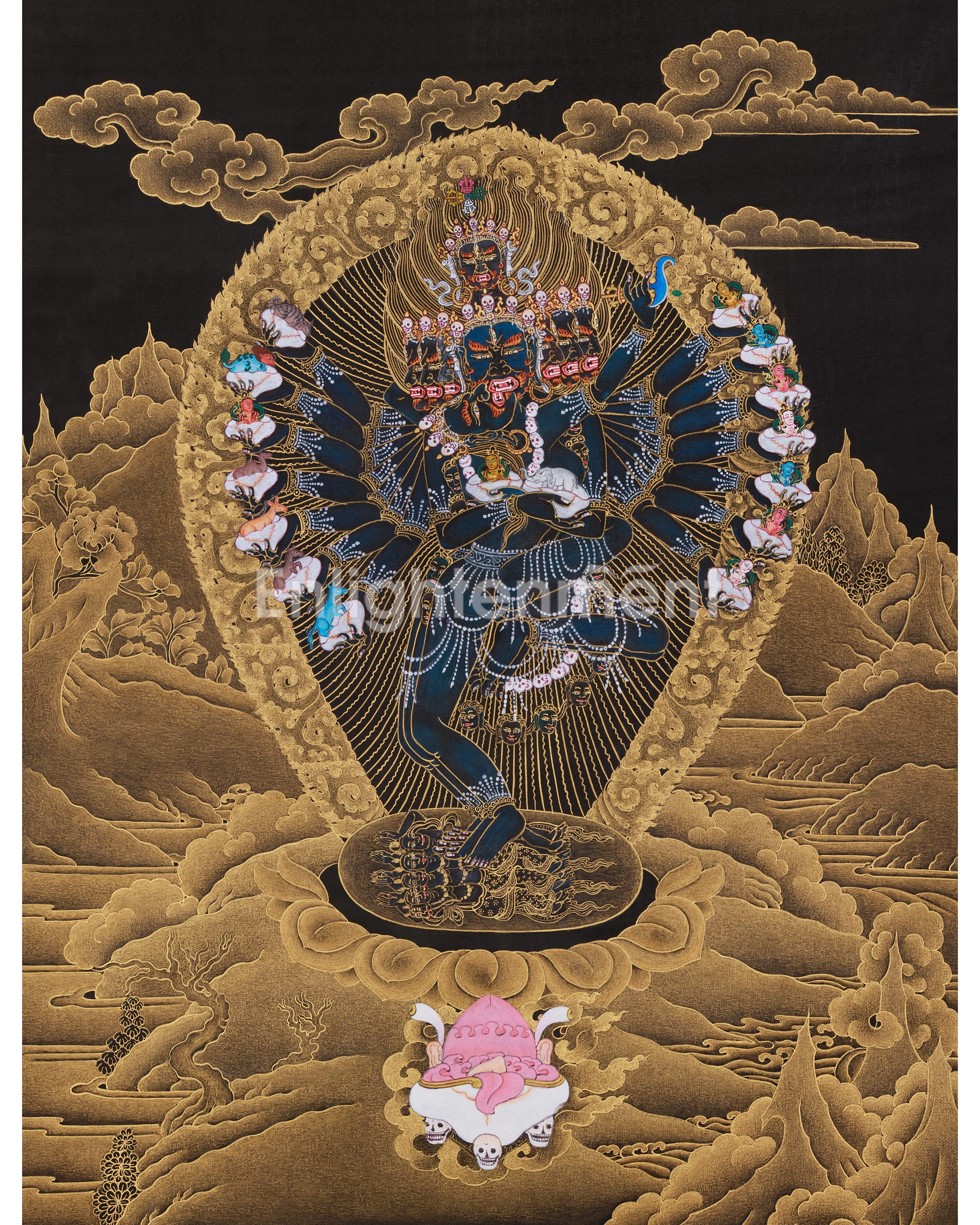
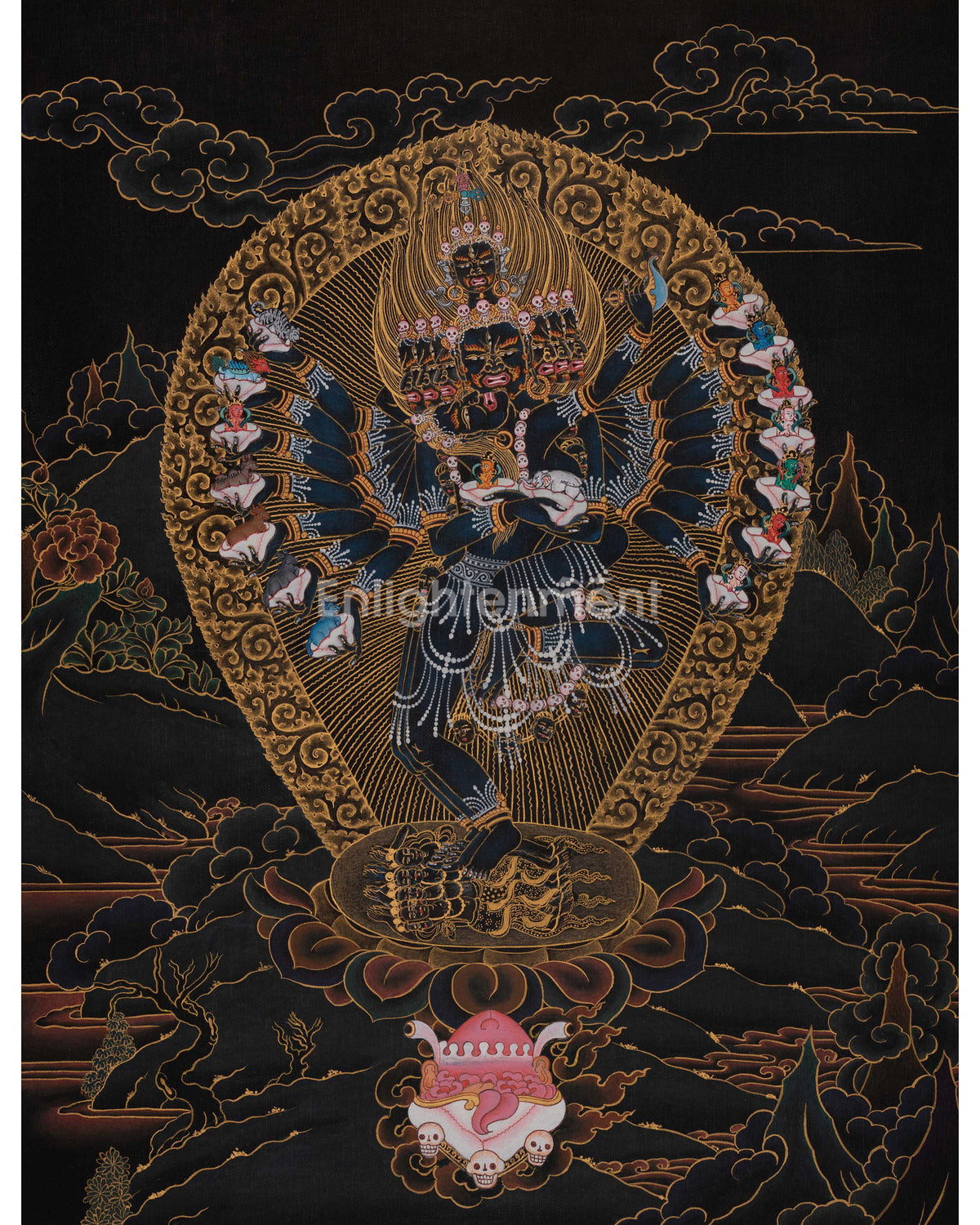
Hevajra, a central deity in Vajrayana Buddhism, embodies the union of bliss and emptiness, skillful means and wisdom. He represents the ultimate realization where all dualities dissolve into enlightened awareness. The Thangka depicts Hevajra in his wrathful yet compassionate form, surrounded by a halo of flames, consort Nairatmya, and a retinue of deities. His multiple heads, arms, and symbolic attributes express the boundless power and precision of awakened activity. The rich background enhances the radiance of his presence, emphasizing both his majesty and transformative energy.
The image is not just a visual representation but a powerful meditational tool. Practitioners contemplate Hevajra to cultivate insight into the inseparability of wisdom and method, the transformation of ordinary desires into enlightened energy, and mastery over mental obscurations. Every detail - from his crown of skulls to the dynamic dancing posture - reinforces teachings on impermanence, compassion, and the potent skillful means of Vajrayana practice.
Iconography and Symbolism
Eight Heads: Represent mastery over the eight classes of worldly beings and the ability to perceive all phenomena simultaneously.
Five Skull Crown: Symbolizes the transformation of the five poisons (ignorance, attachment, anger, pride, and envy) into wisdom.
Eight Left and Right Arms / Skull Cups with Animals & Worldly Gods: Each arm holds a skull cup containing various animals or deities, illustrating Hevajra’s power to transform negative energies and subdue obstacles.
Consort Nairatmya: Represents wisdom in union with bliss, highlighting the inseparability of method and insight.
Dancing Posture: His dynamic stance embodies fearless engagement with samsara, expressing mastery over mind and form.
Halo Flame: The surrounding flames symbolize the burning away of ignorance and purification of the mind.
Garland of Skulls: A reminder of impermanence and the transformation of egoistic tendencies into enlightened awareness.
Lotus Seat: The lotus seat signifies purity arising from samsara.
Brahma, Vishnu, Shiva, Indra: Depicted beneath him, indicating mastery over worldly powers and realms.
The Path of Hevajra
Hevajra exemplifies the perfect union of wisdom and compassionate action. His practice encourages transforming ordinary passions into enlightened energy, harmonizing body, speech, and mind. By meditating on Hevajra, practitioners learn to engage the world fearlessly, skillfully, and with compassion, while deepening their understanding of emptiness.
The Thangka serves both as a sacred object and a guide for transformation. Contemplating Hevajra inspires practitioners to recognize the inseparability of bliss and emptiness, method and wisdom, leading to liberation and the realization of the ultimate nature of mind. His presence instills courage, clarity, and the unwavering capacity to act in the world for the benefit of all beings.