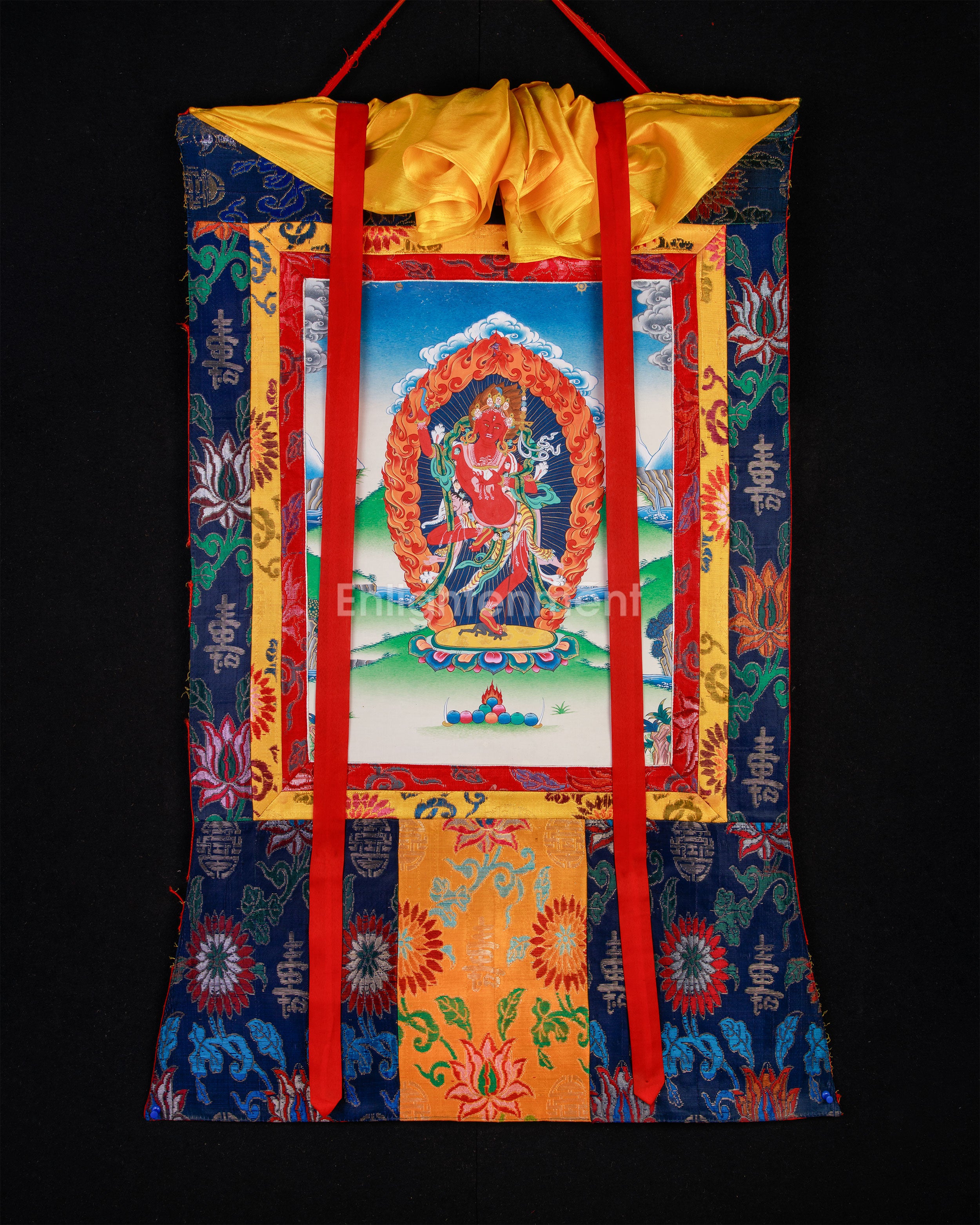
Vajravarahi Thangka Painting Collection
2 products
Showing 1 - 2 of 2 products
Vajravarahi: The Diamond Sow Goddess of Wisdom
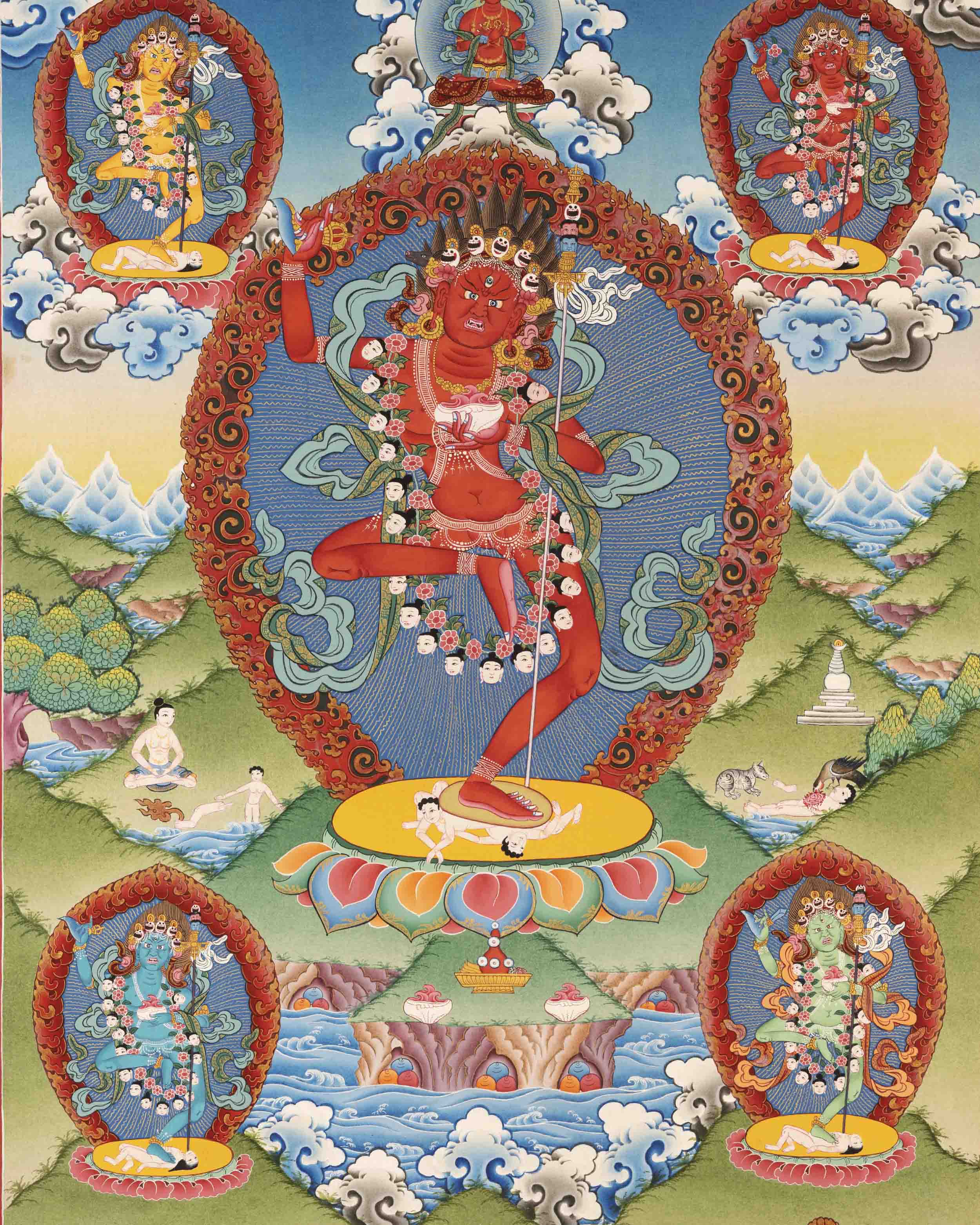
Vajravarahi, or "Vajra Sow," is one of the highest of the female deities in the Vajrayana Buddhist tradition. Her name comes from the small sow's head that sprouts from the side of her own head. A special characteristic that distinguishes her from the strong and beautiful deities of the Vajrayana pantheon. A mere glance, and you'll see that this is very similar to Vajrayogini, who represents the union of great bliss and emptiness. Vajravarahi is a central figure in several of the most important tantric cycles of Tibetan Buddhism, and is practiced widely in both the Kagyu and Sakya lineages.
Like all wrathful dakinis, Vajravarahi is not a gentle, serene deity, but one of dynamic, transformative energy. She dances on a corpse or lotus, and the sun disc symbolises the end of the struggle with the sense of the self, the sense of ego clinging. Her fierce beauty and commanding energy represent the courage and power needed to overcome the obstacles of the spiritual world and unlock deep wisdom. Vajravarahi is a Thangka that is highly revered and cherished by the practitioner community as a powerful visual aid for more advanced meditation practice. It is a Thangka that depicts the direct experience of clarity, bliss, and liberation from delusion.
Symbolism of Vajravarahi
-
The small sow's head protruding from one side of her head is a characteristic of one of the Vajravarahi's faces.
-
It is usually shown in deep red or crimson, which is the colour of energy fully awake, no longer confined by craving and aversion.
-
She is holding a curved knife called kartika in her right hand, symbolizing wisdom that is not rigid, but flexible and intuitive.
-
The skull cup, filled with nectar in her left hand, symbolizes impermanence and the end of the ‘ego'.
-
Her bare body symbolizes her freedom from any defilement or blockage.
-
She carries a garland of fifty newly cut human heads – fifty negative emotions overcome or the fifty letters of the Sanskrit alphabet.
-
The five skulls represent the five negative afflictions: greed, hatred, delusion, envy and pride.
-
It is frequently shown in a dynamic dancing posture with one foot raised and the other foot on a figure underneath it.
-
Her angry face and lighting radiance are a dynamic, non-negotiating compassion, to be able to shatter old ego habits that are very hard to come by if approached gently.
Selecting the appropriate space where the Thangka is to be placed - Vajravarahi Thangka
-
Install it in a special altar or meditation room for this sacred object, so that it can be used to facilitate profound tantric practice and inner realization.
-
It is best placed in a private and quiet room, where this deity is mysterious and advanced.
-
Add warm, soft lighting to make its intense imagery more inviting and produce a contemplative and focused setting for practising.
-
Avoid a room that is used for other purposes, such as kitchens or entryways, which may be used by people frequently, and might have events taking place there.
-
If you're going to put it in a common area, try to place it in a corner that isn't cluttered and is eye-level and respected.
A Vajravarahi Thangka is said to be the most appropriate for those who have taken initiation or met the guidance of a qualified teacher due to its deep tantric symbolism. However, it is a remarkable painting even for those who are only captivated by her vivid presence, for it is a compelling reminder that each of us has the capacity to transcend ignorance and attachment to radiant wisdom and freedom.