Amitayus Buddha Thangka Collection
10 products
Showing 1 - 10 of 10 products
Amitayus Buddha: The Buddha of Infinite Life
Some deities in the Tibetan Buddhist pantheon inspire awe. Others inspire something quieter, a wish. Amitayus Buddha belongs firmly to the second category. Known across Himalayan tradition as the wellspring of vitality itself. He's the figure practitioners turn to when what they're really asking for is more time: more time to heal, to practice, to love the people in front of them. Our Amitayus Buddha thangka collection was created to hold that wish in a form you can sit with every day.
Amitayus, known in Tibetan as Tsepame, is the longevity aspect of Buddha Amitabha, and understanding the two together clarifies each one. Where Amitabha is typically shown as a simple, monk-like figure holding a begging bowl, representing the Nirmanakaya, or "manifest body," of awakening, Amitayus appears as his celestial counterpart: crowned, richly adorned, and radiant, representing the Sambhogakaya, or "enjoyment body," of the same enlightened being. One expresses infinite light; the other, infinite life. Together they capture a very human tension: the wish to see clearly, and the wish for enough time to act on what we see.
Practitioners turn to Amitayus specifically through recitation and meditation practices believed to extend life, strengthen vitality, and purify accumulated negative karma, making him one of the most widely practiced longevity deities in Vajrayana Buddhism.
Iconography and Symbolism
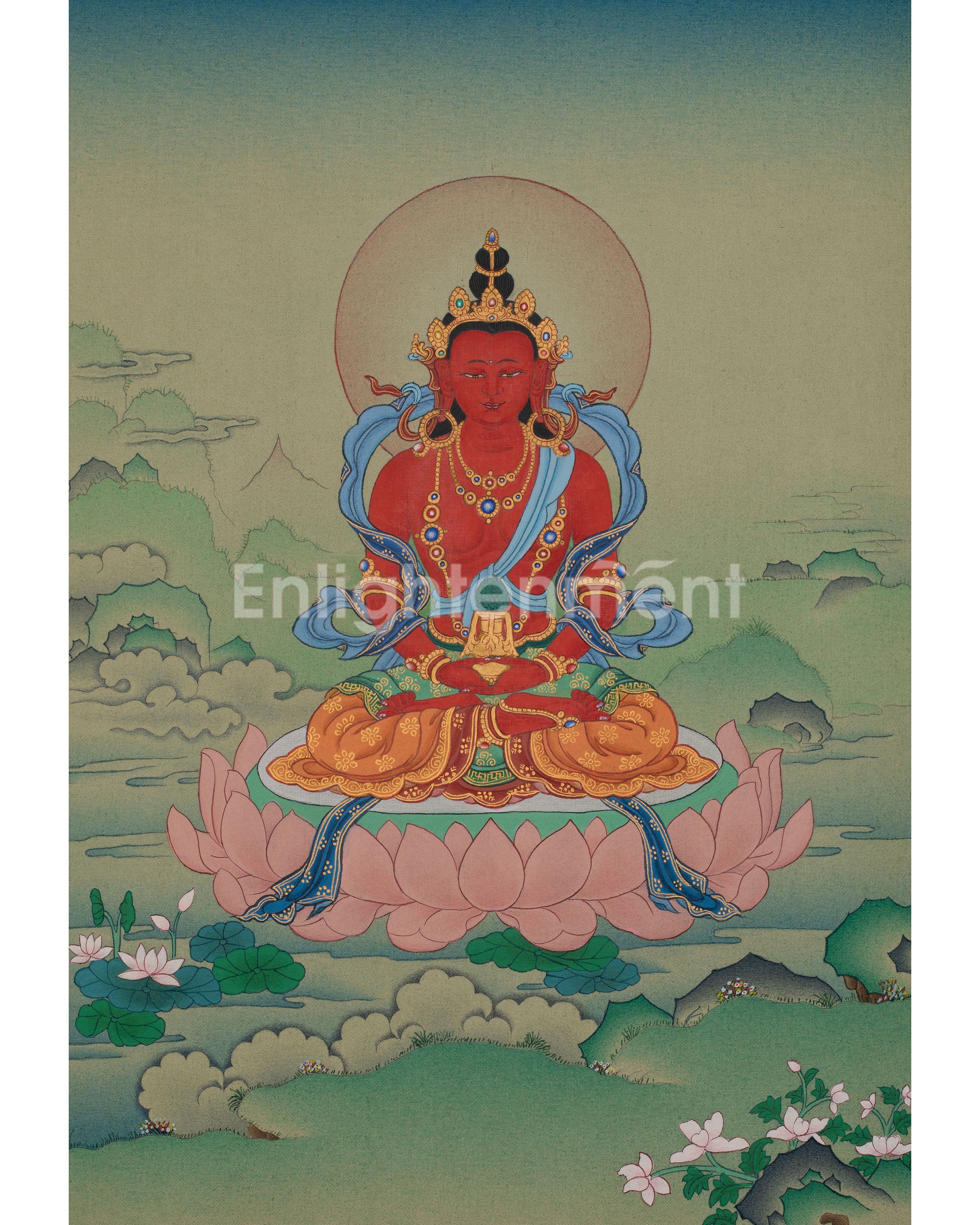
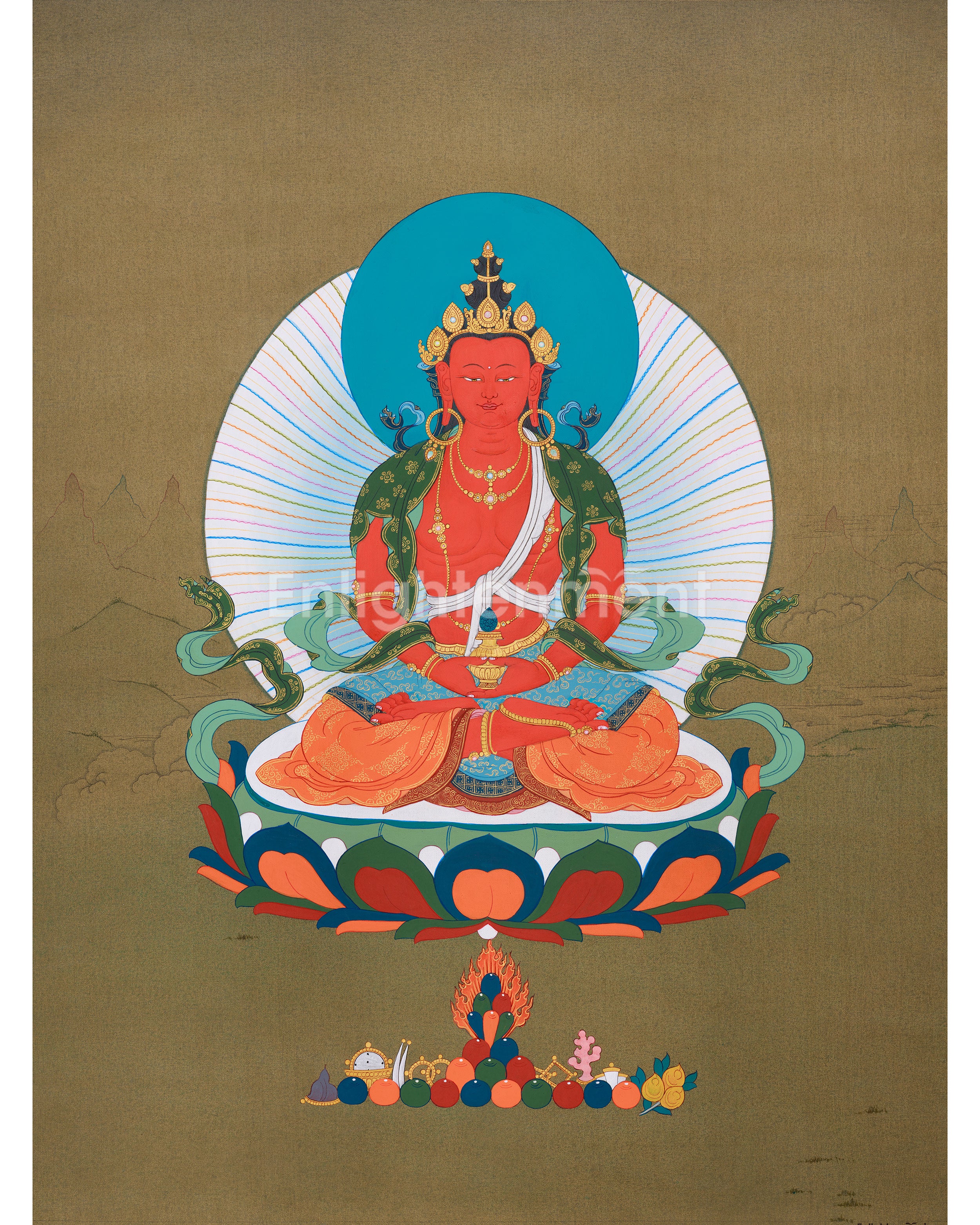
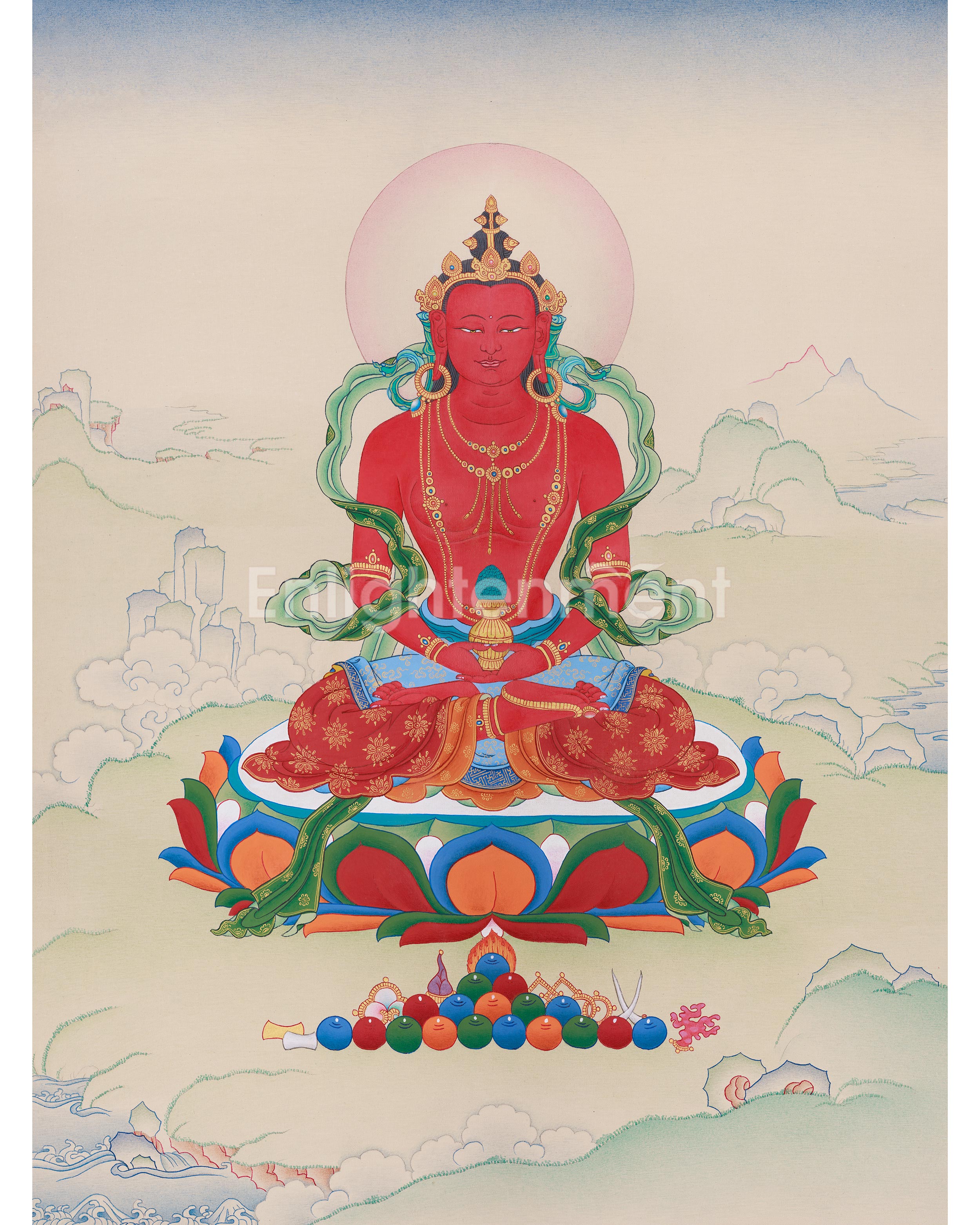
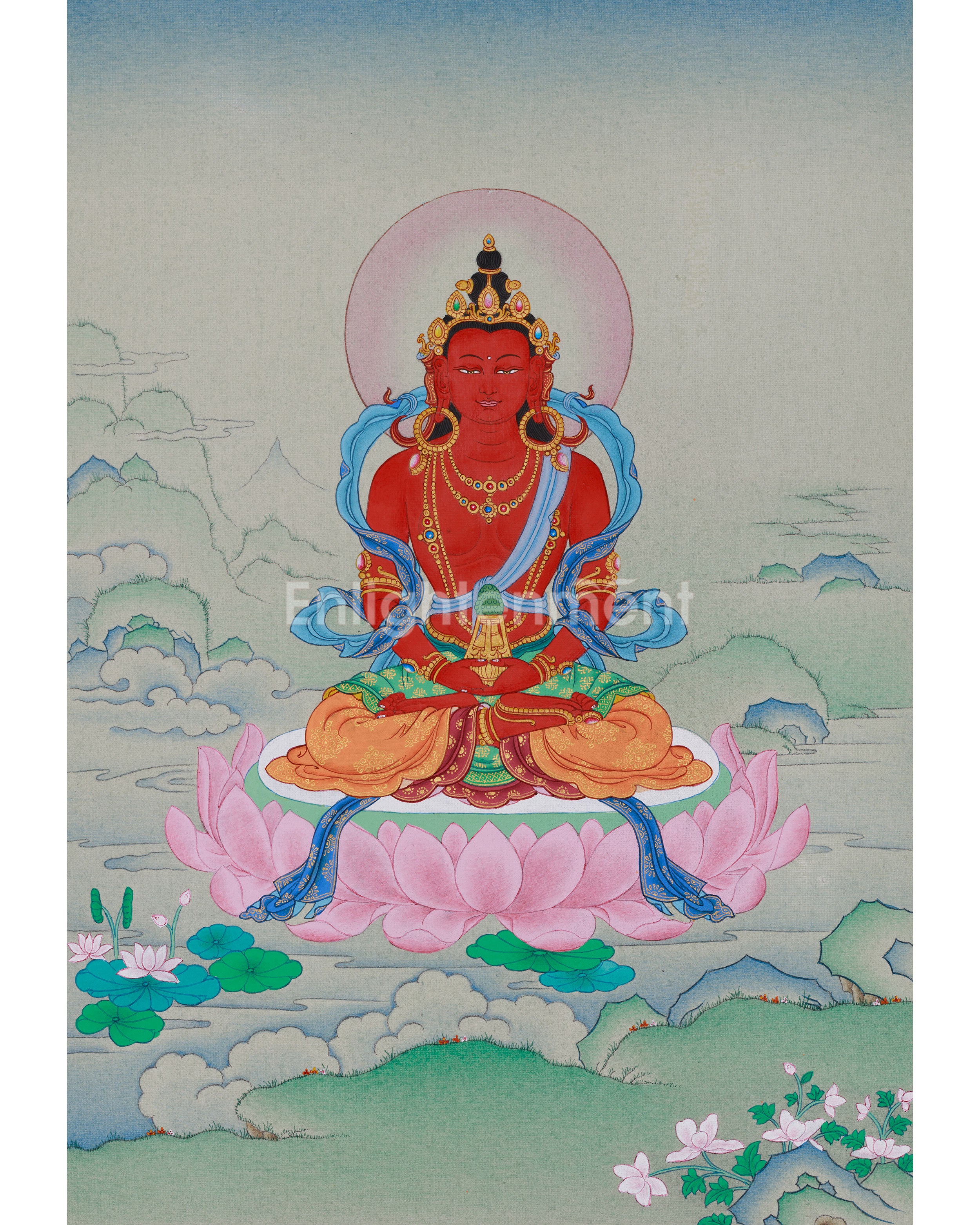
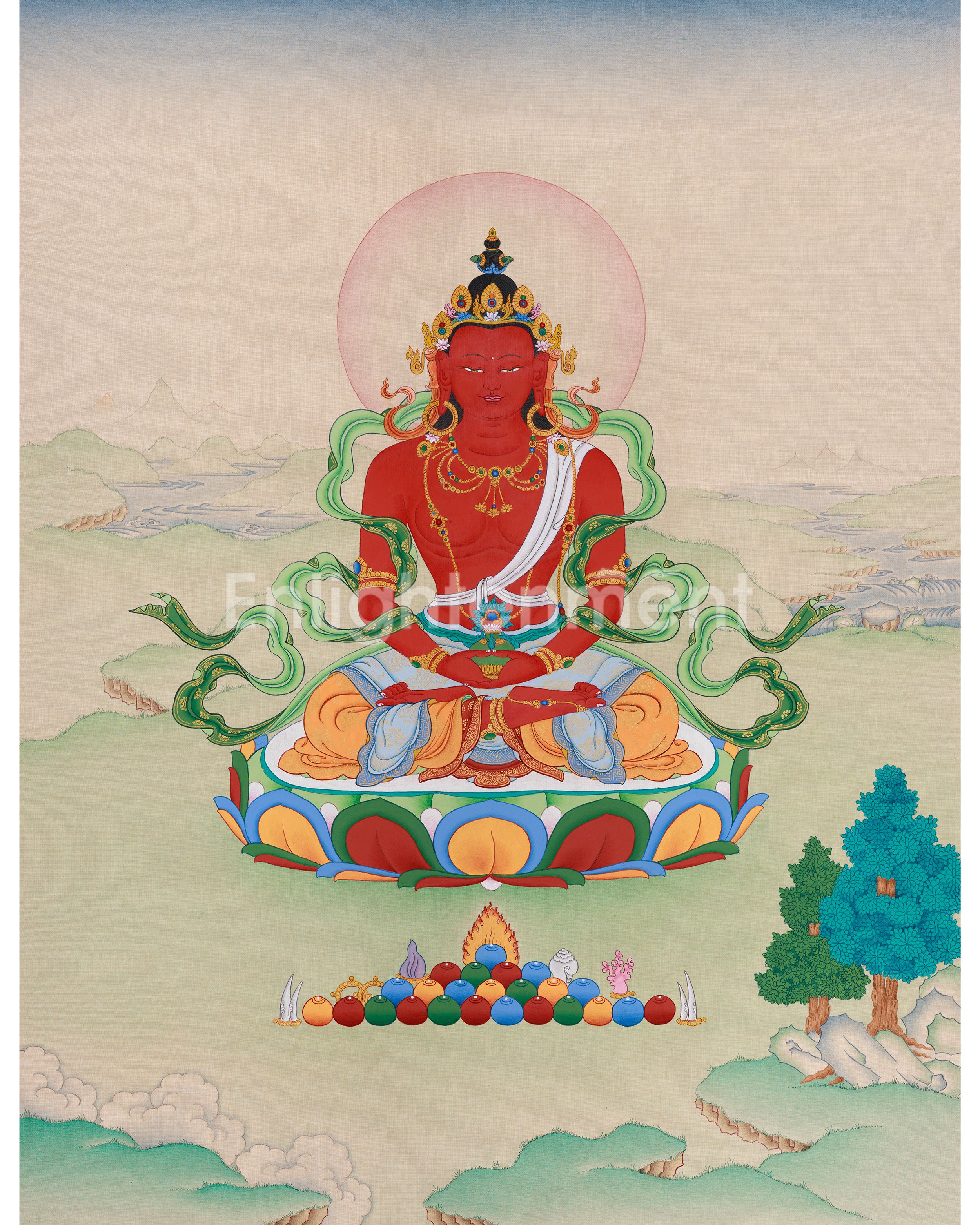
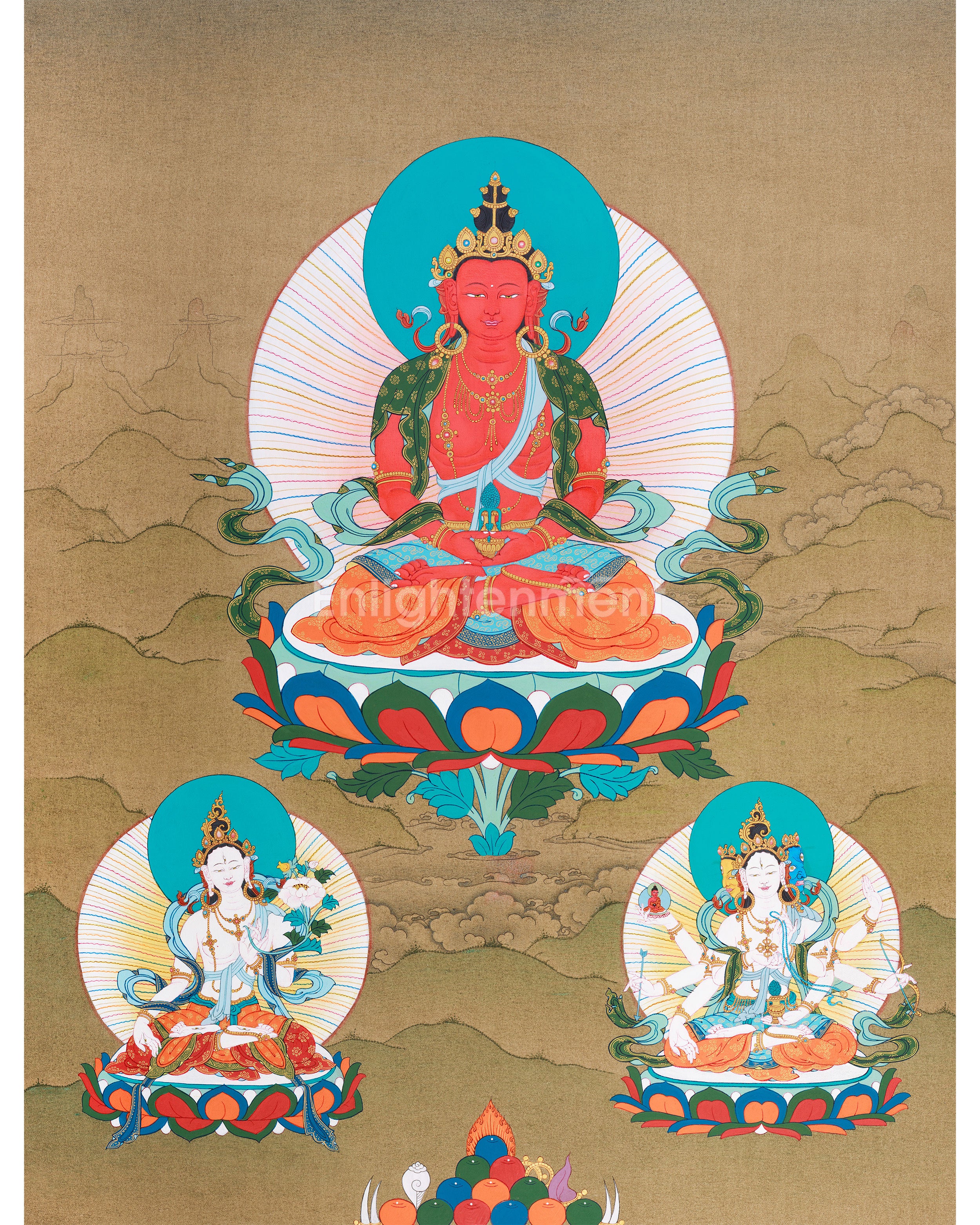
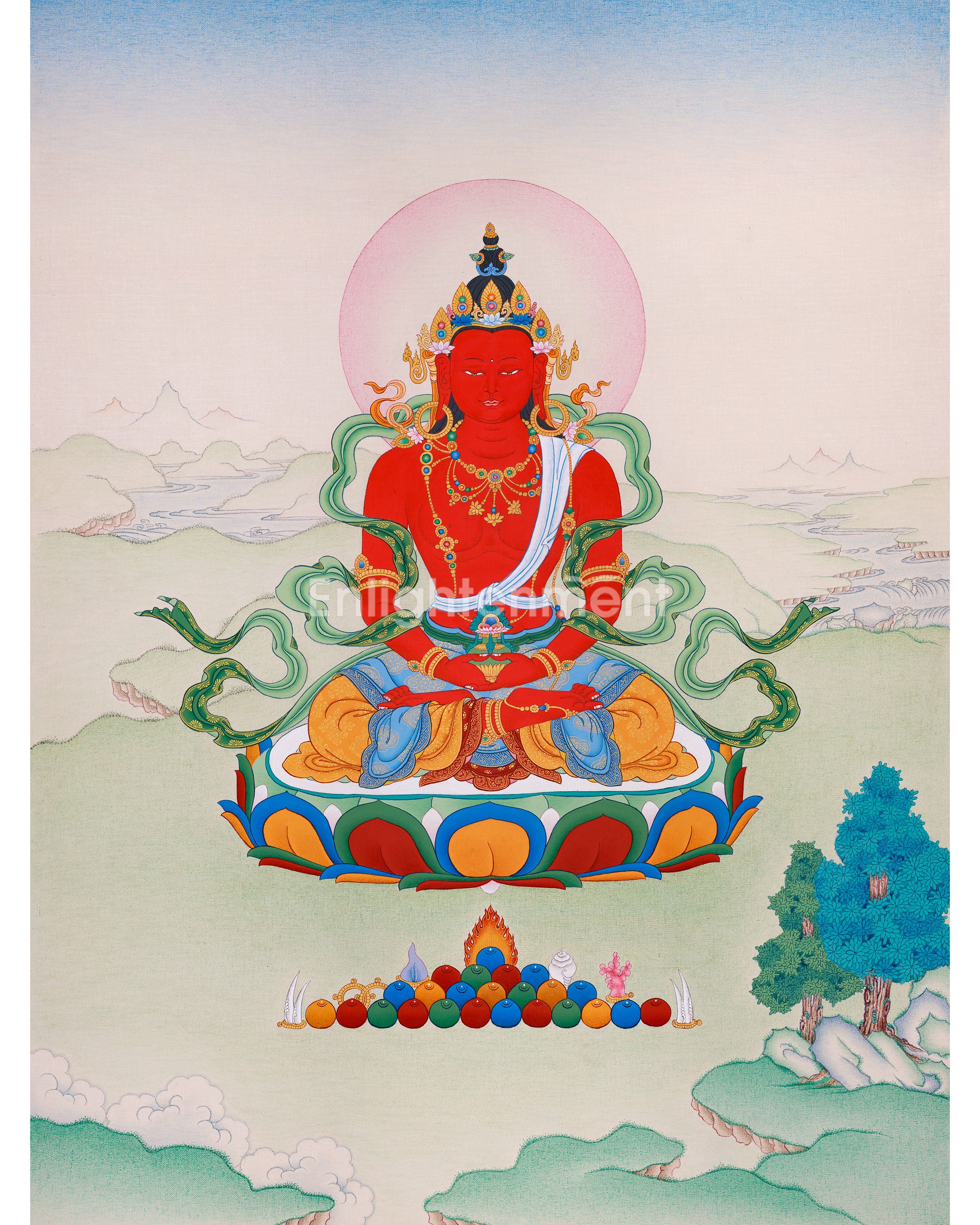
Because Amitayus represents the Sambhogakaya, his form is intentionally more ornate than Amitabha's; every jewel and gesture in the painting is doing spiritual work, not just decorative work:
-
Ruby-red complexion, like other forms connected to the Amitabha family, his red hue signifies compassionate warmth and the transformative, magnetizing quality of enlightened love.
-
Seated in dhyana mudra, both palms resting upward in his lap, the classic gesture of deep meditative absorption and inner equilibrium.
-
The long-life vase (kalasha), cradled in his hands and filled with amrita, the nectar of immortality, the collection's defining symbol, representing boundless vitality and the uninterrupted continuation of spiritual life.
-
Ashoka leaves adorning the vase, a detail that reinforces themes of healing, vitality, and compassionate blessing.
-
A five-jeweled crown, silk garments, and eight ornaments are the traditional adornments of a sambhogakaya deity, marking this as an enlightened, celestial form rather than an earthly teacher.
-
A lotus and moon-disc throne, sometimes tiered and lion-supported, the lotus signifies purity rising untouched from difficulty, while the moon disc represents clarity of mind.
Every element points toward the same idea: life sustained not for its own sake, but as the space in which awakening becomes possible.
A Focal Point for Healing and Reflection
It's easy to see why Amitayus thangkas have found their way from monastery shrine rooms into modern homes, meditation corners, and personal collections alike. For practitioners, the image serves as a genuine support for longevity-focused practice, a visual anchor for mantra recitation and meditation intended to strengthen both body and spirit, and a common presence in healing pujas and long-life rituals performed on behalf of loved ones. For collectors of Himalayan art, each piece preserves an unbroken lineage of iconographic precision, hand-rendered by artists trained in techniques passed down for generations.
Whether it's placed above an altar, in a quiet reading corner, or simply somewhere your eyes rest each morning. An Amitayus Buddha thangka carries the same gentle offering it always has: not a promise against time, but an invitation to meet it with more vitality, more clarity, and more grace.