Chitipati Thangka Collection
2 products
Showing 1 - 2 of 2 products
Chitipati: The Dancing Lords of the Charnel Ground
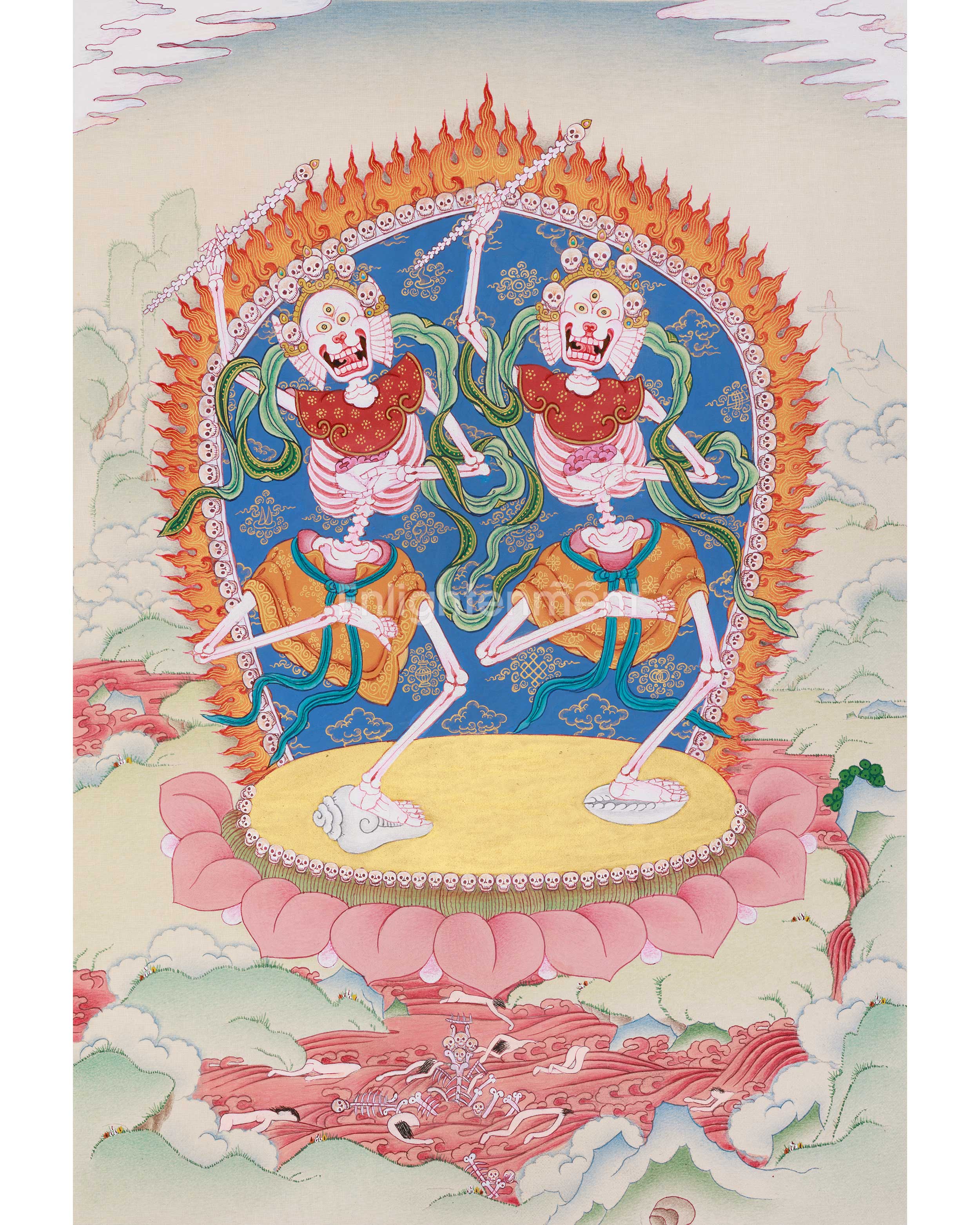
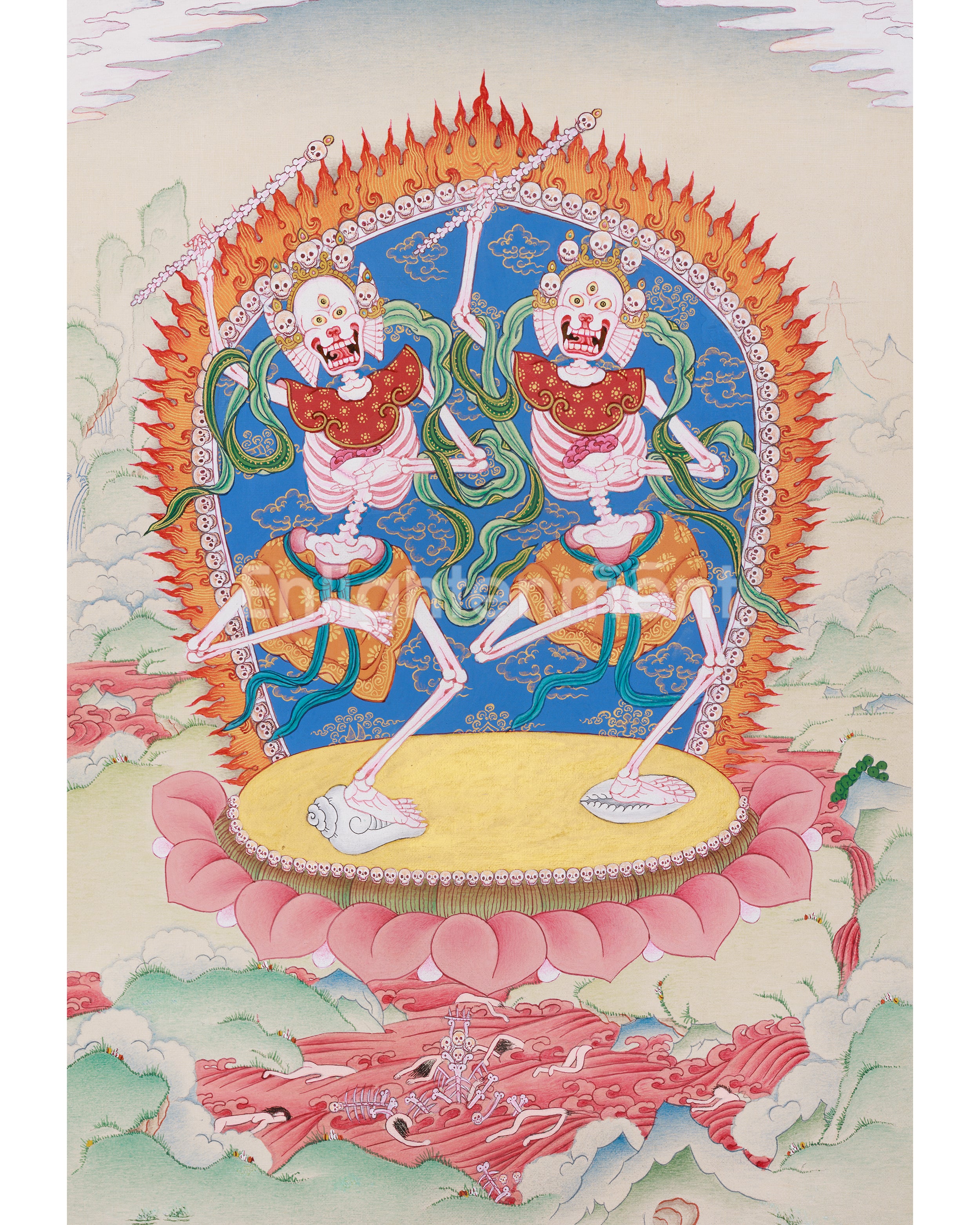
Chitipati are a unique pair of wrathful skeletal deities in Tibetan Buddhism, most commonly recognized as the Dancing Lords of the Charnel Ground. They symbolize the complete transcendence of death, ego, and worldly attachment, revealing the profound Buddhist teaching of impermanence. Although their appearance is fearsome, Chitipati are not beings of destruction but enlightened manifestations that transform fear of death into liberating wisdom. They are especially associated with Vajrayana practice related to the charnel grounds, where meditators contemplate impermanence and the illusory nature of the body.
The Thangka depicts the Chitipati in a dynamic, dancing posture surrounded by blazing flames of wisdom, symbolizing the energetic expression of impermanence itself. Their skeletal forms are not meant to evoke horror but to remind practitioners of the ultimate truth that all compounded things dissolve. Their synchronized movement represents the union of wisdom and method, showing that even death is part of enlightened awareness when understood correctly. Every detail of this composition reflects the transformation of fear into realization and ignorance into clarity.
Iconography and Symbolism
Flames of Wisdom: The surrounding fire represents the burning of ignorance and the intense clarity of impermanence. These flames symbolize the direct realization that nothing in samsara is permanent, stable, or independently existent.
Skeletal Form: The skeletal bodies of the Chitipati symbolize the ultimate truth of impermanence. Stripped of flesh and identity, they represent the empty nature of the physical body and the dissolution of the ego.
Dancing Posture: Their synchronized dance symbolizes the ever-changing nature of reality. It reflects the continuous movement of phenomena arising and dissolving moment by moment within awakened awareness.
Skull Crown: The crowns made of skulls symbolize victory over the five poisons and complete understanding of mortality. They represent the transformation of death into a gateway to liberation rather than an end.
Raised Bone Implements: The ritual bone instruments they hold symbolize the sound and activity of impermanence, reminding practitioners that all conditioned existence is transient and illusory.
Lotus Seat: Despite their charnel ground association, they rest upon a lotus seat symbolizing purity arising from impermanence. It reflects the truth that enlightenment remains untouched by birth and death.
Charnel Ground Imagery: The surrounding environment filled with remnants of decay symbolizes the ultimate meditation ground of Vajrayana practice, where practitioners confront the reality of death to realize fearlessness.
Chitipati and the Realization of Impermanence
Chitipati teaches one of the deepest contemplations in Vajrayana Buddhism: the certainty of death and the illusory nature of all compounded existence. Their dance is not symbolic of chaos but of liberation, showing that when impermanence is fully understood, fear dissolves into clarity. They guide practitioners to recognize that attachment to form, identity, and permanence is the root of suffering.
This Thangka ultimately reveals that even death itself is not separate from awakened awareness. Chitipati embodies the fearless wisdom that arises when one fully accepts impermanence. Their presence invites practitioners to release attachment, embrace transformation, and realize the luminous openness that underlies all phenomena.