Guru Marpa Thangka Collection
2 products
Showing 1 - 2 of 2 products
Guru Marpa Thangka
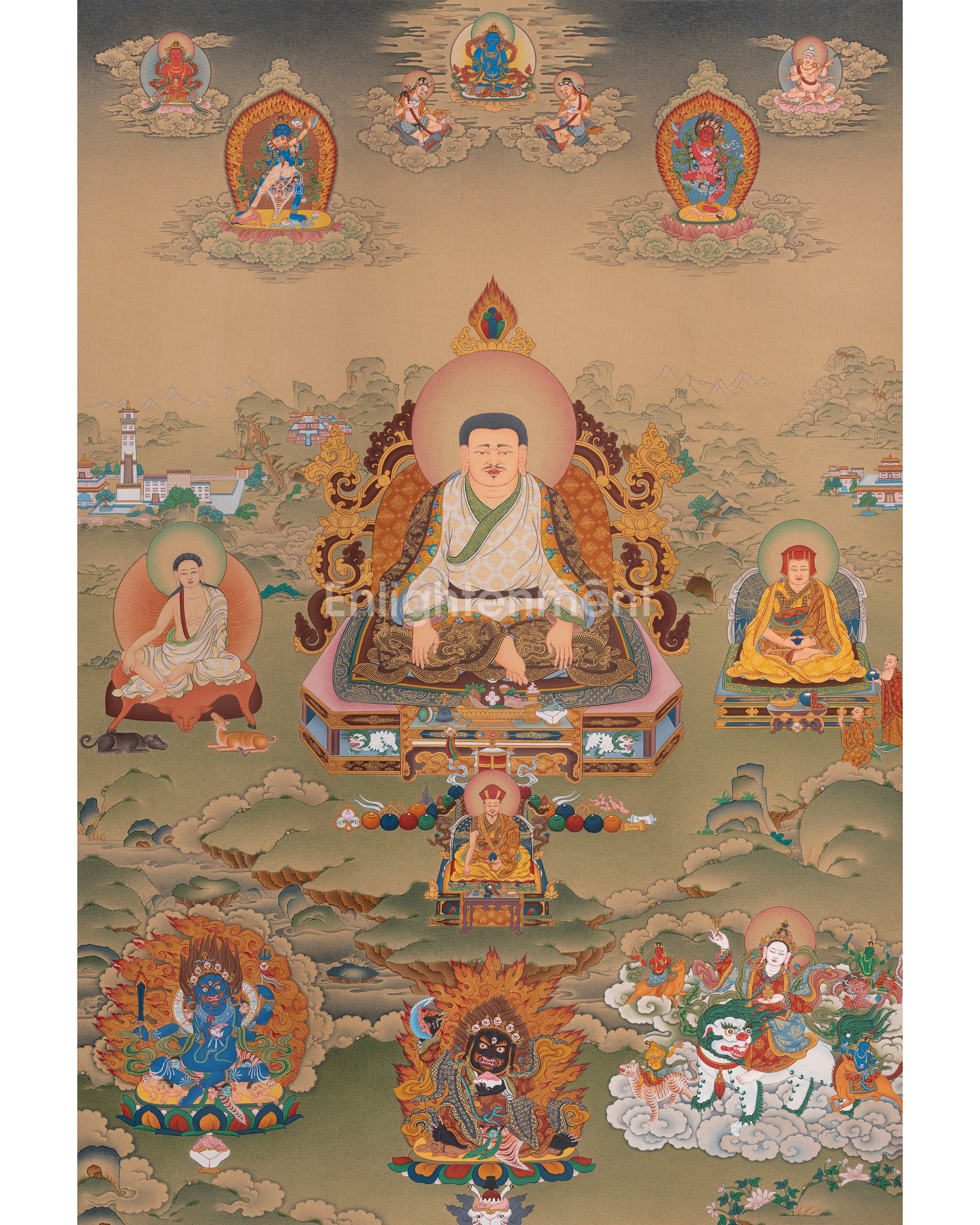
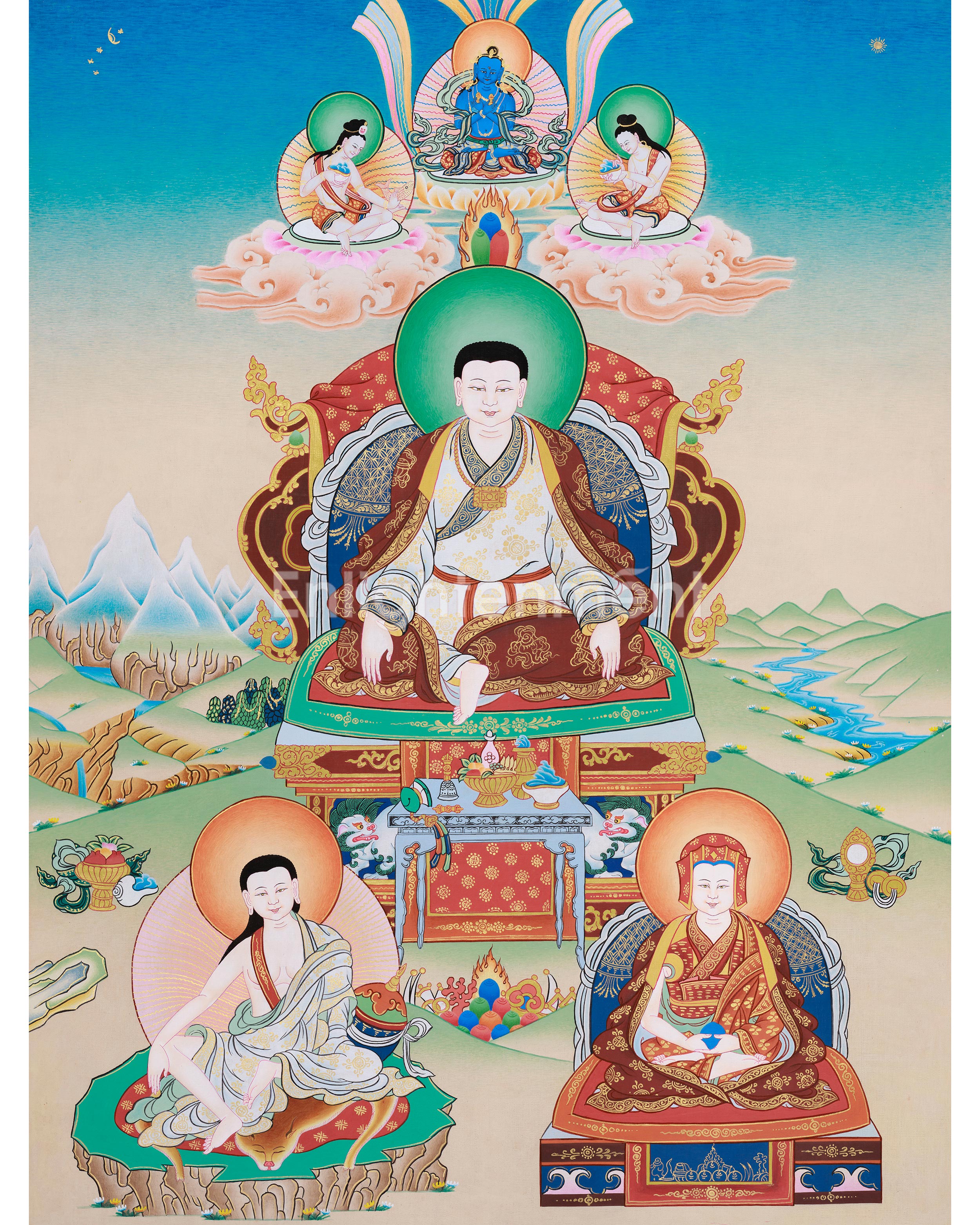
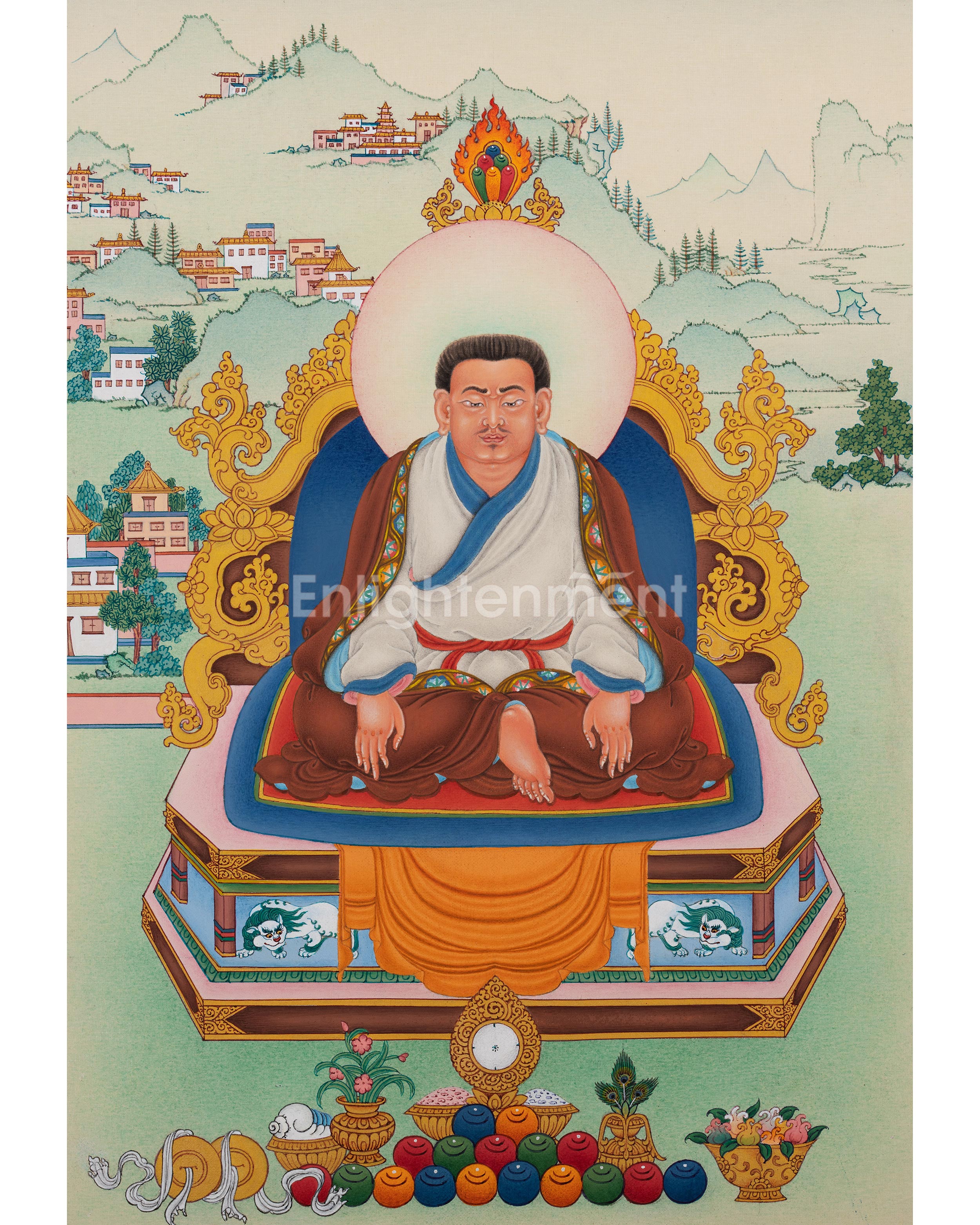
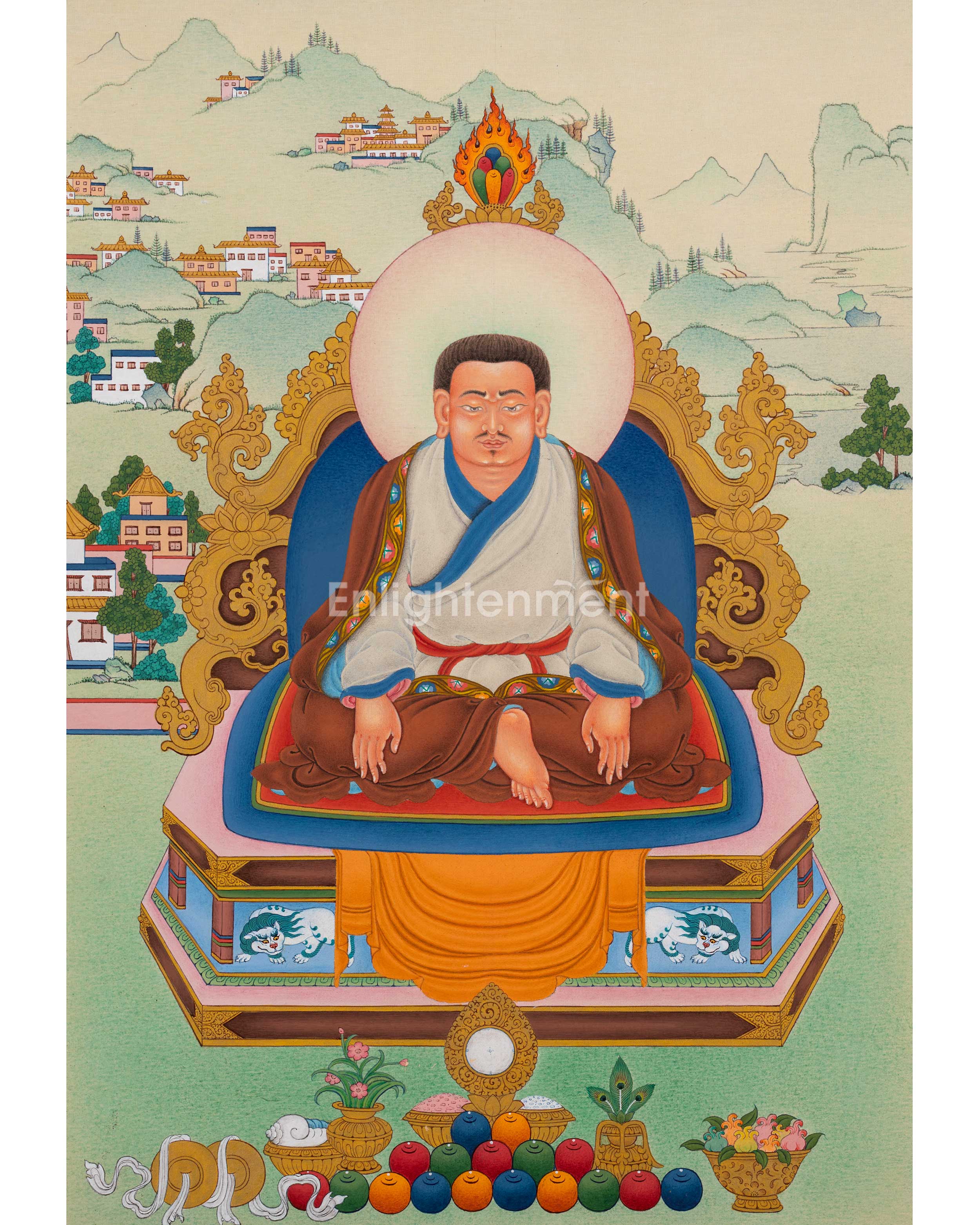
Guru Marpa was a revered Tibetan Buddhist teacher, translator, and yogi, known for transmitting the Six Yogas of Naropa from India to Tibet. He is particularly significant for being the principal teacher of the legendary Milarepa and for his devotion to preserving and transmitting Vajrayana teachings. The thangka portrays Guru Marpa seated on a lotus throne, symbolizing his elevated spiritual realization and purity of mind, surrounded by auspicious elements that denote wisdom, devotion, and accomplishment.
This depiction captures both his human form and the sacred qualities of his enlightened nature. Seated cross-legged, Guru Marpa’s posture signifies meditative stability and balance, reflecting his mastery over both physical and mental disciplines. His serene expression communicates profound equanimity, while the halo and Norbu (jewel) above his head signify his spiritual attainment and enlightened insight. The background, depicting distant mountains and monastic structures, situates him within the cultural and geographic context of Tibet, emphasizing his historical and spiritual roots.
Iconography and Symbolism
Norbu (Jewel): The jewel atop Guru Marpa’s halo represents the ultimate clarity of mind and the precious nature of the teachings he transmitted. It signifies spiritual wealth that is attained through devotion, practice, and wisdom.
Halo: The halo surrounding Guru Marpa symbolizes his enlightened state, radiating spiritual light and protection. It also represents the transcendent awareness that emanates from his realized mind.
Monk Robe: The layered robes indicate his monastic discipline and adherence to the Vinaya, highlighting his role as a teacher and practitioner. The fine details of the embroidery reflect his connection to Tibetan artisan culture.
Crossed-Leg Posture: Sitting in the classic meditative posture emphasizes inner stability, composure, and the yogic mastery he maintained throughout his life. It also signals his ability to integrate meditation with the active transmission of teachings.
Offering Set: Placed before Guru Marpa, the traditional altar offerings-water, flowers, incense, light, and food-represent devotion, respect, and the continuous flow of merit through practice. They remind practitioners of the ethical and devotional foundations of the path.
Accompanying Figures: In some depictions, Milarepa and other disciples may appear, representing the transmission of lineage and the teacher-student relationship central to Vajrayana practice. Their presence highlights the continuation of wisdom across generations.
Hilly Background: The hills, softly rendered in the background, situate Guru Marpa in the Tibetan landscape, indicating the authenticity of his historical and spiritual context. These hills symbolize stability, endurance, and the heights of spiritual accomplishment.
Spiritual Context and Practice
Guru Marpa’s thangka serves as both an artistic homage and a meditation aid for practitioners. Meditating on this image encourages devotion, reinforces the qualities of perseverance and wisdom, and strengthens the connection to the Marpa lineage. The lotus seat and halo serve as visual cues to cultivate clarity and purity of mind, while the offerings symbolize the continuous engagement in virtuous actions.
The image reminds viewers that spiritual practice involves integrating study, devotion, and disciplined effort, just as Guru Marpa exemplified through his life of translation, teaching, and meditation. Placing this thangka in a shrine or meditation space allows devotees to focus on the transmission of teachings and the cultivation of mindfulness, compassion, and insight in daily life.
Through this visualization, practitioners can reflect on the enduring relevance of Guru Marpa’s legacy, receiving inspiration to approach their own spiritual journey with diligence, humility, and reverence.