White Mahakala Thangka Collection
5 products
Showing 1 - 5 of 5 products
White Mahakala: The Compassionate Protector of Wealth and Merit
White Mahakala is a peaceful-appearing yet powerful wrathful deity within Tibetan Buddhism, especially revered in traditions connected with wealth protection, obstacle removal, and the flourishing of Dharma practice. Unlike darker forms of Mahakala, the white aspect embodies the compassionate activity of abundance and benevolence, ensuring that practitioners have both material and spiritual conditions necessary for realization. He is not a deity of worldly desire, but rather a protector who transforms scarcity, fear, and obstacles into auspicious circumstances that support spiritual progress.
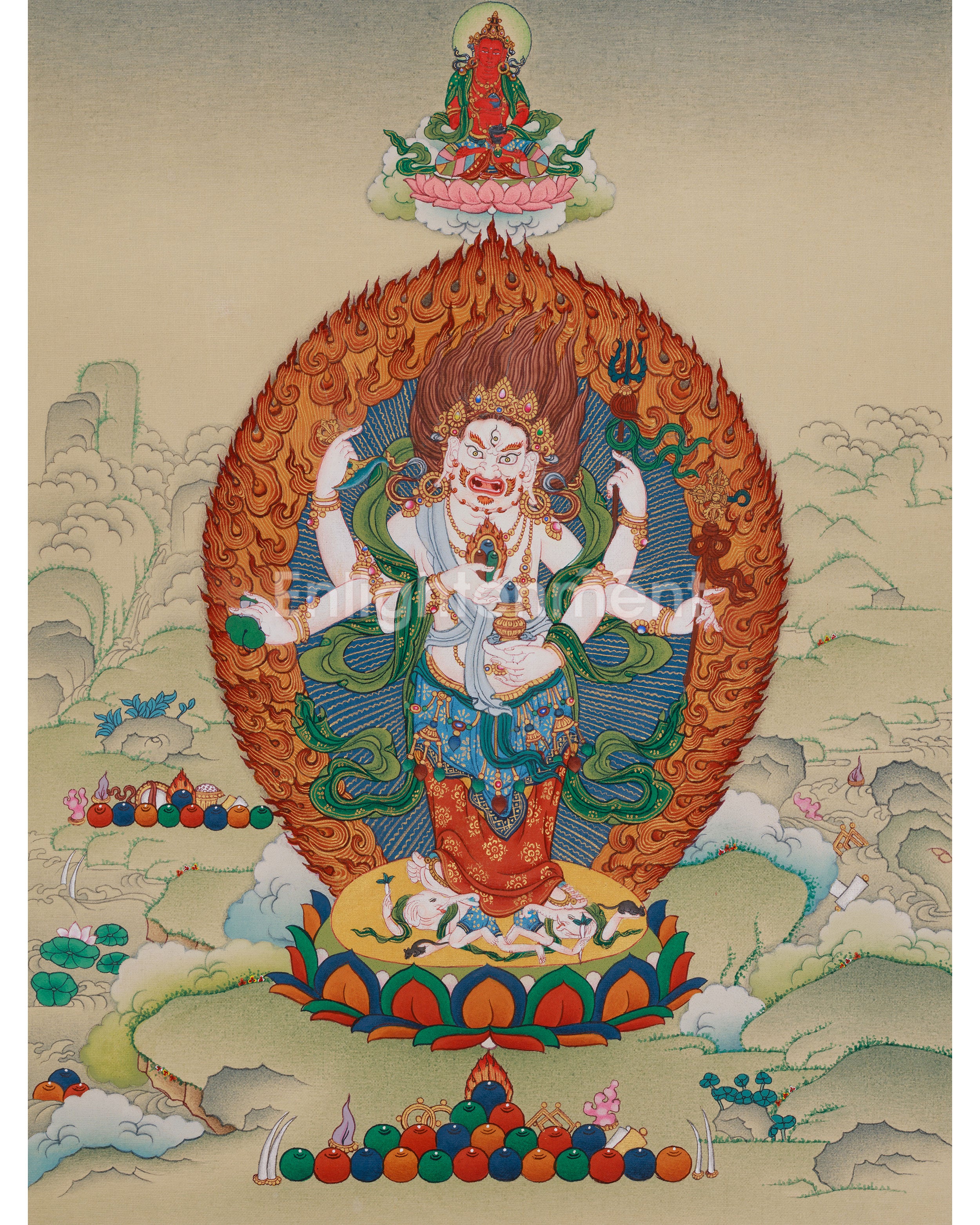
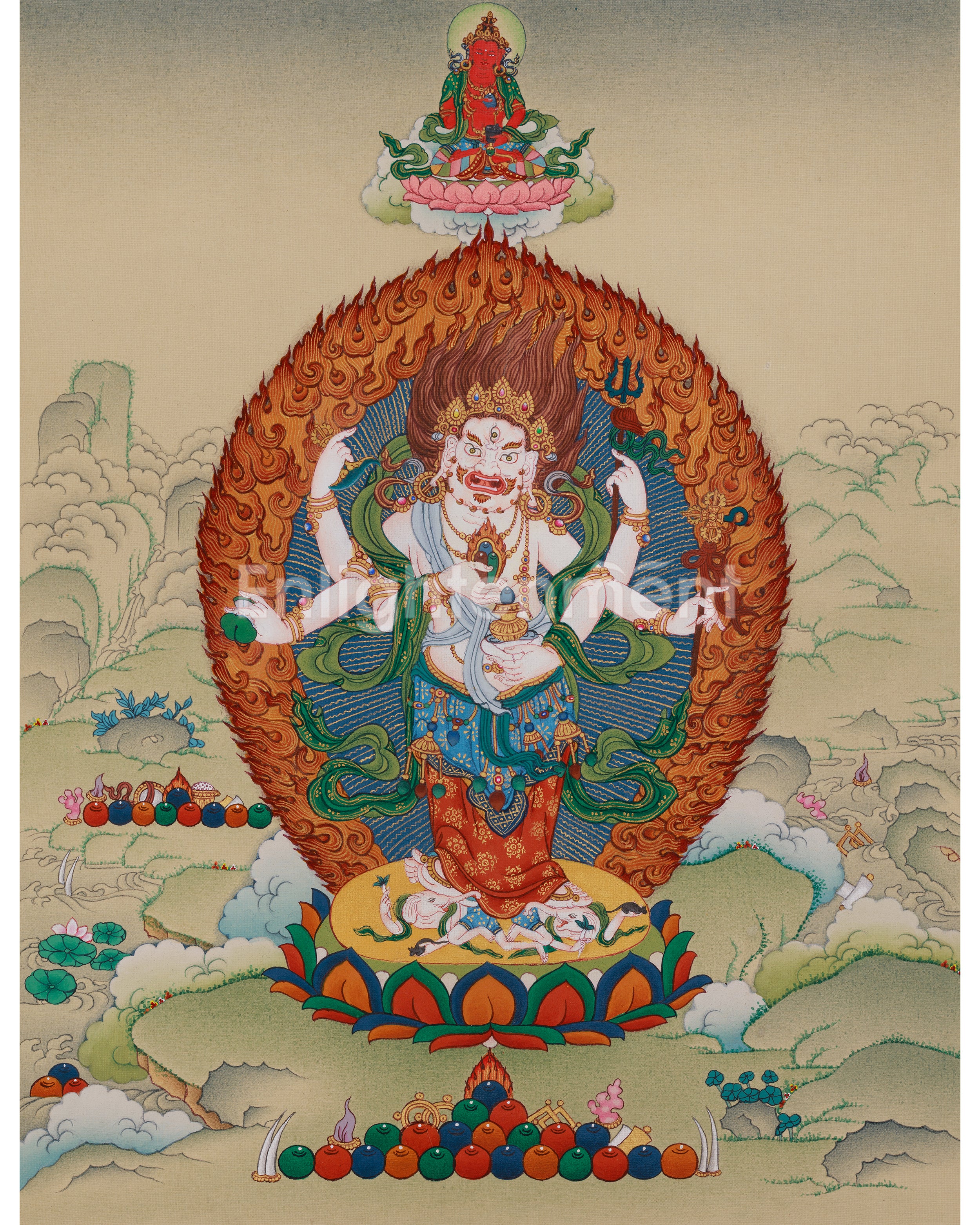
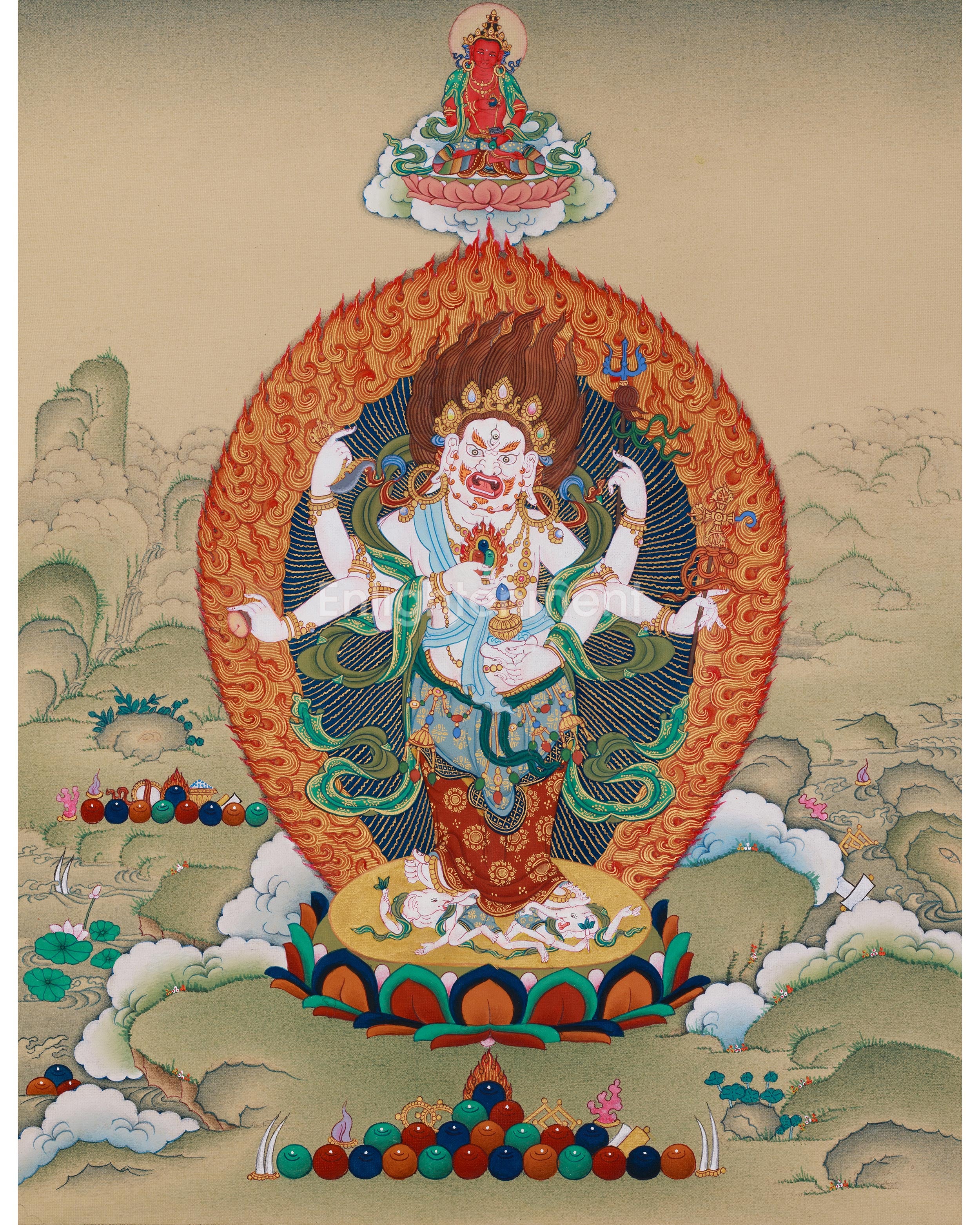
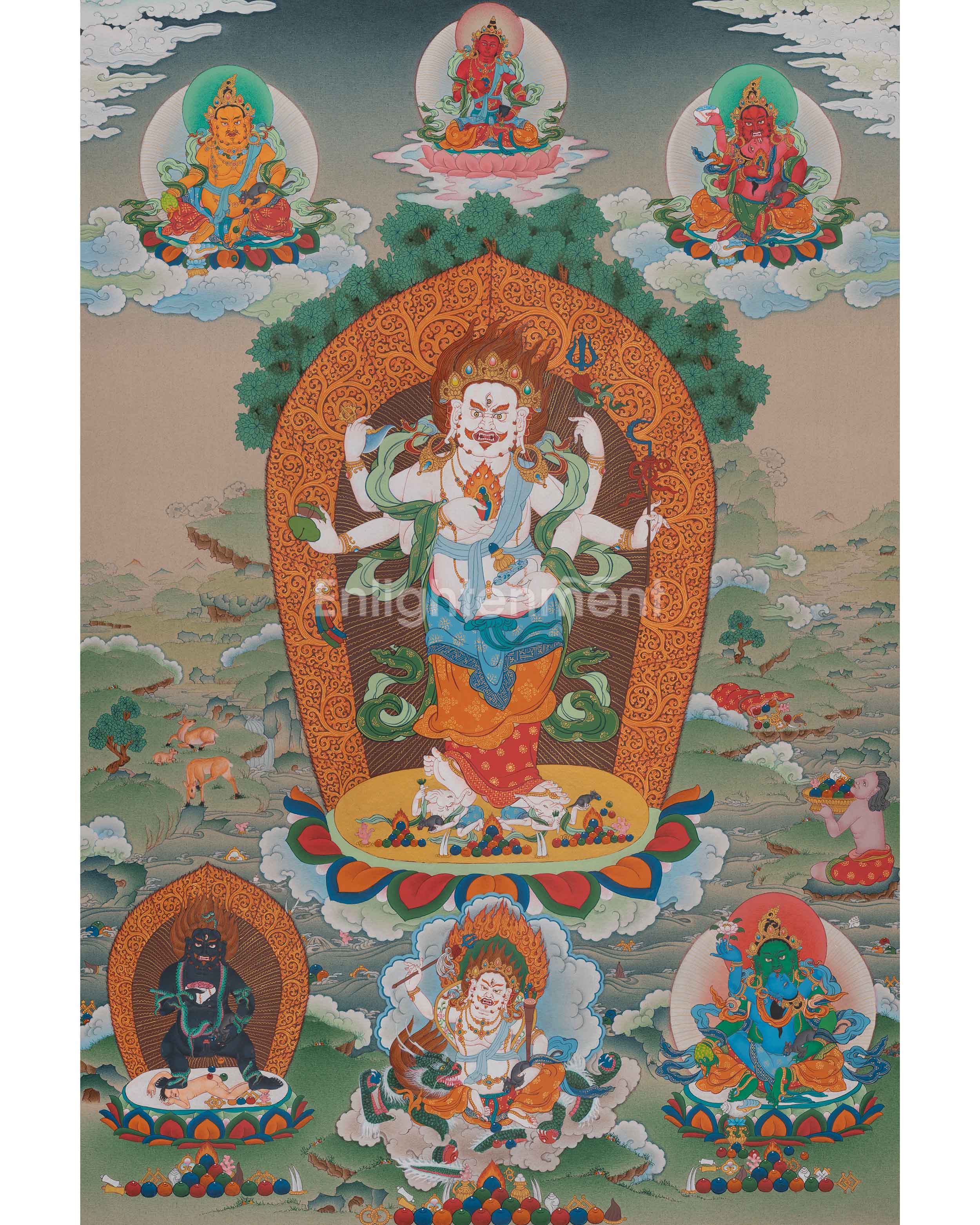
The Thangka depicts White Mahakala in a radiant form surrounded by blazing wisdom flames, symbolizing the dynamic power of compassion that manifests in a more peaceful yet equally forceful expression. His multiple arms and sacred implements show his ability to perform many enlightened activities simultaneously, ensuring protection, prosperity, and spiritual success. Every detail in his form reflects the union of compassion and skillful means, revealing his role as a guardian of both spiritual and material well-being.
Iconography and Symbolism
Flames of Wisdom: The surrounding flames represent purified awareness that burns away poverty consciousness, obstacles, and negative karma. In White Mahakala’s form, these flames symbolize compassionate abundance rather than destruction, illuminating the path of prosperity and Dharma success.
Five Jeweled Crown: The crown adorned with five jewels symbolizes the transformation of the five poisons into the five wisdoms. It reflects his mastery over samsaric conditions and his role as an enlightened protector of abundance and realization.
Curved Knife: The curved ritual knife represents the cutting of ignorance, obstacles, and negative karmic patterns. It symbolizes precise compassionate action that removes inner and outer hindrances to prosperity and spiritual growth.
Wish-Fulfilling Jewel (Cintamani): Held in one of his hands, the wish-fulfilling jewel represents the fulfillment of both material needs and spiritual aspirations. It symbolizes generosity, abundance, and the spontaneous fulfillment of virtuous wishes when aligned with Dharma.
Damaru (Small Drum): The hand drum symbolizes the sound of Dharma proclamation and the vibration of enlightened activity. It represents the continuous reminder of impermanence and the awakening of wisdom through sound.
Hook (Iron Hook): The hook symbolizes the power to attract positive conditions, blessings, and spiritual opportunities. It represents compassionate magnetism that draws beings toward liberation and auspicious circumstances.
Skull Cup with Vase of Jewels: The skull cup filled with a treasure vase symbolizes the transformation of ego and ignorance into inexhaustible spiritual and material abundance. It reflects the overflowing generosity of an enlightened mind.
Trident: The trident represents mastery over body, speech, and mind, as well as control over the three realms of existence. It symbolizes the integration of wisdom, compassion, and skillful means.
Sun Disc and Lotus Seat: The sun disc represents radiant awareness and active enlightened energy, while the lotus symbolizes purity arising from samsara. Together, they show that abundance and awakening arise without contamination from worldly illusion.
Ganesha Beneath the Feet: The presence of Ganesha holding a radish symbolizes the removal of obstacles and the harmonization of worldly and spiritual success. It reflects the transformation of hindrances into supportive conditions for practice.
White Mahakala and the Path of Auspicious Abundance
White Mahakala teaches that true abundance is not merely material wealth but the complete flourishing of conditions that support awakening. His presence reminds practitioners that compassion also manifests as provision, protection, and the removal of obstacles that prevent spiritual progress. Through devotion and contemplation, practitioners develop confidence in the unfolding of supportive conditions aligned with wisdom and virtue.
This Thangka ultimately reveals that enlightened activity is both protective and nurturing. White Mahakala embodies the principle that wisdom ensures not only liberation from suffering but also the creation of harmonious conditions for practice. His form inspires trust in the compassionate intelligence of the awakened mind, which continuously works to benefit all beings in visible and invisible ways.