Vajravarahi Thangka Collection
2 products
Showing 1 - 2 of 2 products
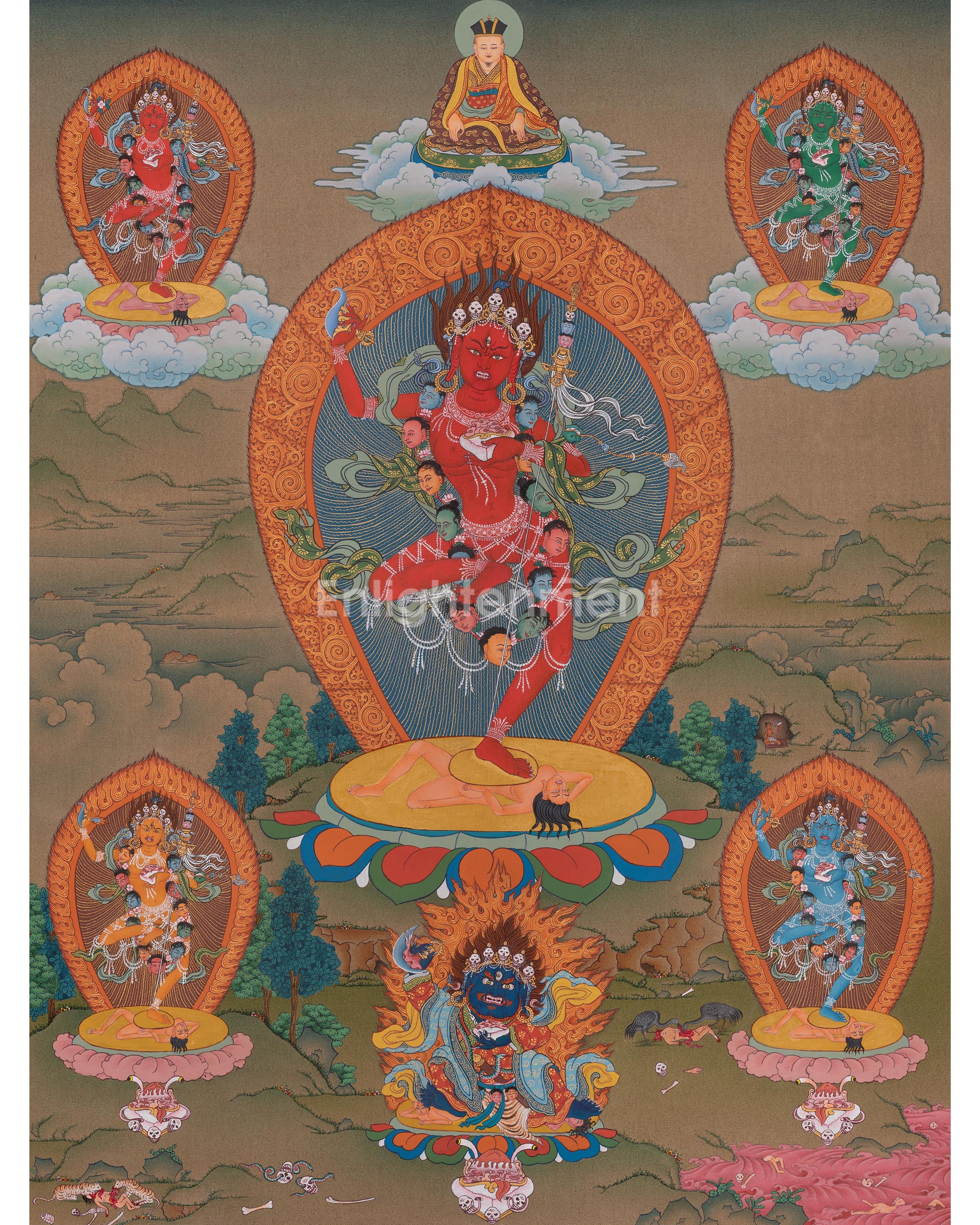
Vajravarahi: A Wrathful Form of Vajrayogini
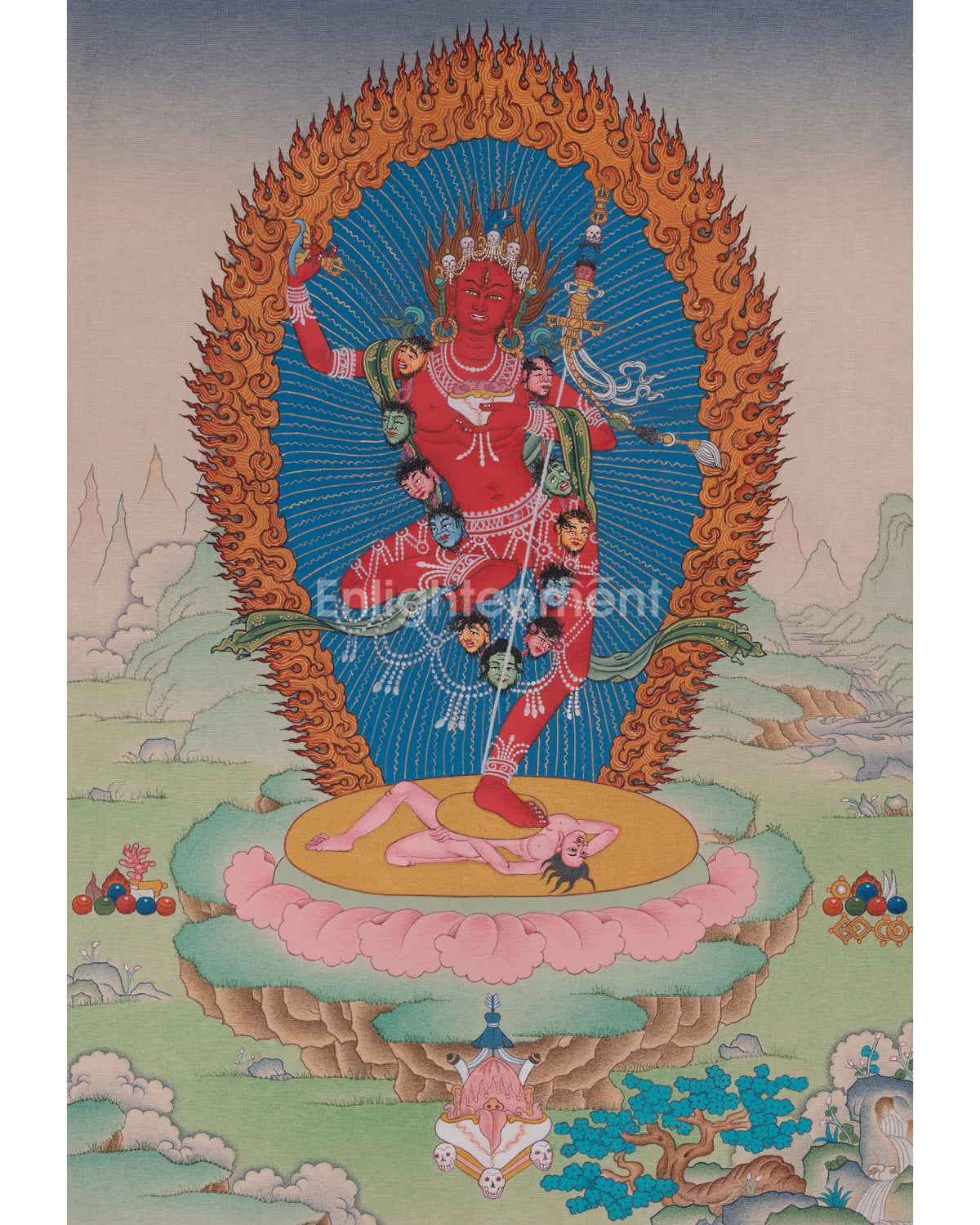
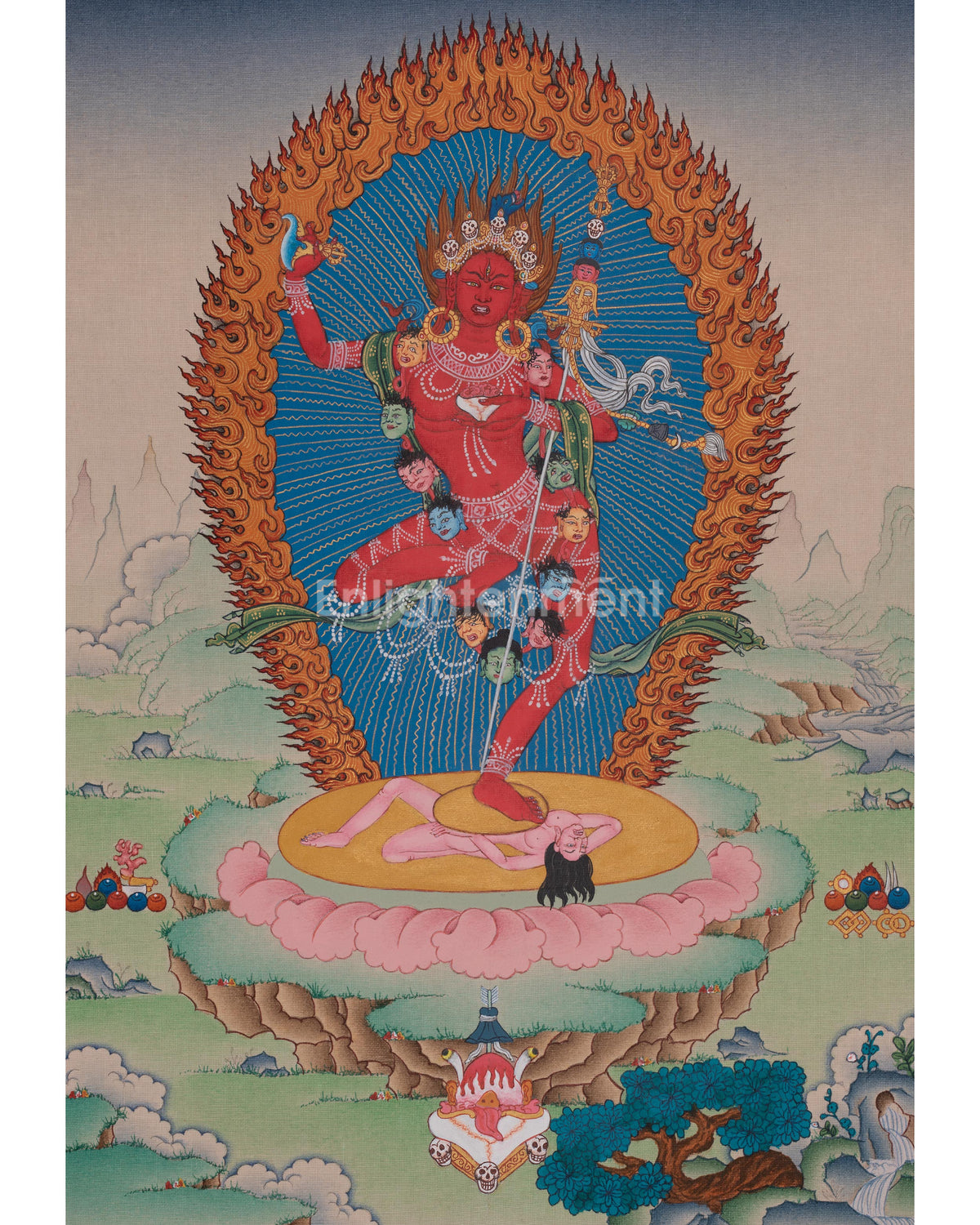
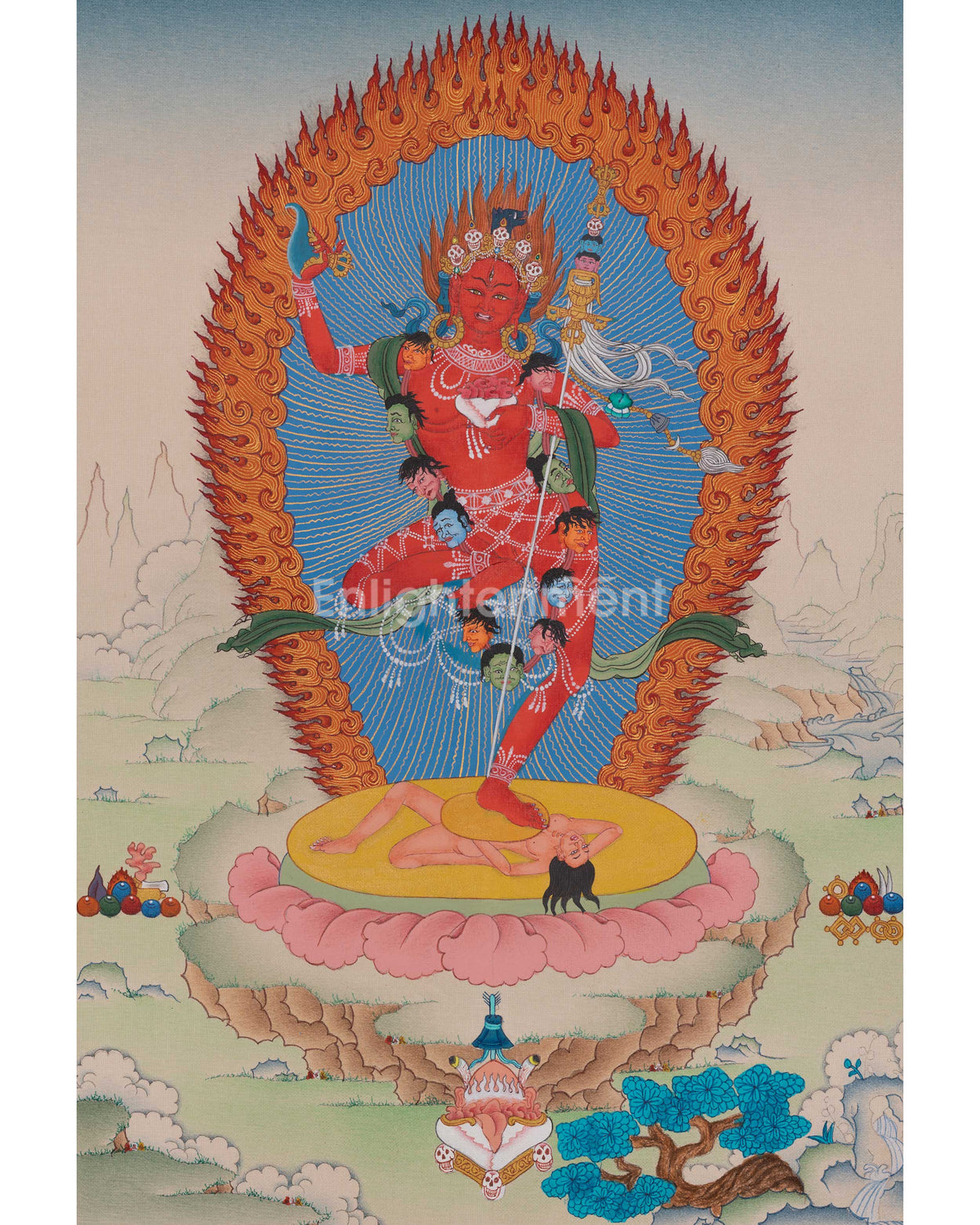
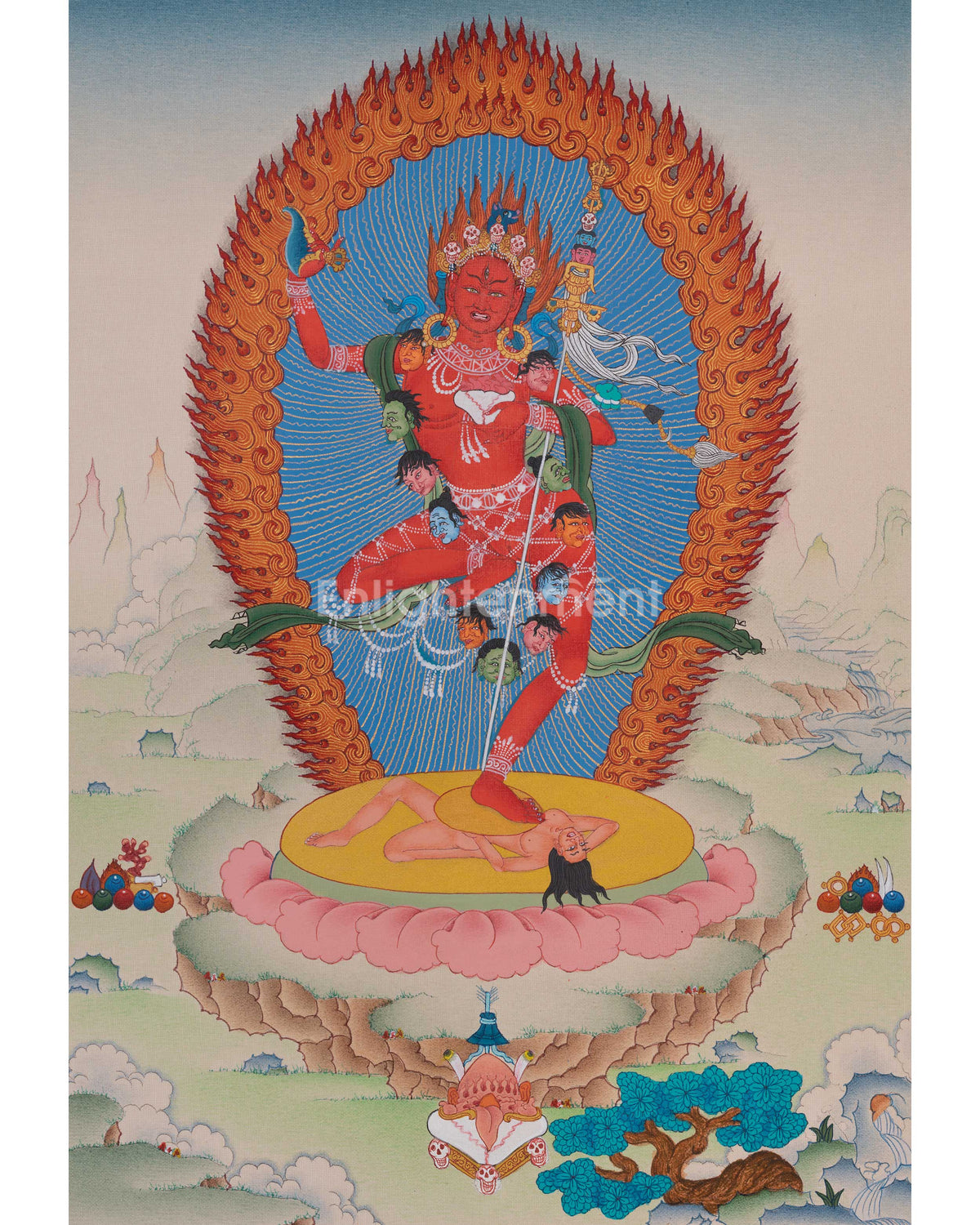
Vajravarahi or Dorje Phagmo (in Tibetan) is a semi-wrathful form of Vajrayogini, and Vajrayogini is connected to the Chakrasamvara Tantra in Tibetan Buddhism. In terms of iconography, she is the female counterpart of Heruka Chakrasamvara and is widely practised in many Tibetan Buddhist traditions but principally relied on within the Kagyu tradition. Her practice is said to bring very high attainments simply by relying on her mantra, along with maintaining pure samaya with the guru, twice-monthly offering of ganacakra, and saying a brief prayer to rise to her Kechara paradise each day. Vajrayogini in any form is very powerful in the current Kaliyuga in which the five signs are apparent. The five symptoms are: decay in lifespan, in time, in sentient beings, in actions and views, and in afflictions.
Kagyu Tibetan lineage and other Tibetan lineages believe that Buddha Shakyamuni is the Buddha Vajradhara who came into this world to teach the Tantra. Besides, many practitioners in India and Tibet have gained great realisations with her practice and especially her mantra. The mantra is only effective if allowed to be recited, and if it is initiated. She is an adept of all the schools of Tibetan Buddhism, but is especially venerated in the Kagyu School. Mahakala Bernagchen is the chief protector within the same school, as depicted in this scroll painting.
Vajravarahi's Symbolism
-
One of Vajravarahi's faces has a small boar's head that protrudes from the side of her face, a reference to her name of the "Vajra Sow".
-
The form is usually deep crimson or blood red, signifying fully awakened energy, not caught in grasping or resisting.
-
She holds a kartika in her right hand, which symbolizes wisdom that is flexible and pliable, not rigid and fixed.
-
In her left hand, she is holding a skull vessel filled with nectar, a symbol that refers to the impermanence of life and the passing away of the ego.
-
Her nakedness proclaims that she is free from all veils and pollutions.
-
Around her is a necklace of fifty fresh heads, which is interpreted as the fifty afflictive emotions conquered, or as fifty characters of the Sanskrit alphabet.
-
The five skulls symbolize the five evil mental afflictions: Pride, Envy, Delusion, Hatred and Greed.
-
She is usually portrayed with one foot on a form, and another foot lifted out, while dancing.
-
Her expression is fierce, and the fire that is blazing between her isn't hostile; it's a fierce, forceful kindness in the deepest sense, one that can cut through and dissolve hardwired egotistical habits that more soothing techniques fail to reach.
Selecting the Appropriate Place to Place the Vajravarahi Thangka
-
Keep it in a special altar or meditation area, as it is well suited for great inner change or tantric practice.
-
A quiet, private room is ideal for this deity, as her pictures are esoteric and advanced.
-
Soft and warm lighting allows her form to be softer, making it more contemplative and focused.
-
Avoid the use of high-traffic areas such as kitchens or entryways where the image would not be viewed but rather just passed by.
-
If there is no other alternative, select a corner that is free of clutter and at eye level, where the image can still be treated with respect.
Due to the depth of the tantra in this thangka, it is advisable to use it only by those who have been initiated or are working under a qualified teacher. It may be enjoyed purely for its visual effect by anyone without formal training; however, it is a powerful reminder that ignorance and attachment can be transcended to clarity and freedom.