Chakrasamvara Thangka Collection
4 products
Showing 1 - 4 of 4 products
Chakrasamvara: The Supreme Yab-Yum Deity of Union
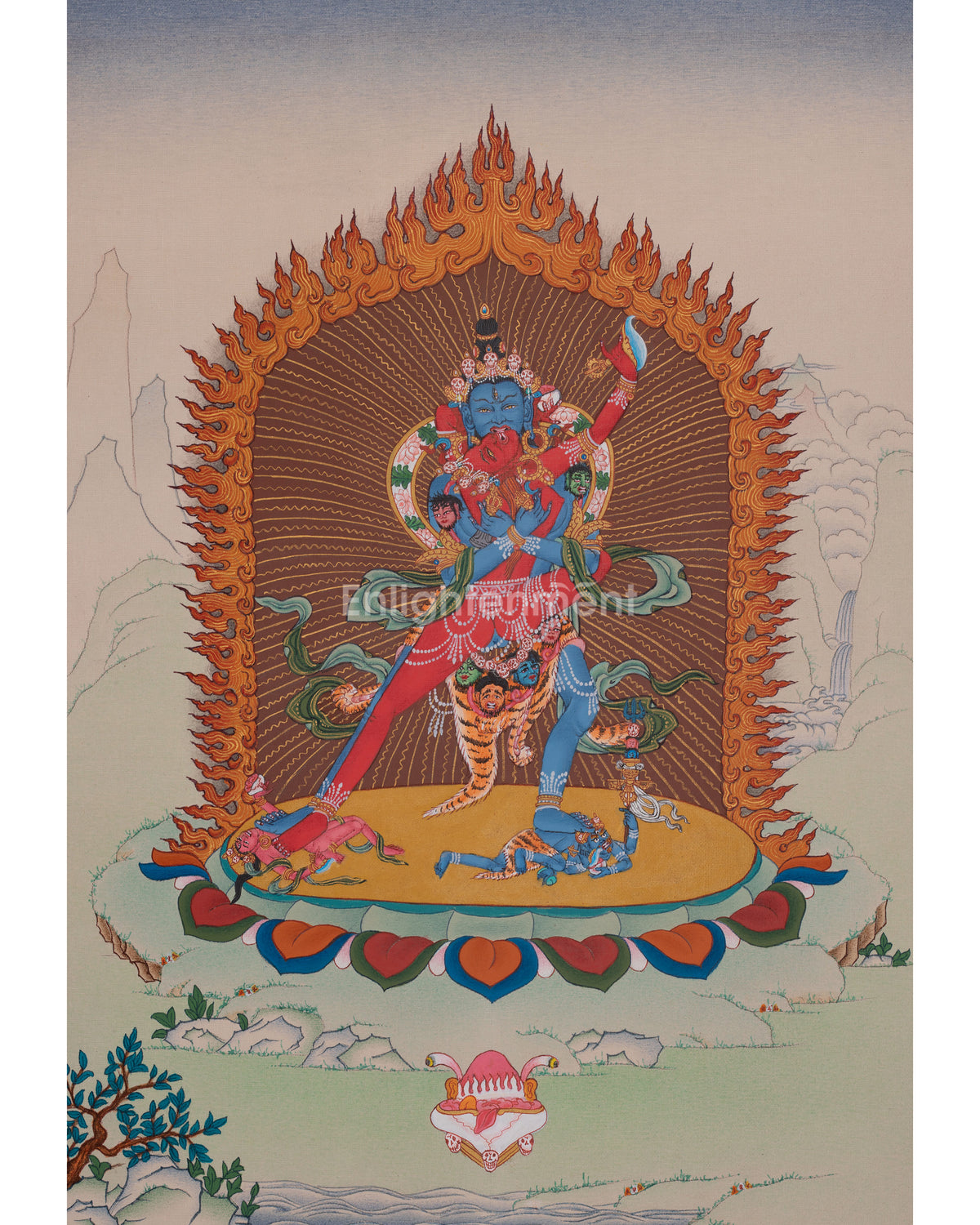
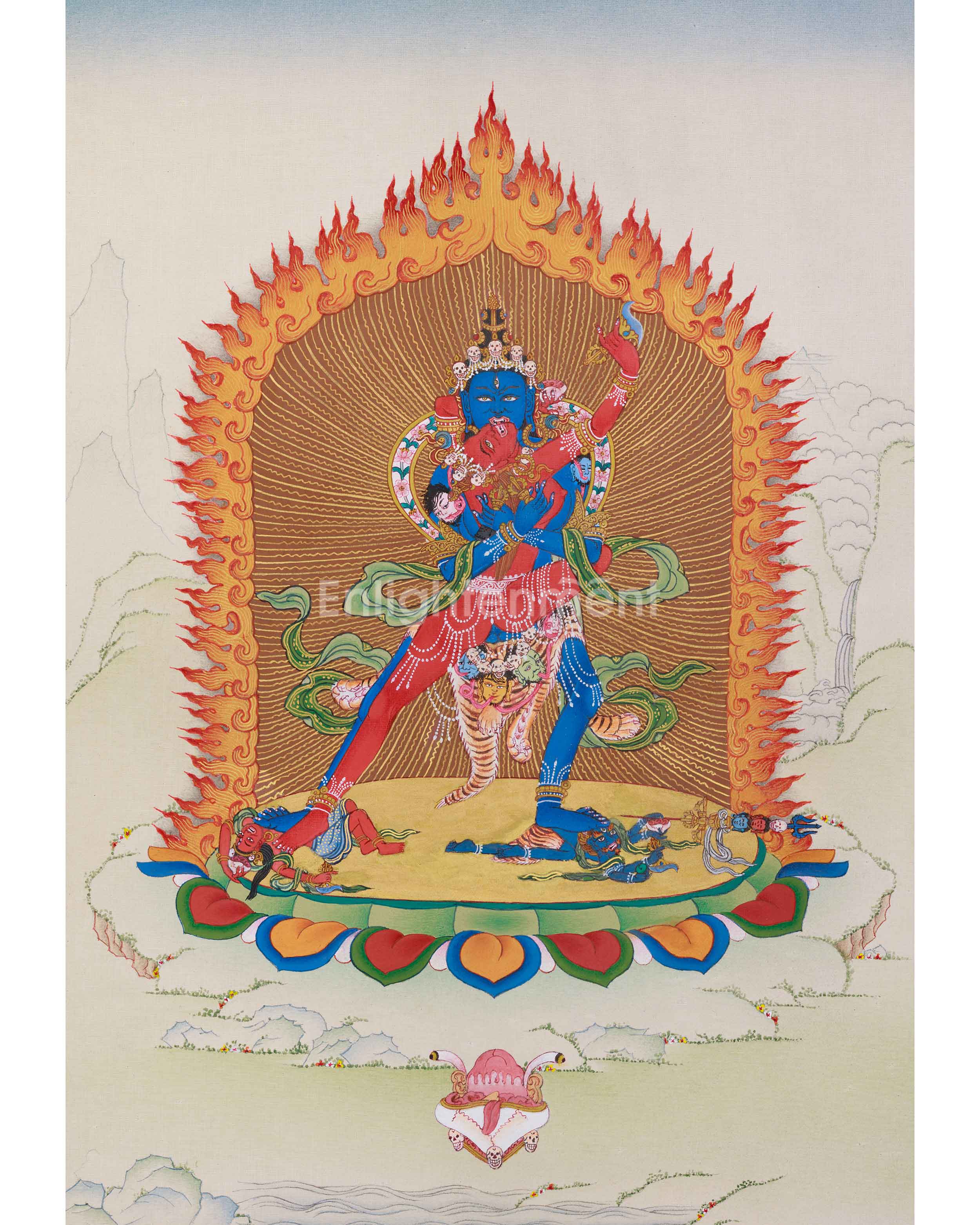
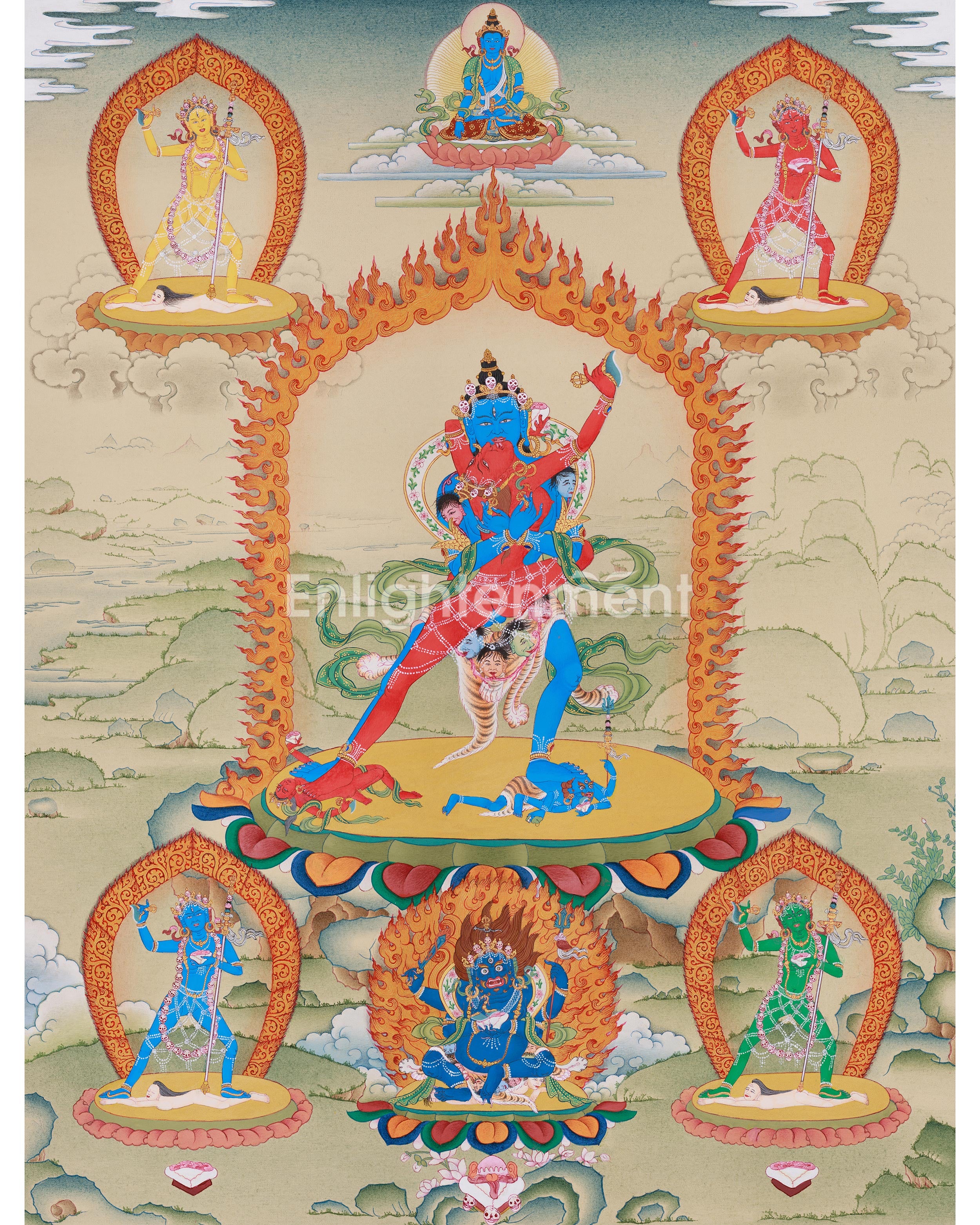
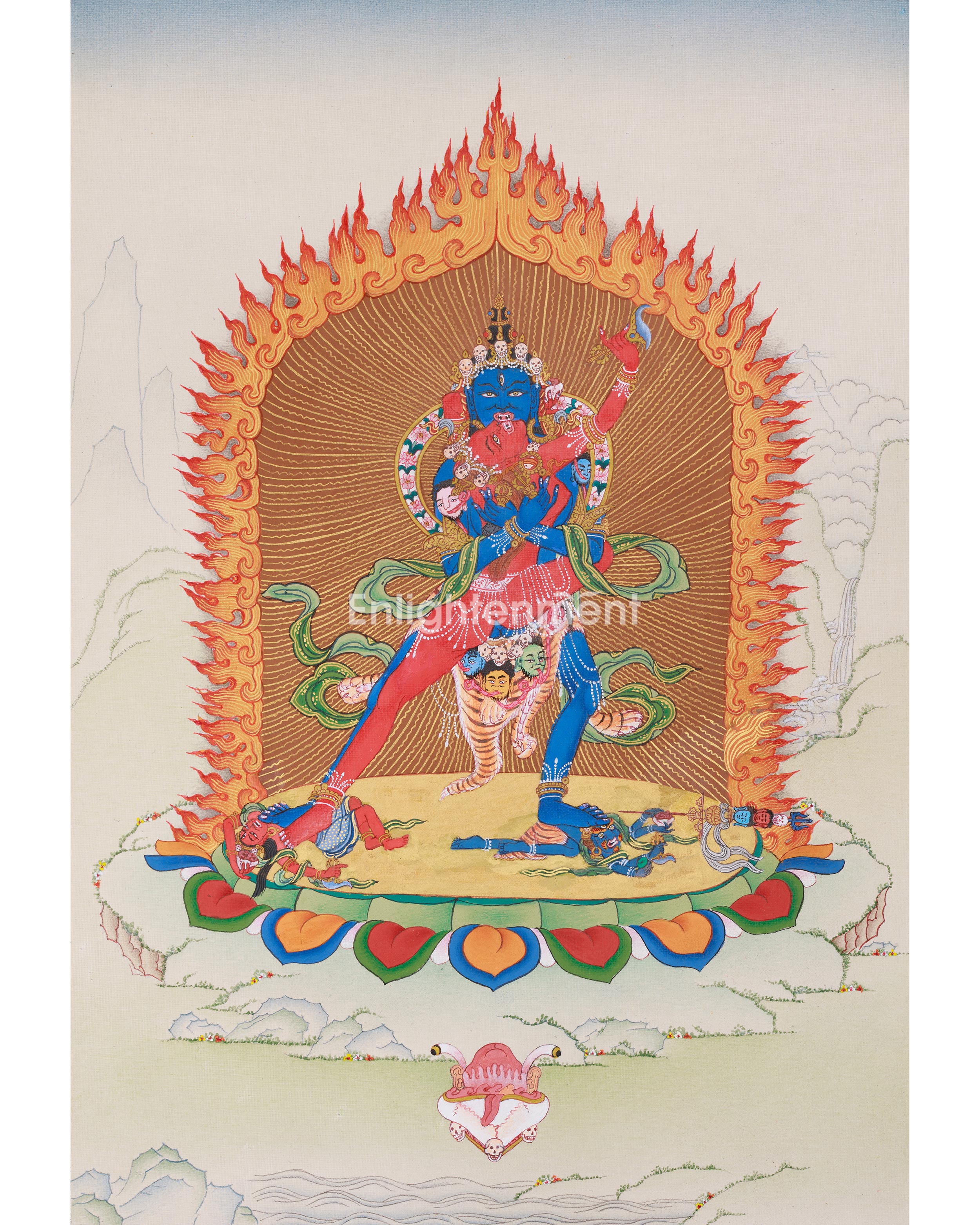
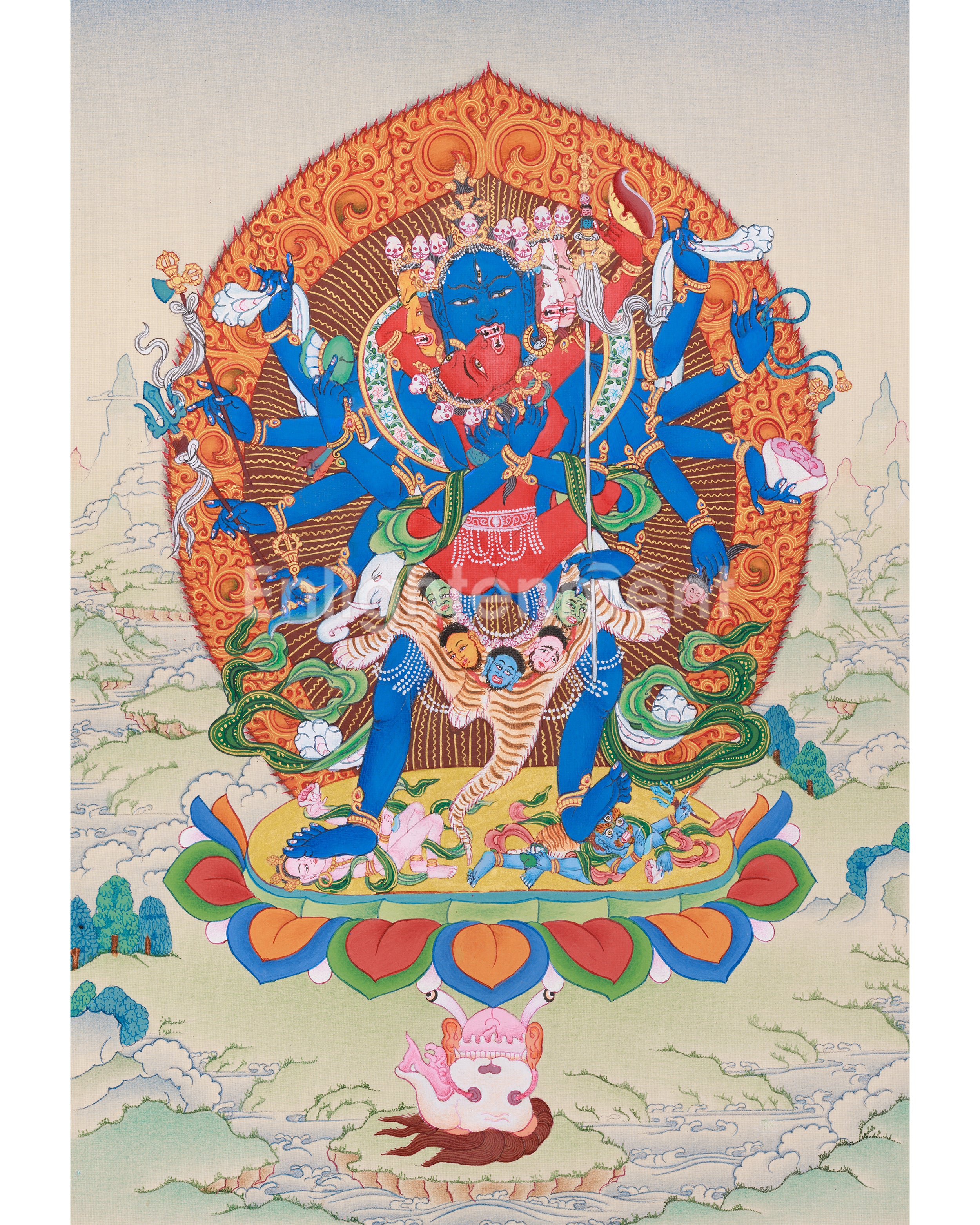
Chakrasamvara is one of the most important tantric deities in Vajrayana Buddhism, revered as the embodiment of the union of wisdom and method, and of bliss and emptiness. Depicted in Yab-Yum union with his consort Vajravarahi, he symbolizes the inseparable nature of compassion and wisdom, showing how skillful means and insight are united in the enlightened mind. The Thangka portrays Chakrasamvara seated on a lotus throne, surrounded by radiant flames, reflecting the dynamic energy of tantric practice. The depiction emphasizes mastery over the mind, the transformation of obstacles into spiritual power, and the harmonious integration of desire and awareness into the path of liberation.
Every element of this sacred image carries profound meaning: his blue body represents vast, sky-like awareness, while Vajravarahi’s red body radiates compassionate magnetism. Together, they express the tantric principle that method and wisdom, passion and clarity, must be practiced as inseparable. At the same time, ritual implements such as the curved knife (kartika), skull cup (kapala), vajra, and bell signify the cutting of ignorance, the transformation of obstacles into insight, and the inseparable union of method and wisdom in tantric practice.
Iconography and Symbolism
Blue and Red Bodies: Chakrasamvara is often shown with a deep blue body, representing the vastness of sky-like awareness, and his consort, Vajravarahi, with a red body, symbolizing compassionate energy and magnetizing power. Together, they express the union of method and wisdom.
Yab-Yum Union: The embrace signifies the inseparability of wisdom (female) and skillful means (male), a central tantric principle. It represents the profound realization that blissful energy and awareness are unified in the enlightened state.
5-Skull Crown: The crown of five skulls symbolizes victory over the five kleshas (afflictive emotions) and mastery over the five wisdoms. It is a mark of complete enlightenment and the transformation of ignorance into wisdom.
Halo of Flames: The surrounding flames indicate the purifying and transformative power of Chakrasamvara’s enlightened energy, consuming negativity and ignorance while radiating protective force.
Curved Knife (Kartika) and Skull Cup (Kapala): Held in the hands of his consort, these tantric implements symbolize the cutting of ego, attachment, and ignorance, as well as the transformation of obstacles into wisdom and blissful experience.
Vajra and Bell: Representing method and wisdom, the vajra embodies indestructible compassion, while the bell signifies emptiness and clarity of insight. Together, they convey the balance necessary for tantric realization.
Consort Vajravarahi: Her presence emphasizes the feminine wisdom aspect of enlightenment, radiating insight, clarity, and blissful union. Her expression mirrors serene awareness combined with potent transformative energy.
Lotus Seat: The deity rests upon a lotus, signifying purity arising unstained from samsara. It reminds the practitioner that enlightened qualities manifest within the world without being tainted by defilements.
Chakrasamvara and the Path of Transformative Bliss
Chakrasamvara’s practice demonstrates that every force of desire, passion, and energy can be transformed into a tool for awakening. His union with Vajravarahi teaches that bliss, clarity, and compassionate action are inseparable from insight and wisdom. Meditating on Chakrasamvara cultivates fearlessness, skillful action, and the ability to harmonize mind, body, and circumstances, turning obstacles into allies on the path to liberation.
Ultimately, the Thangka conveys that enlightened energy is active and transformative, guiding practitioners to integrate wisdom and method, passion and clarity, into every aspect of life. Chakrasamvara reveals the profound tantric principle that true liberation arises not from renunciation alone, but from the skillful and fearless transformation of energy, desire, and perception into compassionate, enlightened activity.