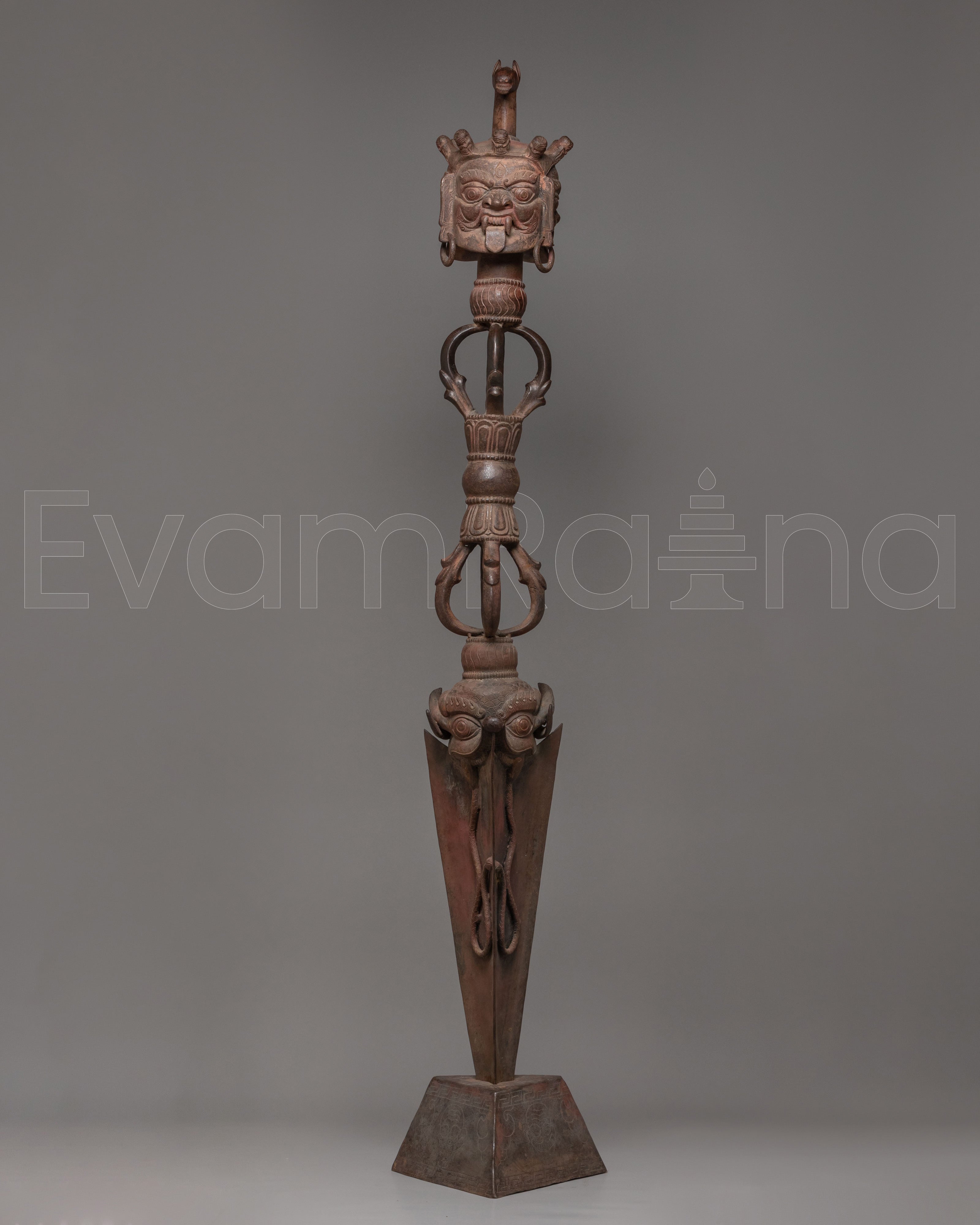
Iron Ritual Phurba | Spiritual Ceremonies
------------------------------------------------
Size: 148.5cm(Height) x 29cm(Length) x 29cm(Width)
Weight: 18.12 kg
Materials: Iron
------------------------------------------------
About Our Product
This Iron Ritual Phurba is a sacred tantric ceremonial dagger used in Vajrayana Buddhist practice for protection, purification, and the transformation of negative energies. Crafted from solid iron with traditional Himalayan ritual form, its towering structure reflects powerful symbolic meaning, making it a significant spiritual object for altar spaces, meditation halls, and ritual environments.
In Tibetan Buddhist tradition, the Phurba represents the cutting through of ignorance, attachment, and inner obstacles. Its three-sided blade symbolizes the integration of wisdom, compassion, and skillful means. The upper section features sacred ritual symbolism along with a Vajra (Dorje), representing indestructible wisdom, spiritual power, and the unshakable nature of enlightenment. Together, these elements reflect the union of fierce protection and enlightened awareness, guiding practitioners toward clarity and transformation.
This Iron Phurba is ideal for tantric rituals, meditation practice, altar offerings, and spiritual décor collections. It is often used as a focal object in protection ceremonies, believed to stabilize energy, remove obstacles, and support deep inner transformation. Whether placed in a shrine or used in ritual contexts, it serves as a reminder of disciplined awareness, spiritual strength, and the path toward awakening.
Introduction of Phurba
The ceremonial dagger (Sanskrit: Kila; Tibetan: phurba) is essential for expelling evil and is considered particularly effective in neutralizing the forces obstructing Tantric Buddhist practice. It has ancient origins, first appearing in the Indian Rig Veda as the core blade of the vajra used by Indra to destroy the primordial cosmic snake Vritra. Kila, derived from Sanskrit, was most likely associated with Vedic sacrifices. Meditation on the Vajrakila Tantra, an early Indian scripture first promoted in Tibet in the eighth century by Padmasambhava, one of the founding teachers of Tibetan Buddhism, is used to invoke the three-headed Vajrakila Buddha.