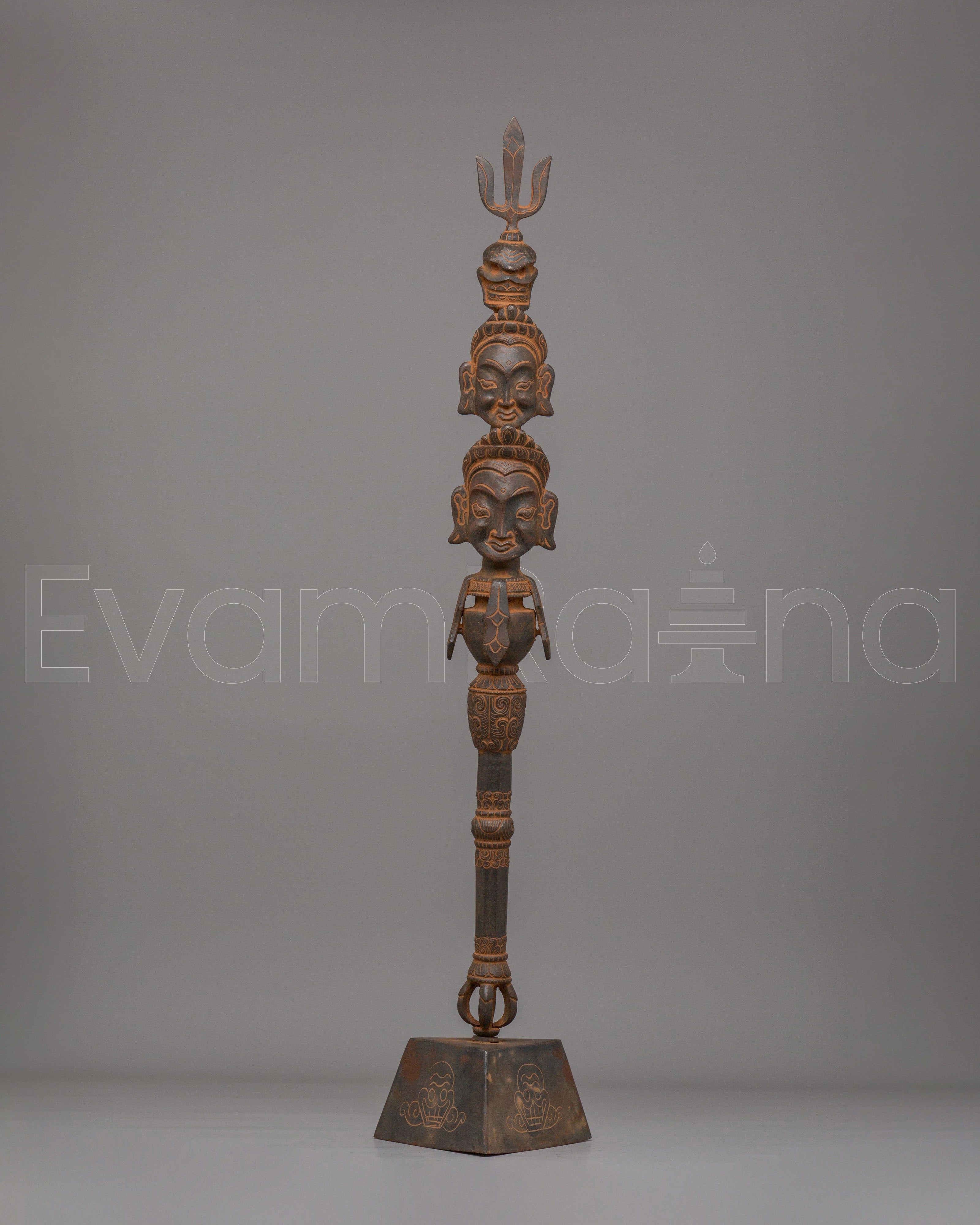
Handcrafted Khatvanga For Ritual | Oxidized Iron Vajrayana Staff
------------------------------------------------
Size: 71.5cm(Height) x 16cm(Length) x 15.5cm(Width)
Weight: 2.53 kg
Materials: Iron Oxidized
------------------------------------------------
About Our Product
This Traditional Khatvanga Ritual Instrument is a sacred Vajrayana Buddhist tantric staff made from oxidized iron, created for altar display, puja practice, meditation spaces, and ceremonial decor. Measuring 71.5 cm in height, 16 cm in length, and 15.5 cm in width, with a weight of 2.53 kg, this ritual staff carries a powerful spiritual presence. The dark oxidized finish gives the piece an antique ritual appearance, making it suitable for Buddhist shrine rooms, tantric practice settings, and sacred interiors.
The design features a tall staff form with a trident at the top, symbolic heads along the upper section, carved ornamental bands, and a stable base decorated with sacred motifs. In Vajrayana symbolism, the Khatvanga is often associated with tantric realization, spiritual power, protection, and the union of wisdom and method. The trident represents the cutting of ignorance and the mastery of body, speech, and mind, while the symbolic heads remind practitioners of transformation, impermanence, and the path beyond ordinary attachment.
In Tibetan Buddhist practice, the Khatvanga is not an ordinary staff, but a ritual object connected with devotion, protection, and inner awakening. It is often seen in the iconography of tantric masters and wisdom deities, representing deep spiritual discipline and the transformation of negative forces into enlightened awareness. Placed on an altar or meditation space, this oxidized iron Khatvanga becomes a meaningful reminder of courage, clarity, peace, and the journey toward enlightenment.
Introduction To The Khatvanga :
Khatvanga is a stick with a skull on top, commonly used in Tantric rituals. It is also depicted in the hands of the oldest known Tantric pictures in the Indic world. It comprises a short stick topped by a single skull from which a vajra emerges.
The khatvanga had a profound meaning in the Tantric Buddhist environment. At its most basic level, it represents the opposite-gender counterpart of the equal or close deity who carries it.
Tsang Nyon Heruka and Padmasambhava are renowned for holding a khatvanga staff on their left shoulder.