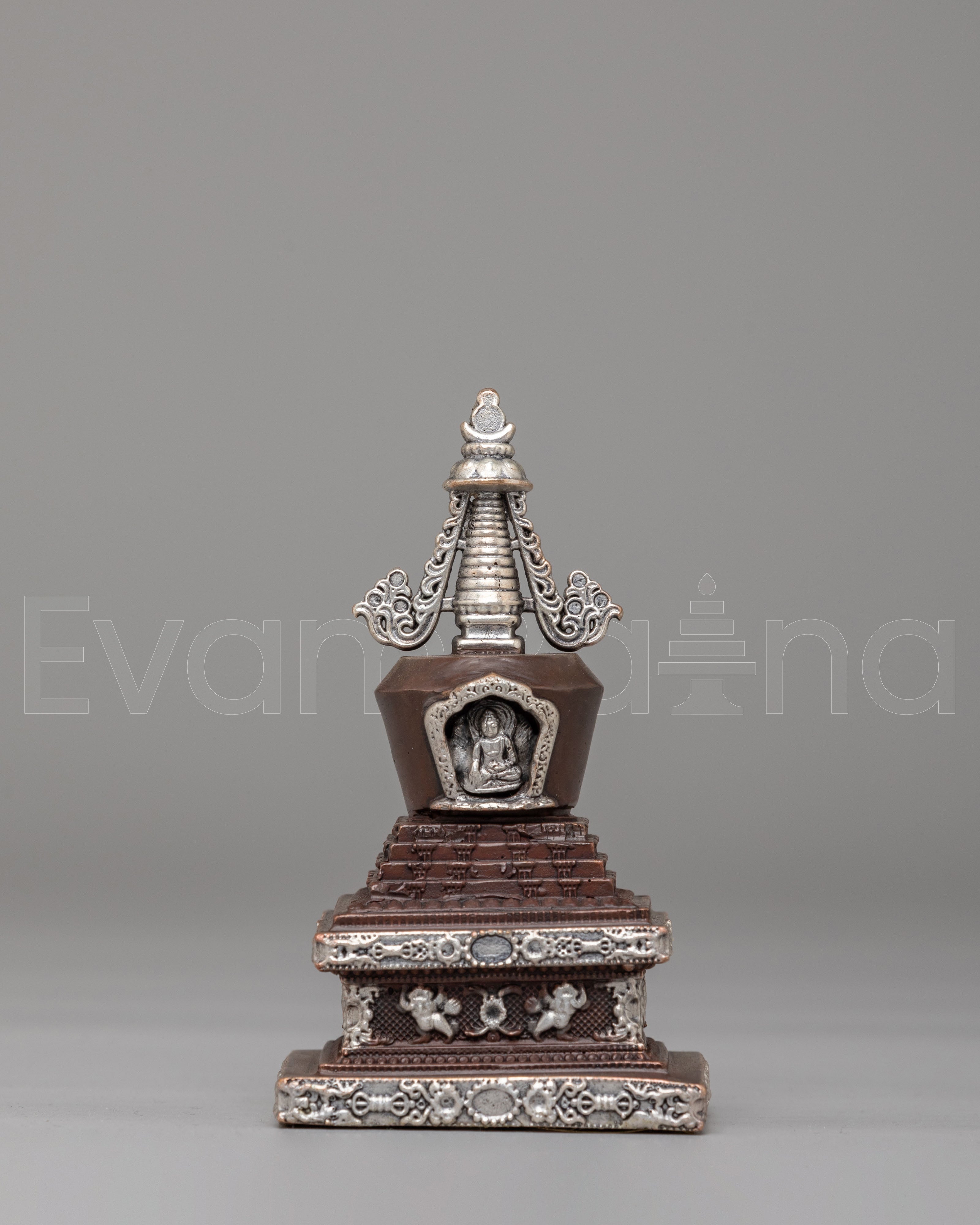
Handmade Buddhist Stupa of Many Doors | Oxidized Copper Body & Silver Plated
------------------------------------------------
Size: 10.5cm(Height) x 6cm(Length) x 6cm(Width)
Weight: 0.21 kg
Materials: Oxidized Copper Body, Silver Plated
------------------------------------------------
About Our Product
Rich in spiritual symbolism and traditional Himalayan artistry, this Buddhist Stupa of Many Doors represents the countless paths leading toward wisdom, compassion, and enlightenment. Handcrafted from an oxidized copper body with elegant silver plated detailing, the stupa carries a sacred presence that beautifully complements meditation rooms, Buddhist shrines, and spiritual altar spaces. The layered structure, ornate carvings, and central deity niche reflect the timeless beauty of Tibetan Buddhist architectural design.
The Stupa of Many Doors symbolizes openness to spiritual understanding and the accessibility of the Buddha’s teachings for all beings. Its stepped base and ascending spire represent the gradual journey toward enlightenment through mindfulness, devotion, and inner transformation. The decorative silver patterns surrounding the structure showcase the skill of Himalayan artisans who preserve traditional Buddhist metalworking techniques with exceptional care and detail. The harmonious blend of oxidized copper and silver plating creates depth, warmth, and a serene visual balance.
Created as both a sacred ritual object and meaningful spiritual decor, this Buddhist Stupa of Many Doors encourages reflection, peace, and spiritual growth. In Buddhist tradition, stupas are believed to radiate blessings and create an atmosphere of harmony within sacred environments. Whether placed on a personal altar, meditation space, or Himalayan art collection, this handcrafted stupa serves as a powerful reminder of wisdom, compassion, and the many paths leading toward awakening.
Introduction of Stupa of Many Doors
Prior to Buddhism, great teachers were interred in mounds. While some were cremated, others were sometimes buried in a seated, meditative posture, covered by an earth mound. Consequently, the domed shape of the stupa came to symbolize a person seated in meditation, mirroring the Buddha's posture when he attained Enlightenment and understood the Four Noble Truths. The stupa's base represents his crossed legs in a meditative pose, the middle section signifies the Buddha's body, and the top of the mound, from which a pole rises surrounded by a small fence, symbolizes his head. Before human images of the Buddha were created, reliefs frequently depicted practitioners showing devotion to a stupa.