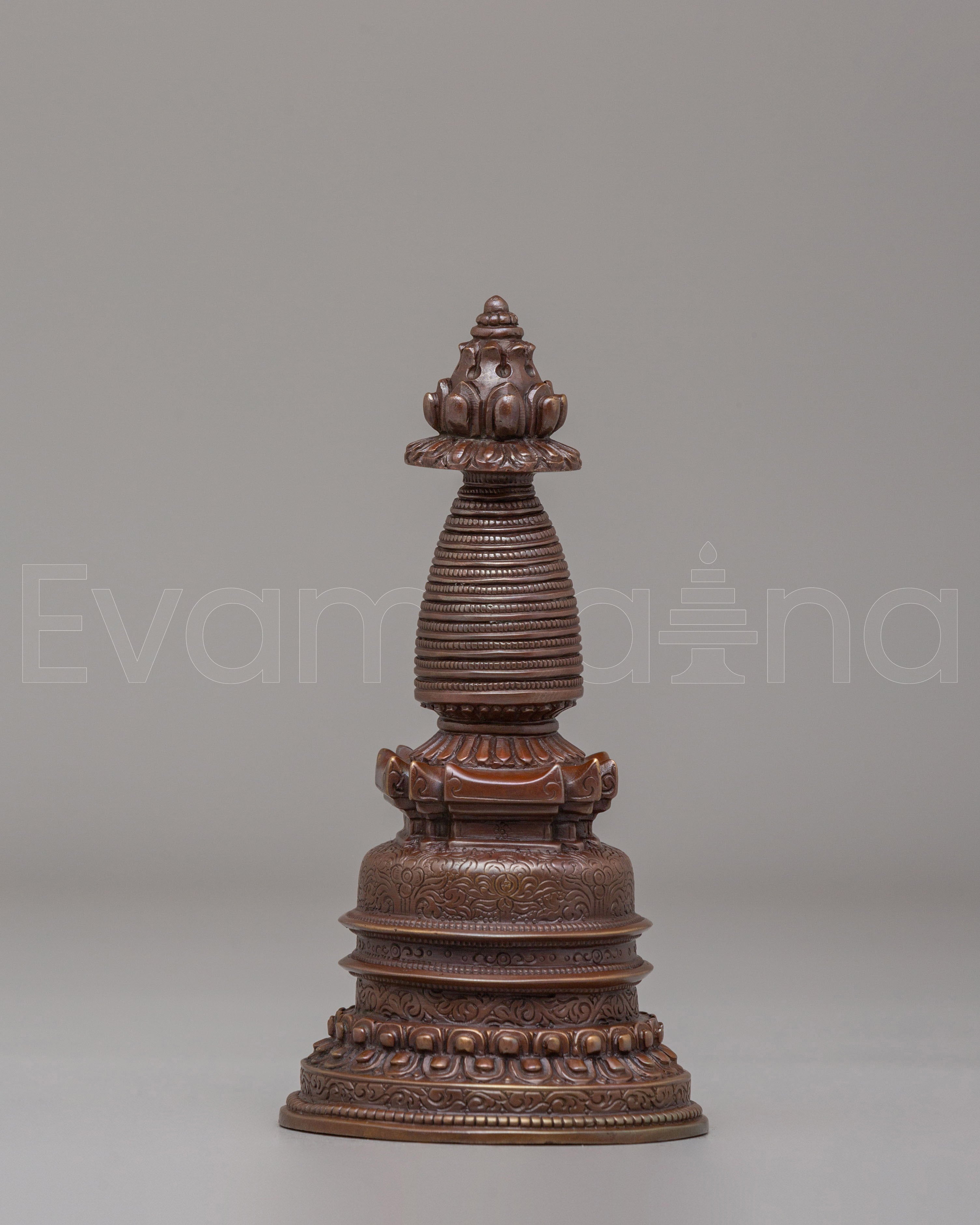
Handcrafted Kadampa Stupa | Sacred Symbol of Enlightenment and Peace
------------------------------------------------
Size: 12.5cm(Height) x 6.5cm(Length) x 6.5cm(Width)
Weight: 0.29 kg
Materials: Oxidized Copper Body
------------------------------------------------
About Our Product
This Vajrayana Kadampa Meditation Stupa is a sacred Buddhist shrine object crafted from an oxidized copper body. Measuring 12.5 cm in height and 6.5 cm in both length and width, with a weight of 0.29 kg, this compact stupa carries a calm devotional presence for Buddhist altars, meditation rooms, shrine spaces, and spiritual home decor. The Kadampa Stupa is deeply connected with Buddhist practice, symbolizing enlightenment, wisdom, compassion, and the awakened mind of the Buddha.
The design features a tiered circular base, lotus petal details, raised ornamental bands, and a beautifully shaped upper section that reflects traditional Tibetan stupa art. The oxidized copper finish gives the piece a warm antique appearance, highlighting the carved patterns, stepped form, lotus crown, and sacred structure with depth and character. Its balanced shape makes it suitable for altar placement, offering practice, and peaceful meditation settings.
In Buddhist tradition, a stupa represents the enlightened body, speech, and mind of the Buddha. Placing a Kadampa Stupa on an altar is believed to support merit, mindfulness, protection, and the wish to progress toward enlightenment. This oxidized copper Buddhist stupa serves as a meaningful reminder of devotion, inner peace, spiritual discipline, and the steady path of Dharma practice.
Introduction of Stupa
Before Buddhism, great teachers were buried in mounds. Some were cremated, but sometimes they were buried in a seated, meditative position. The mound of earth covered them up. Thus, the domed shape of the stupa came to represent a person seated in meditation, much as the Buddha was when he achieved Enlightenment and knowledge of the Four Noble Truths. The base of the stupa represents his crossed legs as he sat in a meditative pose. The middle portion is the Buddha’s body, and the top of the mound, where a pole rises from the apex surrounded by a small fence, represents his head. Before images of the human Buddha were created, reliefs often depicted practitioners demonstrating devotion to a stupa.