
Explore the Spiritual Significance of Yellow Dzambhala & His Role in Transforming Material & Spiritual Wealth
In Tibetan Buddhism, wealth is never regarded as just material wealth. It is a means to promote generosity, compassionate action, and the continuation of the Dharma. This is beautifully expressed in the revered Yellow Dzambhala, the Deity of Wealth, whose blessings aid practitioners in overcoming poverty, obstacles to prosperity and making of wisdom in the use of abundance for the benefit of all beings. In Tibetan Buddhist art, his portrait is a cherished representation not just of his image but also of the aspiration to attain wealth, good conduct, and compassion.
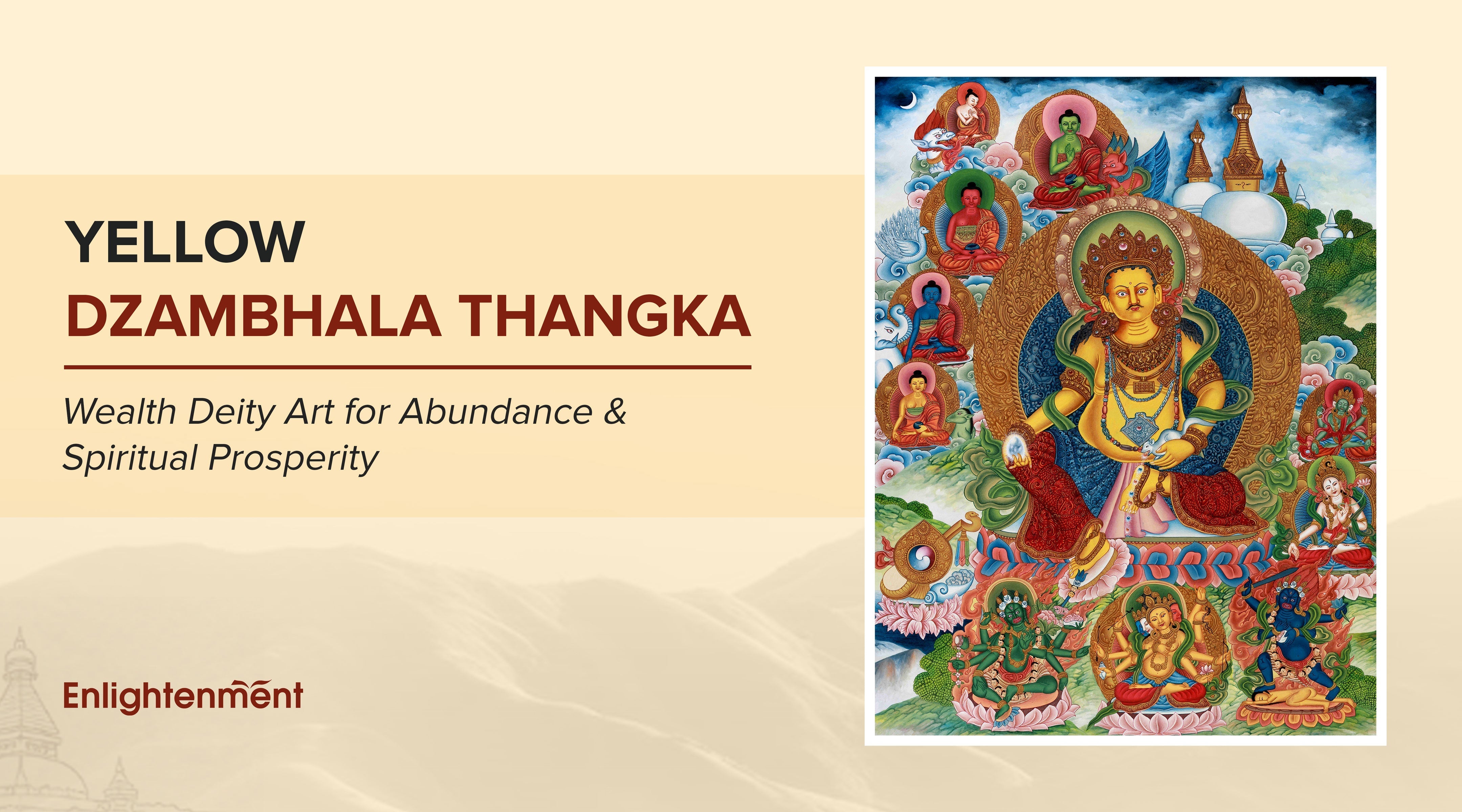
This particular Yellow Dzambla Thangka is so much more than one deity painting. In the middle is Yellow Dzambhala in majestic posture with a carefully placed group of Buddhas of enlightenment, compassionate Taras, and powerful Dharma protectors. Each figure is given a significant position within the composition and takes on a sense of mandala to embody generosity, wisdom, purification and spiritual protection. These figures, which are not just ornamental, but serve as characters for the symbolism, underscore the idea that sustainability is related to compassion, wisdom, and disciplined practice, and that lasting wealth cannot be achieved without them.
The painting itself is also of exceptional artistic value. The acrylic colors are rich and detailed, the gold accents are carefully applied, the intricate floral motifs are beautifully captured, the flowing clouds, sacred stupas, and detailed landscapes are all in perfect harmony. Each element adds a sense of balance and vitality to the composition, encouraging viewers to delve into its symbolism and layers of meaning. This thangka is a work of art that can be displayed in a sacred shrine, on a meditation altar, or simply as a piece of art, and is sure to be a source of inspiration and beauty.

Click Here To View Our Dzambhala Thangka
A Unique Composition of Prosperity, Wisdom, and Protection
One of the most striking features of this Yellow Dzambhala Thangka is its composition, which brings together multiple enlightened figures into a harmonious, unified whole. This painting is not like many traditional images of Dzambhala, which only show him alone; it is a full spiritual tableau of all the factors that contribute to his prosperity: wisdom, compassion, healing, purification, and protectiveness.
The central figure is a Buddhist deity, with a series of Buddhas depicted above him, and the figure on the right, White Tara, embodies compassion. Below the figure of Yellow Dzambhala are three wrathful protectors, the powerful forms of which symbolize the elimination of the obstacles, ignorance and negative influences that hinder spiritual and material progress. These figures are not overpowering; they provide a visual balance that will lead viewers through the painting.
The surrounding landscape further enhances the composition. The background of the mountains, the rivers, the white stupa, the rolling clouds and the lotus flowers creates a pure Buddhist landscape in which everything is idealized. These natural components can not just be viewed as decorative, but as a symbol for purity, stability, constant development of the soul and the growth of enlightened qualities. In combination they form a space where the blessings of Yellow Dzambhala are present throughout the field of vision.
Yellow Dzambhala: The Wealth Deity at the Heart of the Painting
The central figure of the thangka, which is one of the most revered Wealth Deities of Tibetan Buddhism, represents abundance, generosity, and poverty-removal. He is considered to be an emanation of Ratnasambhava Buddha and is a symbol of the transformation of scarcity into plenty and a way to help people develop a more balanced relationship with material resources. His presence embodies more than material wealth; it carries the essence of inner richness, wisdom, compassion, and spiritual fulfillment.
The artist portrays Yellow Dzambhala in such a majestic pose sitting upon a lotus throne with his golden-yellow complexion symbolizing the virtues of 'wealth' and 'enlightened abundance'. Carefully detailed with precise brush strokes, his regal stance, kind expression, jeweled crown, elaborate necklaces, silk clothing, and intricate decorations highlight the artist's attention to detail and mastery of traditional thangka techniques. These ornaments symbolize the attainment of the qualities of enlightenment, as well as the absence of any worldly attachments.
Yellow Dzambhala is about not only material wealth but about giving and doing good for others. His gracious and patient nature teaches the practitioners that abundance is to be developed responsibly, for charitable works, spiritual practice and welfare of all beings. This representation helps to evoke the link between wealth, kindness, and the path of enlightenment.

The Iconography of Yellow Dzambhala
Yellow Dzambhala's iconography is full of symbolic elements, each symbolizing different aspects of enlightened wealth, generosity, and abundance. From his golden complexion to his jeweled crown, the objects he holds onto, and so much more, all of his presentation depicts teachings about turning wealth into a vehicle of compassion, Dharma practice and benefit to all beings. The symbols serve as a reminder that wealth is not just about the material wealth but also about the abundance of wisdom, merit, and generosity.
The Golden Body (Richness of Mind and Spirit:
The golden body of Yellow Dzambhala represents enlightened wealth, generosity and spiritual abundance. The radiant colour symbolises purity, wisdom, and the prosperity that accrues from compassionate works and activities of Dharma as opposed to material gains.
5-Jewelled Crown:
The five jewels symbolize the five wisdoms of enlightenment and the five awakened qualities of Dzambhala. It represents his power to grant you blessings in the form of material assistance, spiritual advancement, and safety from harmful influences.
Royal Ease Posture:
He is in a relaxed royal position, with calm authority, confidence and compassionate readiness. It demonstrates his ability to respond to the needs of the practitioners skilfully, ensure balance and wisdom in the use of wealth.
Mongoose Spitting Jewels:
The mongoose that's being held by Dzambhala is the symbol of the continuous stream of jewels, merit and blessings. The jewels coming out of its mouth represent the elimination of scarcity, the resources to facilitate generosity and spiritual practice.
Citron Fruit in Granting Mudra:
The fruit of the citron is used to symbolize prosperity, long life and the bringing of good things. In the granting mudra, it embodies the compassion of Dzambhala, who gave a blessing of abundance and support to those in need.
Lotus Seat:
The lotus throne symbolizes purity, wisdom, and the capacity to be detached from attachments yet in the world. It represents the richness of compassion and enlightened purpose.
Calm, yet commanding expression:
Dzambhala's expression is both calm and profound, embodying a sense of care, wisdom, and guardianship. His eyes will remind practitioners that true abundance is found in generosity, ethical living and spiritual development.
The Five Dhyani Buddhas: Spiritual Foundation
The Five Dhyani Buddhas at the top of the thangka are the enlightened foundation upon which Yellow Dzambhala's blessings are granted. They represent the conversion of negative emotions into five wisdoms, and they make it clear to practitioners that the five wisdoms - the secret to true abundance - is practice of wisdom, compassion, and ethical action.

Amitabha Buddha is the symbol of infinite compassion and the wisdom of discernment. He embodies the need to use wealth and resources with kindness and generosity to others.
Amoghasiddhi Buddha represents fearless action and successful accomplishment. He symbolizes the ability to surmount difficulties and use resources effectively for good acts.
Akshobhya Buddha embodies stability, clarity and tranquility. He turns anger into wisdom, reminding practitioners to have a calm and balanced mind.
Ratnasambhava Buddha embodies abundance, generosity, and equality. He is very close to Yellow Dzambhala and symbolizes enlightened use of wealth through giving and compassionate action.
Vairocana Buddha is the Buddha of universal wisdom and enlightened awareness. He is a teacher of the fact that material good should always be guided by spiritual understanding.
The Five Dhyani Buddhas collectively teach that wealth is not just about material abundance, but also the development of wisdom, compassion, and enlightened qualities.
Bodhisattvas and Protective Deities: Compassion and Protection
In addition to the supporting deities of the thangka, Mahakala is a protective and transformative deity that is responsible for maintaining the blessings of Yellow Dzambhala. These figures, in addition to the compassionate presence of White Tara, emphasize the importance of fostering abundance while also eliminating interference to allow it to manifest. The presence of these highlights that wealth and prosperity in Vajrayana Buddhism is not limited to accepting blessings but also involves developing wisdom, compassion, and spiritual responsibility.
White Tara, along with Yellow Dzambhala symbolizes compassion, healing, longevity and peaceful protection. The presence of her highlights the nourishment side of abundance, reminding practitioners that prosperity not only means material wealth but also physical health, inner peace and spiritual harmony. White Tara represents healing energy, the elimination of suffering and obstacles, and the realization that wealth is meaningful when it brings the good health, happiness and well-being of others.

Mahakala is a fierce Dharma protector who represents the removal of obstacles, ignorance and negative energies with great compassion. His wrathful form is not anger, but his active energy to face the internal and external difficulties that slow down spiritual development. Mahakala is placed as a protector under Yellow Dzambhala, thus symbolically representing the protection of wealth, Dharma activities, and positive conditions, to teach practitioners that wealth should be protected through the ethical discipline, wisdom, and compassionate intention.
Symbolism and Meditation Practices
The Yellow Dzambhala Thangka is a potent visual aid for meditation, contemplation and the practice of abundance. Practitioners visualize the shape of the Yellow Dzambhala, recite sacred mantras like “Om Jambhala Jalendraye Svaha,” and offer symbolic objects to generate generosity, eliminate obstacles and set up auspicious conditions for spiritual development and worldly happiness.
In addition to the blessing of wealth, the practice of Yellow Dzambhala is centered on shifting the mindset of the individual towards wealth. It inspires practitioners to rise above greed and attachment, to embrace ethical use of resources, and to foster compassion with others. By meditating, Dzambhala reminds us that abundance is found in wisdom, generosity, and actions that benefit the health and happiness of all.
Artistic Craftsmanship
This Yellow Dzambhala Thangka showcases the exceptional skill and dedication of traditional Tibetan artists. The colors used are vibrant, the shading techniques refined, and the delicate 24K gold highlights beautifully complement the deity's crown, jewelry, ornaments, lotus throne, and sacred elements. Every detail has been carefully painted to capture the symbolic interpretation and visual richness of the composition.
The figures are arranged in a harmonious manner, the patterns are detailed and intricate, and the brushwork is precise, demonstrating the artist's mastery of Tibetan Buddhist iconography and artistic traditions. Each part of the composition, including the expressive qualities of the deities, the surrounding decoration, and the general harmonies, creates an overall harmony and serves as a spiritual teaching and a captivating work of sacred art.
Conclusion: Integrating Wealth, Wisdom, & Compassion
In the Yellow Dzambhala Thangka, the image is a wonderful representation that true success is not confined to material gain alone. The painting's central figure, Yellow Dzambhala, and the other enlightened figures, embody abundance in the form of generosity, wisdom, compassion, and spiritual responsibility. Taken together, the Five Dhyani Buddhas, Tara forms, and protecting deities all convey that wealth is truly valuable when it's used to bring benefit to oneself and others and when it's anchored in ethical principles.
The thangka was made using traditional Tibetan art techniques, featuring vibrant colors, intricate details, and delicate gold accents, which have been passed down for centuries in the Himalayan Buddhist traditions. It is more than a sacred painting; it is a visual aid for meditation, devotion, and contemplation, and it reminds meditators that real wealth comes from a balanced mind, a compassionate action and the development of enlightened attributes. The Yellow Dzambhala Thangka continues to generate inspiration for the union of wealth, wisdom and compassion, on the path of Vajrayana practice, by its imagery and teachings.
Click Here To View Our Collection Of Hand-Painted Dzambhala Thangkas
