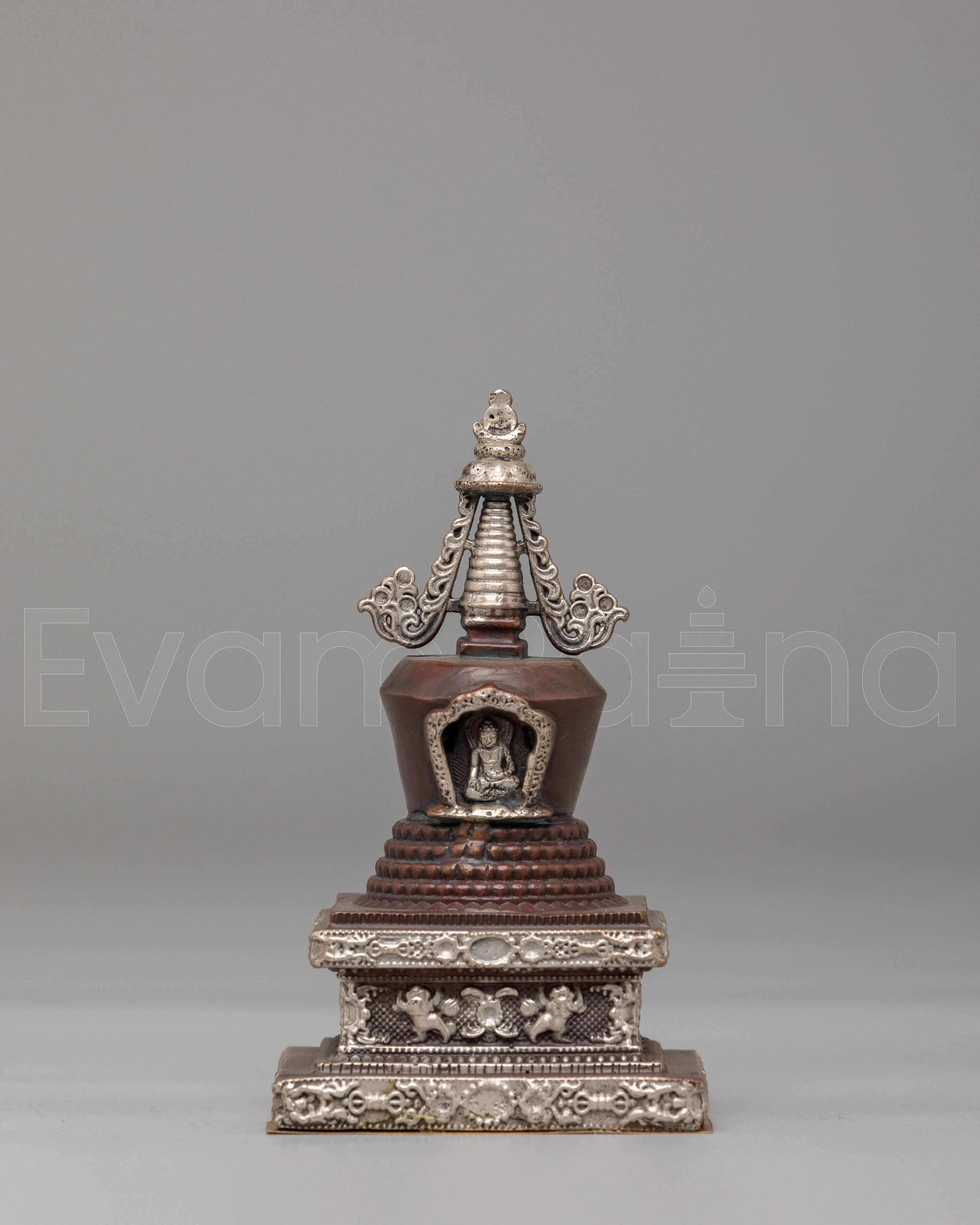
Handcrafted Lotus Blossom Stupa | Sacred Buddhist Altar Decor
------------------------------------------------
Size: 10.5cm(Height) x 6cm(Length) x 6cm(Width)
Weight: 0.21 kg
Materials: Oxidized Copper Body, Silver Plated
------------------------------------------------
About Our Product
Gracefully designed with traditional Himalayan artistry, this Handcrafted Lotus Blossom Stupa symbolizes spiritual awakening, wisdom, and the enlightened mind of the Buddha. Made from an oxidized copper body with elegant silver plating, the stupa carries a serene and sacred appearance that beautifully complements meditation spaces and Buddhist altars. The carefully proportioned structure rises from a layered base adorned with intricate carvings, while the small Buddha figure within the central niche enhances its devotional significance.
The architectural form of this Lotus Blossom Stupa reflects important elements of Buddhist symbolism. The stepped foundation represents the gradual path toward enlightenment, while the upward rising spire signifies spiritual ascension and liberation from worldly suffering. Decorative silver details surrounding the base and canopy showcase the remarkable craftsmanship of Himalayan artisans who preserve centuries old Buddhist metalworking traditions. The oxidized copper finish adds warmth and depth, creating a harmonious contrast with the luminous silver plated accents.
Created as a sacred object of peace and mindfulness, this Handcrafted Lotus Blossom Stupa brings calming spiritual energy into any environment. In Buddhist tradition, stupas are believed to radiate blessings, encourage meditation, and inspire compassion and wisdom. Whether placed on a personal shrine, meditation altar, or spiritual collection display, this Himalayan stupa serves as a meaningful reminder of inner balance, devotion, and the path toward enlightenment.
Introduction of Lotus Blossom Stupa
Prior to Buddhism, great teachers were interred in mounds. While some were cremated, others were buried in a seated, meditative posture, covered by a mound of earth. Consequently, the domed shape of the stupa evolved to represent a person seated in meditation, mirroring the Buddha's posture when he attained Enlightenment and understood the Four Noble Truths. The stupa's base symbolizes his crossed legs in meditation, the middle section represents the Buddha’s body, and the top of the mound, featuring a pole rising from the apex surrounded by a small fence, signifies his head. Before human images of the Buddha were created, reliefs frequently depicted practitioners demonstrating devotion to a stupa.