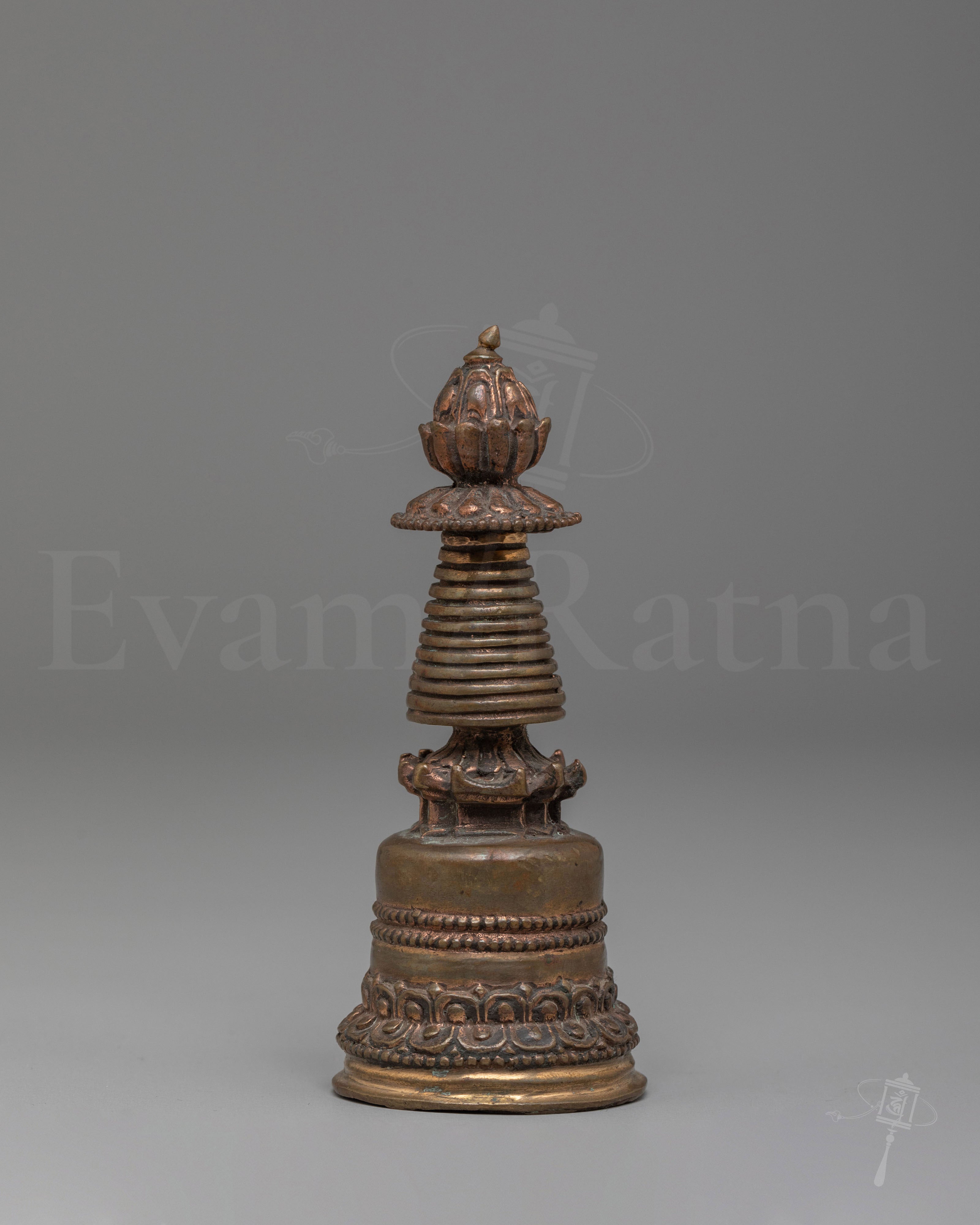
Tibetan Kadampa Stupa | Buddhist Meditation Symbol
------------------------------------------------
Size: 11cm(Height) x 4.5cm(Length) x 4.5cm(Width)
Weight: 0.2 kg
Materials: Oxidized Copper
------------------------------------------------
About Our Product
This Handmade Buddhist Kadampa Chorten is crafted from oxidized copper, reflecting the traditional artistry and spiritual significance of Tibetan Buddhist sacred objects. Designed in the form of a classic stupa, it features carefully shaped architectural elements, including a tiered base, rounded body, stacked rings, and a lotus inspired finial at the top. The detailed craftsmanship and antique finish highlight the symbolic beauty of this miniature stupa, making it suitable for Buddhist altars, meditation spaces, and spiritual collections.
In Buddhist tradition, the stupa represents the enlightened mind of the Buddha and serves as a powerful symbol of wisdom, compassion, and liberation. The Kadampa Stupa is especially connected with the Kadampa tradition, which emphasizes ethical conduct, meditation, compassion, and the cultivation of inner awareness. Traditionally, stupas are built to preserve sacred teachings and relics while inspiring practitioners on the path toward awakening.
This Tibetan Kadampa Stupa is ideal for practitioners, collectors, and those seeking a meaningful sacred object for their altar or meditation area. Whether used as a devotional item or displayed as Buddhist decor, it serves as a reminder of mindfulness, spiritual discipline, and the aspiration to develop wisdom and compassion. Its compact form allows it to become a meaningful presence in personal practice spaces and sacred environments
Introduction of Stupa
Before Buddhism, great teachers were buried in mounds. Some were cremated, but sometimes they were buried in a seated, meditative position. The mound of earth covered them up. Thus, the domed shape of the stupa came to represent a person seated in meditation, much as the Buddha was when he achieved Enlightenment and knowledge of the Four Noble Truths. The base of the stupa represents his crossed legs as he sat in a meditative pose. The middle portion is the Buddha’s body, and the top of the mound, where a pole rises from the apex surrounded by a small fence, represents his head. Before images of the human Buddha were created, reliefs often depicted practitioners demonstrating devotion to a stupa.