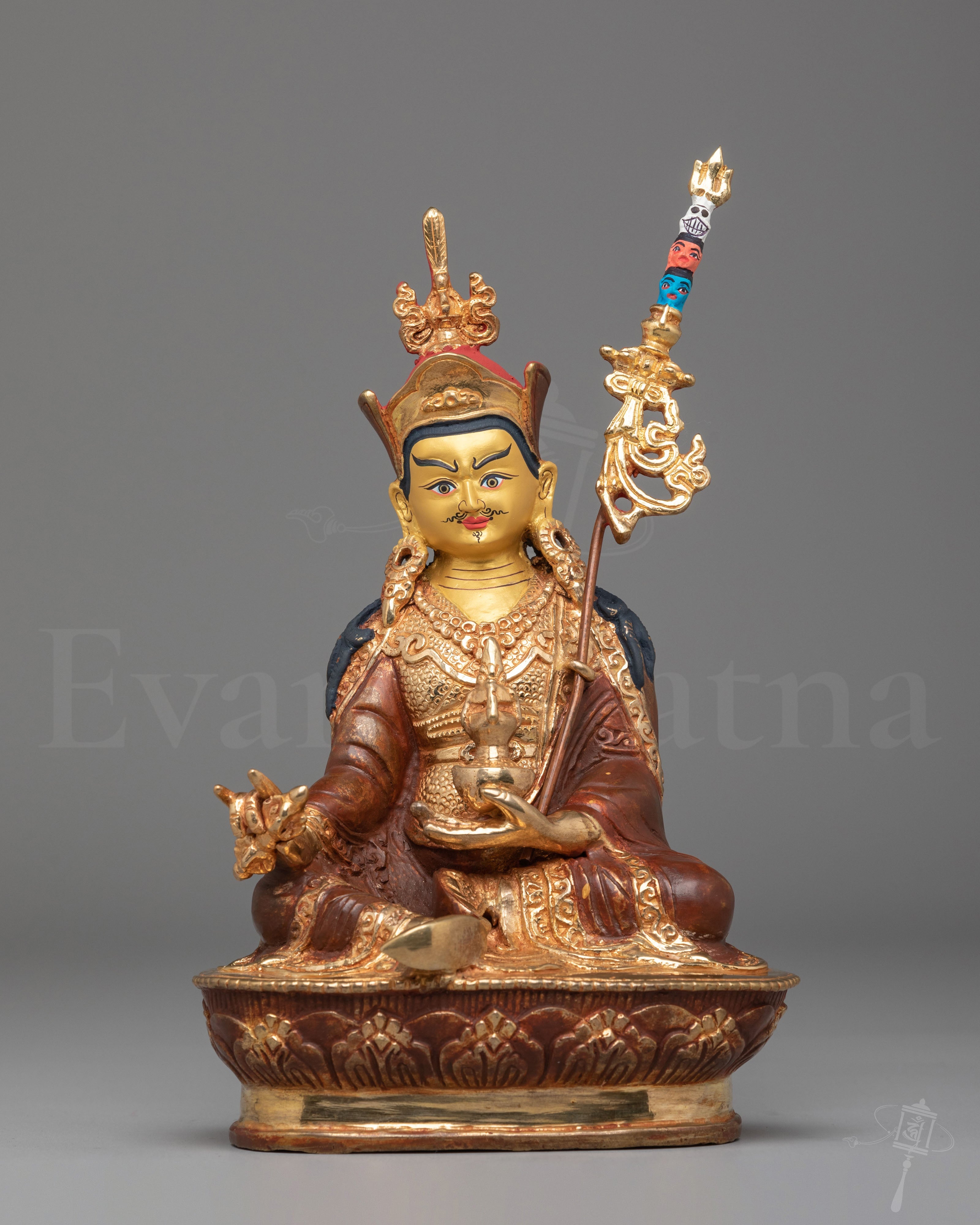
Traditional Guru Rinpoche Statue | Symbol of Wisdom & Protection
------------------------------------------------
Size: 23cm(Height) x 15cm(Length) x 11cm(Width)
Weight: 1.19 kg
Materials: 24K Gold Plated, Acrylic Color, Copper Body
------------------------------------------------
About Our Product
This Padmasambhava Guru Rinpoche Sculpture is a handcrafted Tibetan Buddhist artwork representing the great master who established Vajrayana Buddhism in Tibet. Measuring 23cm in height, 15cm in length, and 11cm in width, with a weight of 1.19 kg, this sacred sculpture is crafted from a copper body with 24K gold plating and detailed acrylic color work. The statue portrays Guru Rinpoche in his traditional seated form, reflecting his enlightened wisdom, spiritual power, and compassionate activity.
This Guru Rinpoche statue displays the traditional features associated with Padmasambhava. He wears his distinctive lotus hat, which represents his enlightened wisdom and mastery of Buddhist teachings. His right hand holds the vajra, symbolizing unchanging wisdom, compassion, and spiritual power. His left hand holds the skull cup containing the vase of immortality, representing the nectar of wisdom and the attainment of awakened realization. Resting beside his left shoulder is the khatvanga staff, a sacred tantric symbol representing spiritual transformation and the union of wisdom and method. His richly decorated robes, ornaments, peaceful expression, and lotus seat reflect his revered role as a tantric master and protector of the Dharma.
Guru Rinpoche, also known as Padmasambhava, is deeply respected in Tibetan Buddhism as the “Second Buddha” who spread Vajrayana teachings throughout Tibet. This statue can be placed in Buddhist altars, meditation rooms, temples, or sacred collections as an object of devotion and inspiration. His presence symbolizes protection, removal of obstacles, spiritual guidance, and the cultivation of wisdom and compassion on the path toward awakening.
Introduction of Guru Rinpoche
Guru Rinpoche, also known as Padmasambhava, was an instrumental figure in Tibetan Buddhism. His teachings are recognized through an oral lineage (kama) and a lineage of hidden treasure texts (termas). He is believed to appear in visionary encounters to tertöns, and his form is visualized during guru yoga practice, especially within the Nyingma school. Buddhists across Tibet, Nepal, Bhutan, India's Himalayan states, and other global regions revere him.