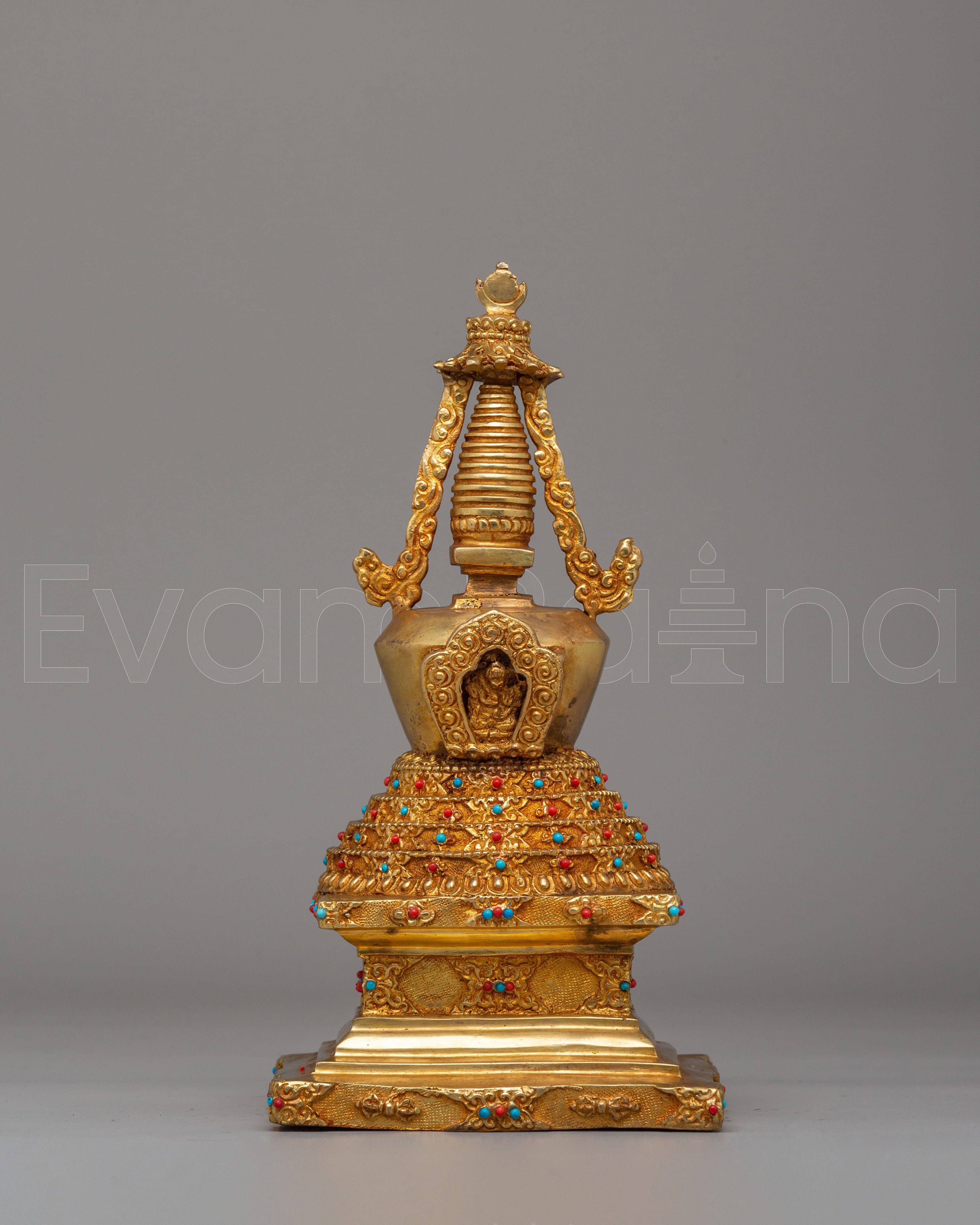
Ritual Altar Lotus Blossom Stupa - Symbol of Enlightenment
------------------------------------------------
Size: 23.5cm(Height) x 12.5cm(Length) x 12.5cm(Width)
Weight: 1.76 kg
Materials: Copper Body, Gold Plated
------------------------------------------------
About Our Product
The Ritual Altar Lotus Blossom Stupa is a magnificent handcrafted copper stupa with gold plating. It measures 23.5 cm in height, 12.5 cm in breadth, and 12.5 cm in length, weighing 1.76 kg. The stupa's golden surface gleams with brilliant light, representing the purity and spiritual enlightenment of the Buddha's teachings. Its meticulous craftsmanship and elegant design make it a stunning centerpiece for any altar, meditation area, or sacred space.
The design features a lotus blossom inspired base, ornate floral motifs, raised decorative patterns, and jewel tone accents that enhance its ceremonial beauty. The tiered stupa form rises with elegance, symbolizing the path toward enlightenment, wisdom, and inner awakening. Each sculpted detail adds depth to the piece, making it a powerful Buddhist stupa for offerings, prayer, and sacred home decor.
In Buddhist tradition, the lotus blossom symbolizes the path to spiritual awakening and purity, rising from muddy waters to bloom beautifully. This Lotus Blossom Stupa embodies the same spirit, representing the transformation of ignorance into enlightenment. The gold-plated surface enhances its divine presence, making it an excellent focal point for prayer, meditation, and offerings. Whether used in ritual practice or as a decorative piece, this stupa brings peace and spiritual energy to any environment, serving as a reminder of the Buddha's teachings and the potential for inner growth.
Introduction of Lotus Blossom Stupa
Before Buddhism, great teachers were interred in mounds. Some were cremated, while others were buried in a seated, meditative position, covered by an earth mound. Consequently, the domed shape of the stupa evolved to represent a person seated in meditation, mirroring the Buddha's posture when he attained Enlightenment and knowledge of the Four Noble Truths. The stupa's base symbolizes his crossed legs in meditation, the middle portion represents the Buddha’s body, and the top of the mound, from which a pole rises surrounded by a small fence, signifies his head. Prior to the creation of human Buddha images, reliefs frequently depicted practitioners demonstrating devotion to a stupa.