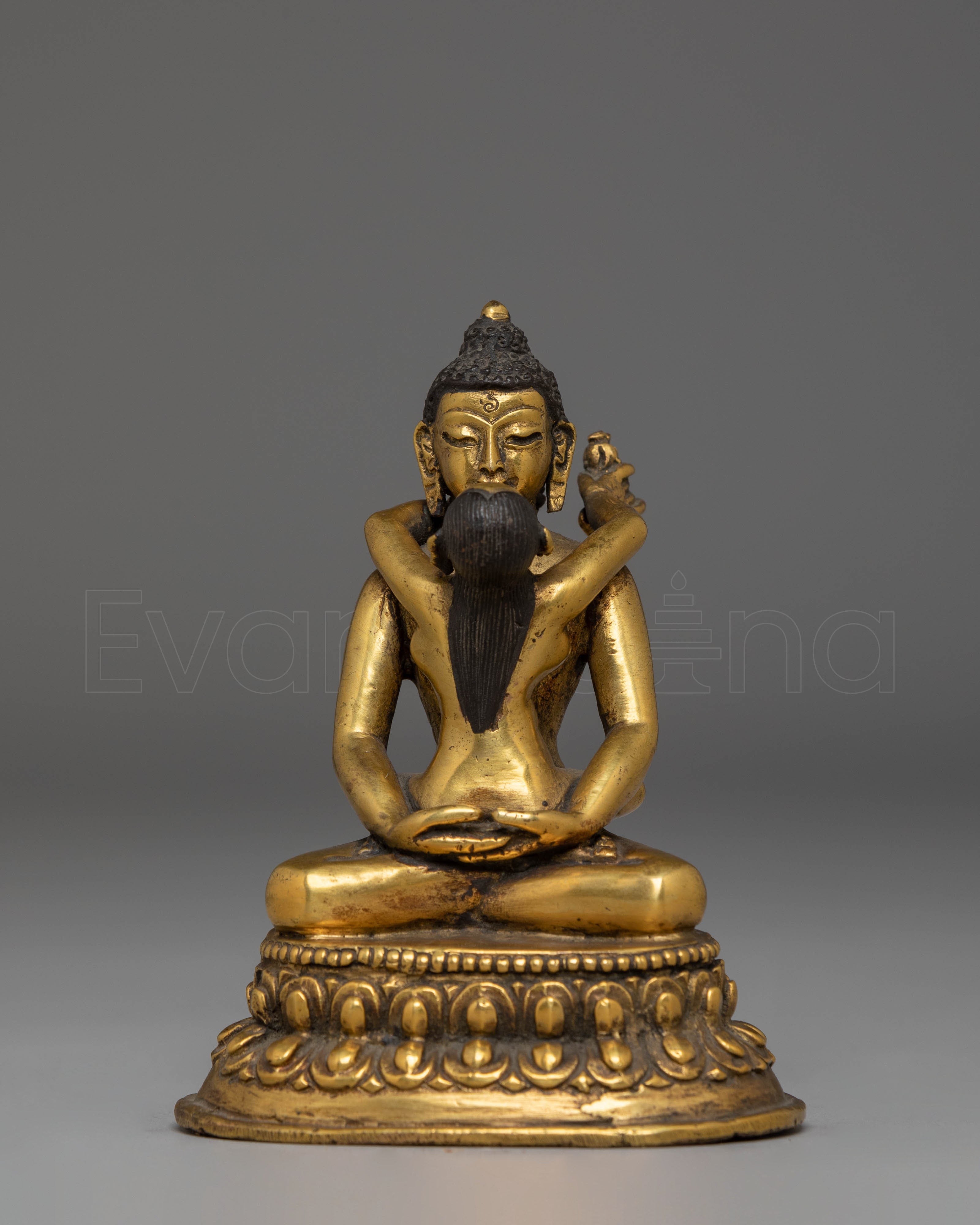
Copper Samantabhadra Yab-Yum Sculpture | Enlightenment & Wisdom Symbol
---------------------------------------
Size: 11.5cm(Height) x 8.5cm(Width)
Weight: 0.57 kg
Materials: Copper Body, Gold Plated, Antique Finish
---------------------------------------
About Our Statue:
This Samantabhadra with Samantabhadri Statue is a handcrafted sacred artwork created by the late Yogesh Shakya, an artisan with over 30 years of experience in traditional metal craftsmanship. The sculpture features a copper body with a rich gold-plated finish and antique detailing, highlighting the serene expressions, intricate ornaments, lotus throne, and balanced composition of the figures. The refined craftsmanship reflects the skill and dedication involved in creating traditional Himalayan Buddhist sculptures.
Samantabhadra Yab-Yum represents the union of wisdom and compassion, method and insight, within Vajrayana Buddhist philosophy. Samantabhadra, the primordial Buddha, is depicted in union with Samantabhadri, symbolizing the inseparable nature of enlightened awareness. The embracing posture represents the harmonious integration of these complementary qualities, while the peaceful seated form reflects the state of awakened consciousness beyond dualistic perception.
This Handcrafted Samantabhadra Yab-Yum Statue is suitable for Buddhist altars, meditation spaces, shrine rooms, spiritual collections, and traditional interiors. Its compact size makes it ideal for personal practice spaces while preserving the symbolic depth and artistic detail of the sculpture. The combination of copper craftsmanship, gold plating, antique finishing, and traditional Vajrayana iconography makes this a meaningful representation of Himalayan Buddhist artistry and the legacy of skilled artisan work.
Introduction to Samantabhadra
In Mahayana Buddhism, Samantabhadra is a bodhisattva (buddha-to-be) who represents benevolence and happiness. He is frequently depicted in a triad with Shakyamuni (the Buddha) and the bodhisattva Manjushri, riding a three- or single-headed elephant with six tusks. In China, he is the patron deity of Mount Emei, located in the province of Sichuan. He is regarded as the manifestation of Vairocana, the cosmic Buddha, in Vajrayana, or Tantric Buddhism. In Chinese, he is known as Puxian, while in Japanese, he is known as Fugen.