
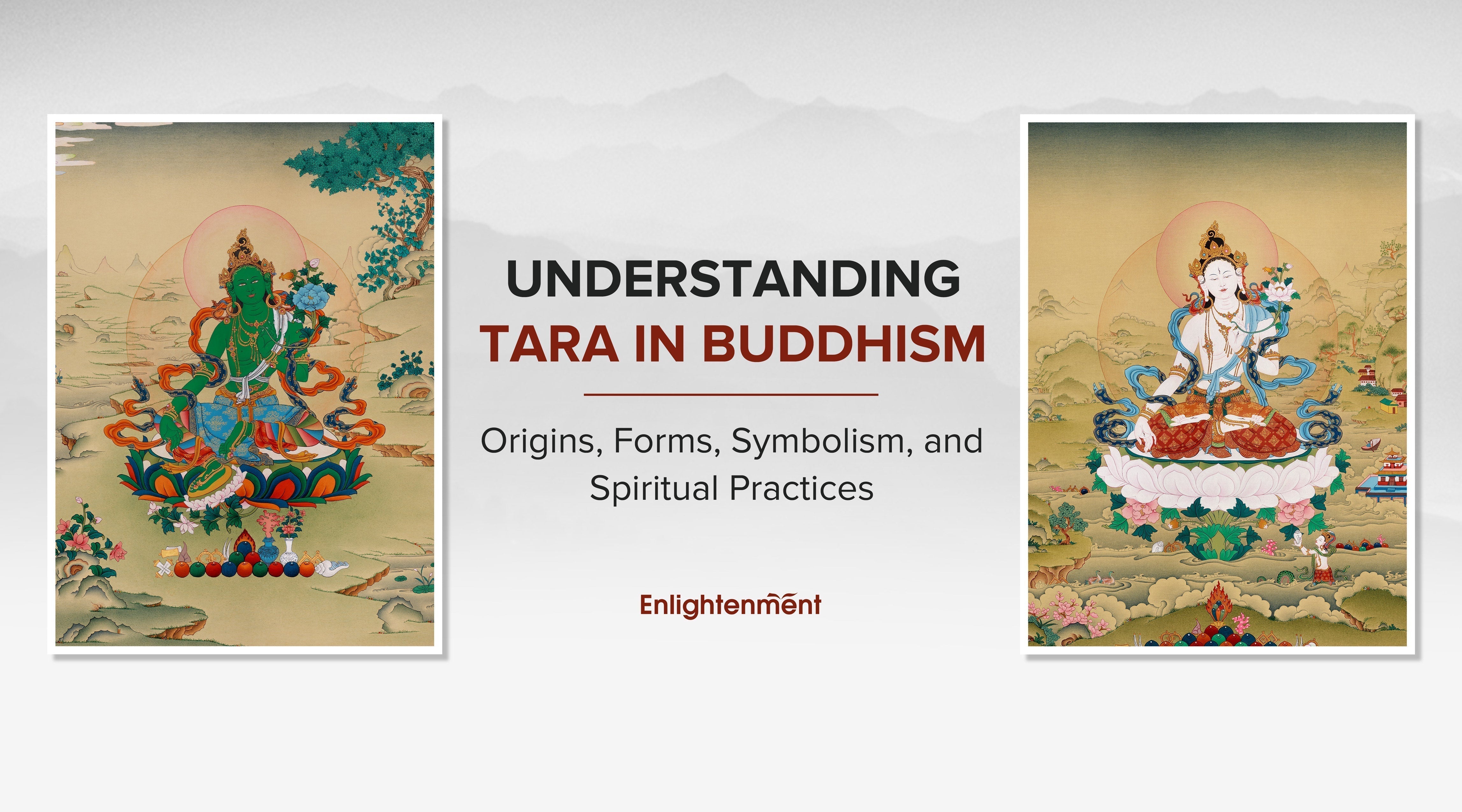
Discover Tara’s origins, sacred forms, symbolism, meditation practices, and protection from the eight great fears
Tara is one of the most popular enlightened beings in Tibetan Buddhism, embodying compassion, wisdom, and prompt enlightened action. Known as the “Mother of All Buddhas” and the “Saviouress,” she responds quickly to the suffering and fears of sentient beings. Tara is connected with protection, healing, the removal of obstacles, and guidance towards liberation. Her various forms manifest different qualities of awakening: the active compassion of Green Tara and the healing, peace, and longevity of White Tara.
Tara is often depicted with a serene face, an elegant pose, lotus flowers, and a gesture that symbolizes compassion. The purpose of these sacred pictures is not simply to decorate but as a visual aid for meditation and spiritual devotion. Practitioners use Tara visualization, mantra recitations, and contemplation as a way to develop fearlessness, kindness, wisdom, and the ability to respond to the needs of others with compassion.
Tara in Buddhism
Tara’s name comes from the Sanskrit root tṛ, meaning “to cross” or “to help cross over.” Therefore, she is known as the one who assists sentient beings in crossing the ocean of suffering, fear, and confusion to liberation and awakening. Her name is a reminder of her loving nature as a guide who brings practitioners beyond the hurdles of the world and the obstacles of the spirit.

Tara is considered to be the embodiment of enlightened compassion and wisdom in Mahayana and Vajrayana Buddhism. She is very much related to Avalokiteshvara, also called Chenrezig, the Bodhisattva of Compassion. Avalokiteshvara is the compassionate awareness of all suffering, while Tara is the embodiment of that compassion, one that acts immediately, fearlessly and beneficially.
This is an active quality that is evident in the traditional posture of Green Tara, which is always one leg extended as if she were ready to help beings immediately. Tara practices are to be found in all four major schools of Tibetan Buddhism: Nyingma, Kagyu, Sakya, and Gelug. They are widely practiced because they involve deep meditation and mantra, as well as visualization and attributes like courage, kindness, protection, and compassion that can be carried over into daily life.
Origin of Tara
There are several traditional stories of the origin of Tara in which she is presented as a symbol of compassion, wisdom, equality, and enlightened action. These legends are not just stories, but the awakening of the qualities that emerge when compassion is directly engaged with suffering.
Tara Emerging from Avalokiteshvara’s Compassion
One of the most popular tales tells of Avalokiteshvara, who was moved to compassion by the countless sufferings of living beings. He had tirelessly assisted them, but countless beings continued to suffer, be frightened, and be confused. Tears came rolling down from his eyes, and from one of those tears Tara appeared. She vowed to help him save sentient life from suffering, demonstrating that compassion is not just an emotion but a natural growth that leads to prompt and effective action.
Tara’s Vow to Become Enlightened as a Woman
There is another story about a princess named Yeshe Dwa, or Moon of Wisdom. She practiced the Dharma for many lives and gained deep compassion, then monks told her to pray to be born as a man for the purpose of attaining enlightenment. She rejected this belief and vowed to continue appearing in female form until all beings were liberated. She vows that awakening is not gender bound and that all beings can become awakened through wisdom, compassion, and dedicated practice.

Is Tara the Same as Buddha?
Tara is not the same as the historical Buddha Shakyamuni, who was born as Siddhartha Gautama and taught the path of Buddhism in ancient India. In Mahayana and Vajrayana Buddhism, however, the figure of Tara is seen as a fully enlightened being who has become a Buddha and is constantly active in the world to liberate all beings.
She is known as a Female Buddha, Enlightened Mother, and a compassionate embodiment of awakened wisdom. Tara is seen as the feminine form of enlightened activity, rather than a creator deity, and she manifests in a multitude of forms to respond to the needs of practitioners with regard to protection, guidance, healing, and response.
Types of Tara in Tibetan Buddhism
Tara is seen in many aspects, each with its own form of enlightened compassion and activity. These include Green Tara and White Tara, which are both very popular and commonly practiced. The Tibetan Buddhist traditions also have Red Tara, Yellow Tara, Black Tara, and the Twenty-One Taras, all with their own qualities and spiritual uses.
Green Tara: The Swift Protector
Green Tara is the most widely practised form of Tara and is the symbol of quick, effective, compassionate action, protection, courage, and the clearing away of obstacles. She is thought to be very responsive in those moments when she is called upon, particularly when frightened, uncertain, in danger, or in emotional distress. The green color represents awakened activity, vitality, and the power to help beings immediately.

Click Here To View Our Collection Of Hand-Painted Green Tara Thangkas
She is depicted seated on a lotus base with her right leg extended downward, symbolizing her willingness to get up and help those in distress. Om Tare Tuttare Ture Soha is her famous chant to protect, encourage, and free from inner and outer obstacles. Green Tara is also closely associated with the protection of the 8 great fears.
White Tara: The Mother of Healing and Longevity
White Tara is the symbol of peaceful compassion, healing, long life, and spiritual well-being. Her white color symbolizes purity, calmness, and the peaceful energy of enlightened wisdom. White Tara is used by practitioners during illness, when they find themselves weak, or when they want to remove obstacles that may shorten their lives or upset the balance of the body and mind.
She has seven eyes, two on her face, one on her forehead, one in each palm, and one in each sole. These eyes represent that she is able to see suffering in all directions and respond with endless compassion. White Tara practices are particularly associated with life energy restoration, life longevity, peaceful awareness, and healing.

Click Here To View Our Collection Of Hand-Painted White Tara Thangkas
Other Forms of Tara
In addition to the Green and White Tara in Tibetan Buddhism, there are many other forms:
Red Tara
Red Tara is related to the magnetic power of enlightened activity, compassionate influence, and the transformation of desire to wisdom. Her practice tends to be associated with gathering favourable circumstances, enhancing good relationships, and leading beings to the Dharma.
Yellow Tara
Yellow Tara symbolizes abundance and plenty, generosity and accumulation of merit and positive qualities. In her practice, she fosters material prosperity and the inner abundance that comes through wisdom, ethics, and generosity.
Black Tara
Black Tara is a strong protecting form, and it fights against bad forces, negative energies, and serious obstacles. Her determined look is a sign of caring strength, not anger; she demonstrates the strength of wisdom in the elimination of fear and negativity.
The Twenty-One Taras
The Twenty-One Taras are the manifestations of Tara, each one of them embodying a different aspect of compassionate action. Together they provide protection, healing, guidance, courage, prosperity, and support to a practitioner who may be experiencing any type of difficulty.
Depiction of Tara in Thangka Paintings and Statues
Tara's portrayal in Thangka paintings and in statues of Buddha depicts traditional and symbolic art forms, where many postures, gestures, expressions, and symbols have spiritual significance. These details enable practitioners to appreciate her luminous characteristics and serve as a symbol for meditation and reflection.
Lotus Flower
Tara is often depicted in the lotus posture, carrying flowers or sitting on a lotus seat. The lotus is a symbol of purity, spiritual awakening, and wisdom from the ordinary. The flower comes from muddy water, but the flower is clean and beautiful, and the possibility of attaining enlightenment is that it can be done by living in the midst of the difficulties in the world.
Mudras: Sacred Hand Gestures
Tara’s hand gestures, known as mudras, communicate her compassionate and protective qualities. The Varada Mudra symbolizes her generosity and willingness to bless and help. The Abhaya Mudra (gesture of fearlessness) represents protection, reassurance, and freedom from fear.
Peaceful Expression
Tara's expression is calm and gentle, symbolizing compassion, inner stability, wisdom, and total absence of fear. Unlike wrathful Buddhist deities whose fierce forms symbolize the powerful transformation of obstacles, Tara’s peaceful appearance reveals how loving compassion and wisdom can overcome suffering.

Tara Practices and Their Benefits
Tara practice is a blend of visualization, mantra recitation, and cultivation of compassion. It offers several key advantages, such as:
-
Protection and Fearlessness: The practice of Tara empowers practitioners to confront danger, anxiety, and uncertainty with greater courage and awareness.
-
Removal of Obstacles: It is usually done in challenging moments to build determination, clarity, and compassionate action.
-
Cultivation of Compassion: Meditation on Tara encourages practitioners to respond to suffering with kindness, patience, and understanding.
-
Healing and Longevity: White Tara practice is particularly linked to peaceful energy, healing, good health, long life, and overall well-being.
The Eight Great Fears Tara Protects Against
One of Tara’s most important roles is protecting beings from the Eight Great Fears. There are external and internal meanings of these fears. They represent physical dangers as well as mental afflictions.
-
Lions - Pride: Tara assists in the transformation of arrogance to humility and compassion.
-
Elephants - Ignorance: She removes ignorance and brings forth wisdom and awareness.
-
Fire - Anger: Tara changes anger and hatred into patience and clarity.
-
Snakes - Jealousy: She helps overcome jealousy by appreciating and understanding.
-
Robbers - Wrong Views: Tara leads practitioners out of false perceptions to the truth.
-
Imprisonment - Attachment: She symbolizes freedom from attachments and unhealthy patterns.
-
Water - Desire: Tara helps calm overwhelming desire and restore inner balance.
-
Demons - Doubt: She provides courage to overcome fear, doubt, and inner obstacles.

The Importance of Tara in Buddhist Art and Practice
The figure of Tara continues to be one of the most popular in Tibetan Buddhism as an embodiment of compassion that is actively engaged with suffering. Her presence provides practitioners with protection, guidance, courage, and a connection to enlightened feminine wisdom.
A Tara Thangka or statue is used to help meditate and to inspire the development of compassion and wisdom in everyday life. Its sacred symbol conveys the belief that these enlightened characteristics can be cultivated in the mind of the practitioner.
Conclusion: Tara as the Compassionate Heart of Buddhism
Through her wisdom, protection, and fearless response to suffering, Tara embodies the compassionate Heart of the Buddha. Whether appearing as Green Tara, White Tara, or one of her many other forms, she inspires practitioners to overcome fear, remove obstacles, develop inner strength, and transform suffering into wisdom and courage.
Practitioners draw upon the enlightened attributes of Tara through meditation, chanting of mantras, visualization, and contemplation of her sacred image. Her presence reminds us that compassion is not just a feeling; it is a practice of kindness, awareness, and service that can help us and others to move towards liberation.
