35 Buddha Thangka Collection
2 products
Showing 1 - 2 of 2 products
35 Confession Buddha Thangka, Their Sacred Iconography, and the Path of Purification
In Tibetan Buddhism, few images carry as much quiet power as the thangka of the 35 Buddhas of Confession. It is not painted only to be admired. It is a working tool for the heart, built to help a practitioner face past mistakes with honesty and let them go.
The practice behind it comes from a Mahayana scripture called the Sutra of the Three Heaps, taught by Shakyamuni Buddha. A thangka of the group works like a mirror. It reminds us of our capacity to change, and of the compassion that waits to meet sincere regret.
Detailed Description of the 35 Buddhas of Confession Thangka
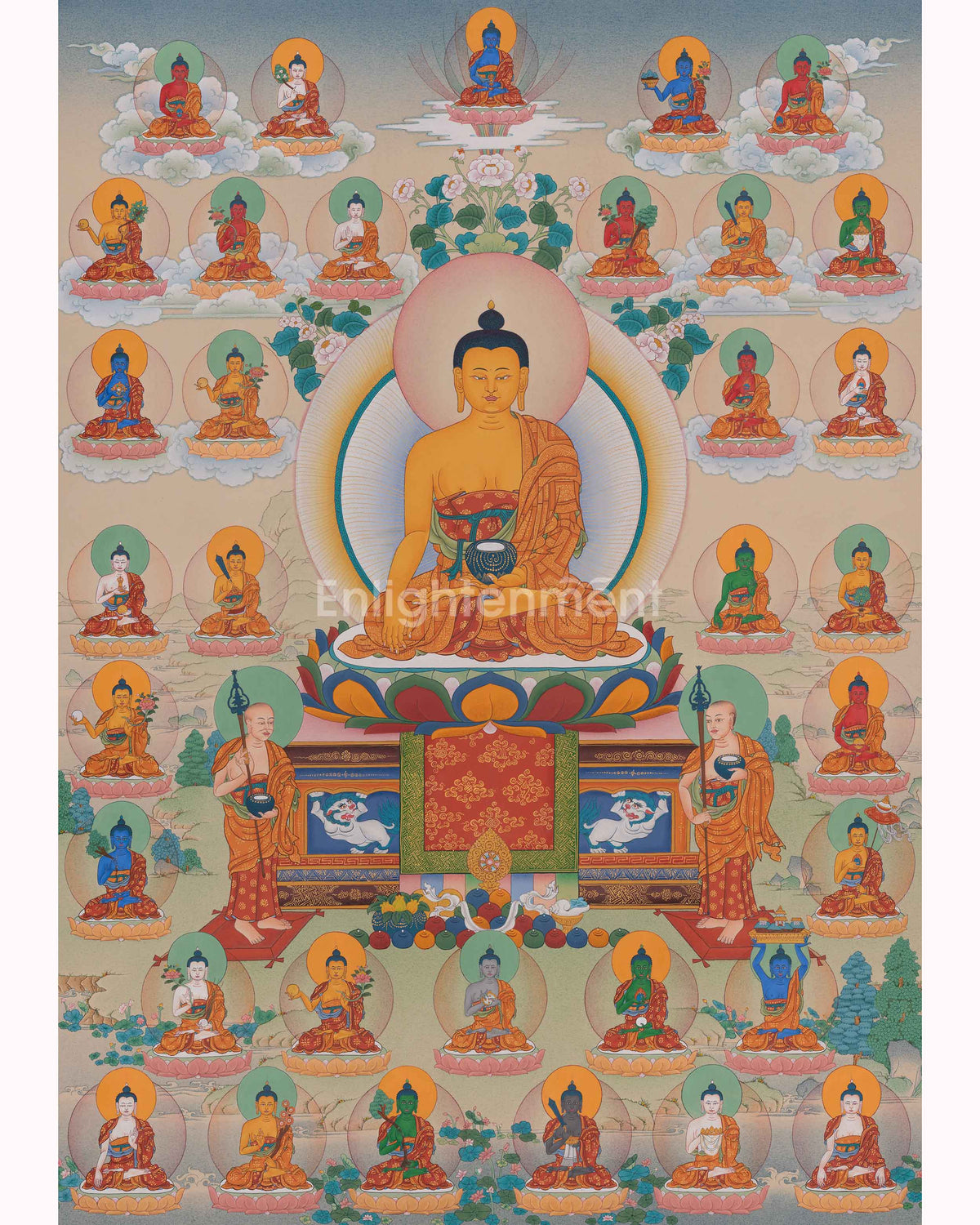
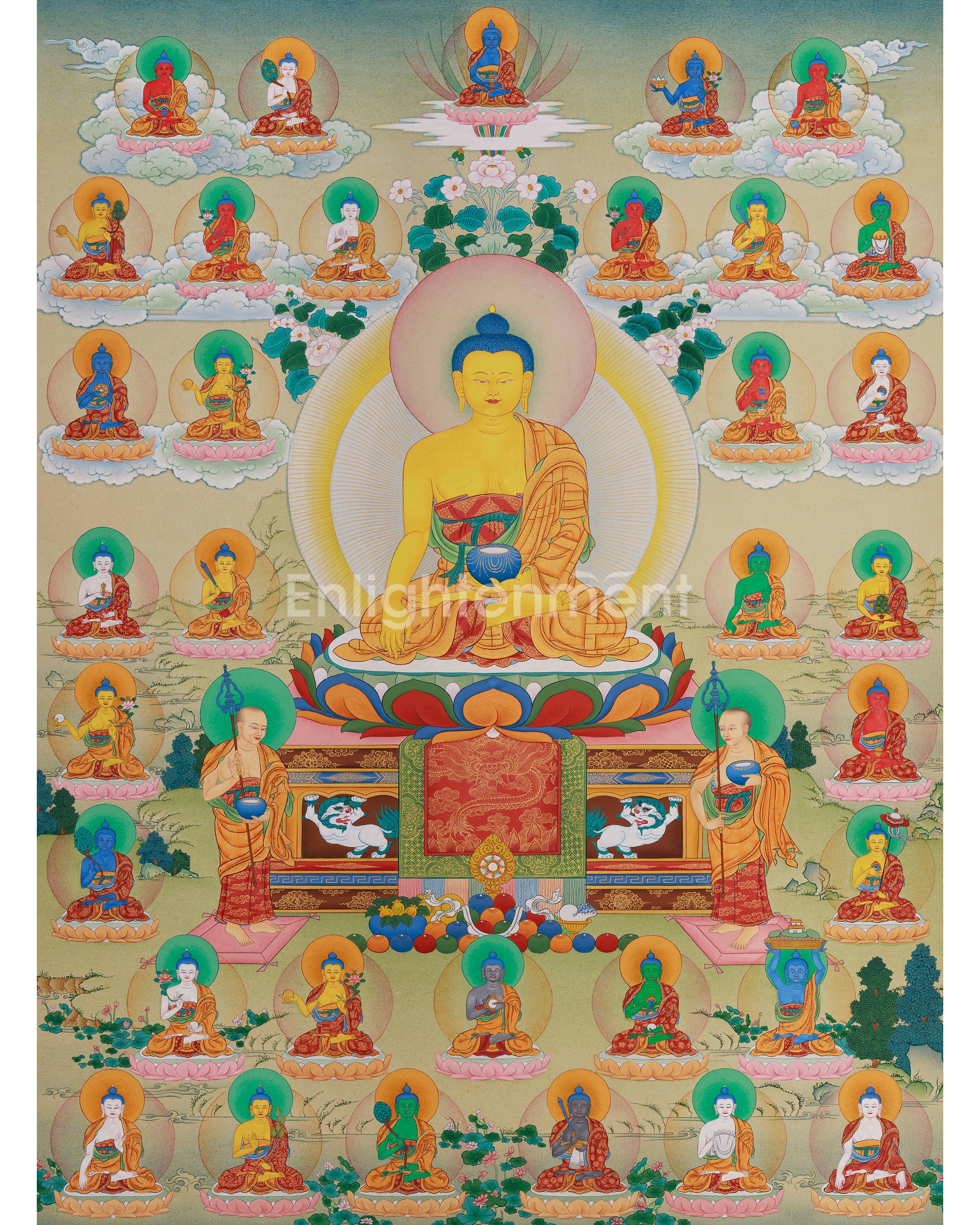
A fine example of this subject is painted by hand on premium cotton canvas. The artist uses natural Lhasa stone pigments and finishes the work with genuine 24K gold highlights. The style is Karma Gadri, a classical Tibetan school loved for its open skies, soft shifts of atmosphere, and balanced landscapes.
At 24 inches wide and 36 inches tall, the painting is large enough for a shrine or a meditation room while still feeling intimate. It presents a calm heavenly realm. Each Buddha sits on his own lotus among drifting clouds and quiet scenery, which expresses the wonder of the enlightened world. The gold does more than decorate. It stands for light, clarity, and wisdom.
Shakyamuni Buddha rests at the center as the source of the practice. The other Buddhas surround him, each set apart by color and by what he holds. Together, these details express virtues such as compassion, protection, and purity, as well as the power to dissolve the barriers made by karma.
The scripture takes its name from three collections of mental activity that together bring about real purification. The first is homage, where the practitioner honors the Buddhas through prostration and appreciates their qualities. The second is confession, the center of the practice, where one admits the harm done through body, speech, and mind and states regret openly before the Buddhas. The third is dedication and rejoicing, where we celebrate the virtue of others, offer up the merit we have created, and resolve to leave harmful patterns behind.
Reciting the names alone is not enough. The practice works best with four powers. Reliance means taking refuge in the Three Jewels and generating bodhicitta. Remorse is sincere regret, felt with urgency, like someone rushing to remove poison from the body. Remedy is the practice itself: prostrations, recitation, and visualization. Commitment is a firm resolve not to repeat the harm.
Practitioners rely on the painting during confession and purification practices, including the intensive retreat called Nyungne. Those who have taken bodhisattva vows traditionally recite the Confession Prayer three times a day. Bowing before the thangka while reciting the names engages body, speech, and mind together, and it makes honest confession feel real.
As purification advances, some practitioners report signs in dreams, such as the sun or moon rising, meeting monks, or drinking milk. More importantly, the mind grows clearer, and the Dharma becomes easier to understand. Over time, the thangka becomes more than a reminder of past mistakes. It supports the act of releasing them.
The Visual Guide: Iconography of the 35 Buddhas
The thangka is a visual map for a demanding visualization. In the tradition linked to Arya Nagarjuna, each Buddha has his own color and hand object, and each one points to a particular kind of purifying strength.
Shakyamuni Buddha sits at the center, golden in color. He stands for ethical discipline, renunciation, and awakening, and he serves as the main guide for our age. He is often accompanied by two of his chief students, Shariputra and Maudgalyayana. His presence reminds us that purification is not only about cleaning up the past. It is about moving toward the same awakening he achieved.
The surrounding Buddhas are arranged in rows, and each carries something specific. The 35 Buddhas are:
-
-
Tathagata Shakyamuni
-
Dhanasri
-
Suradatta
-
Vajrapramardi
-
Narayana
-
RatnaPadmaVikrami
-
Samantava Bhasavyuhasri
-
TathagataPadma Jyotiivikriditabhijna
-
Varunadeva
-
Sri Bhadra
-
Smriti Sri
-
Supari Kirtita Namadheya Sri
-
Varuna
-
Viranandi
-
Ratnangi
-
Ratnachandraprabha
-
Ratnarcis
-
Virsena
-
Amoghadarshi
-
Candana Sri
-
Brahmadatta
-
Anantatejas
-
Nagesvararaja
-
Indraketudhvajaraja
-
Tahtagata Brahamajyoti Vikridita Bhijna
-
Brahma
-
Vimala
-
Ratnachandra
-
Ratna Padma Supratisthita Sailendra Raja
-
Vikrantagami
-
Kusumasri
-
Ashokashri
-
Vijitasangram
-
Prabhasasri
-
Subhikranta
-
For example, Vajrapramardi is blue and sits directly above Shakyamuni, while Vimala, in a smoky hue, sits directly below him holding a mirror. Amoghadarshi is green with a hand raised in the gesture of fearlessness, and Vijitasangram is black, holding a shield and a sword.
Other Buddhas in the set hold jewels, suns, moons, lotuses, banners, scriptures, or Dharma wheels. Their colors span red, white, blue, yellow, green, and orange. The variety is deliberate. Each object and hue helps the practitioner picture one Buddha clearly and link him to one quality worth cultivating.
Read as a whole, the painting is more than a religious ornament. It is a companion for inner change that invites honesty, compassion, and resolve. It reminds us that however heavy our past may feel, true purification is always possible through sincere remorse and a firm commitment to a virtuous path.