There are some artworks that immediately capture your attention with bold colours and dramatic detail. Then there are artworks that quietly calm your mind the moment you see them.
A White Tara thangka belongs to the second kind.
The first thing you notice is not complexity or grandeur. It is peace.
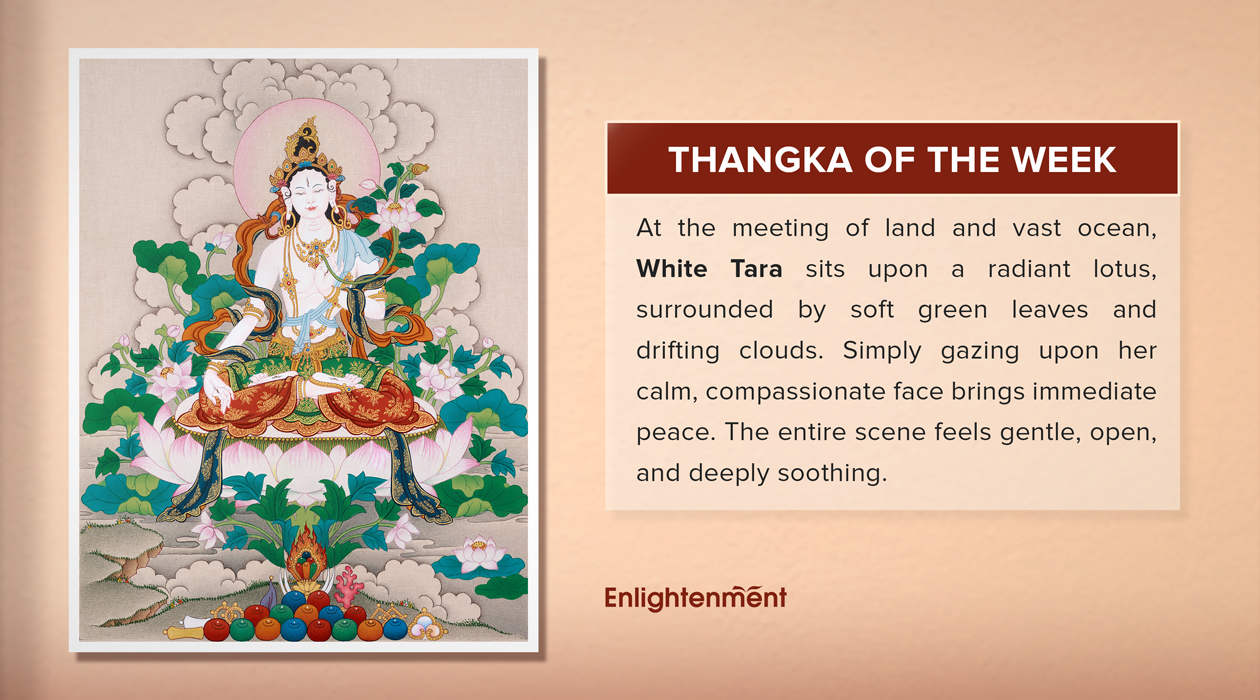
Her expression is soft and compassionate. The open ocean surrounding her creates a feeling of space and stillness. Gentle clouds drift quietly through the background while fresh green leaves and natural elements bring life and balance into the composition.
Everything about the painting feels calm.
In a world that constantly demands your attention, a thangka like this offers something rare, a quiet place for the eyes and mind to rest.
Beautifully serene White Tara thangka that captures healing, compassion, and harmony with extraordinary grace. Every detail of this artwork has been carefully painted to create a composition that feels nurturing, alive, and deeply peaceful.
This is not a decorative painting.
It is a work of sacred art designed to inspire calmness, reflection, and emotional ease.
Who Is White Tara?
White Tara is one of the most beloved female figures in Tibetan Buddhism. She is widely known as the goddess of compassion, healing, longevity, and protection.
Her presence represents gentleness rather than force.
While some Buddhist deities appear powerful and intense, White Tara is often depicted with a calm and nurturing energy that immediately puts the viewer at ease. She symbolises emotional healing, peaceful wisdom, and compassionate care for all living beings.
Many people are drawn to White Tara during periods of stress, uncertainty, grief, or personal healing because her image carries such a soothing and reassuring presence.
Even if someone knows very little about Buddhism, they often feel emotionally connected to her image right away.
That connection is part of what makes White Tara thangkas so special.
You do not need to fully understand every symbol or tradition to feel the calmness within the artwork.
Her peaceful expression speaks for itself.
A Scene That Feels Open and Peaceful
One of the most beautiful qualities of this thangka is its setting.
White Tara is seated gracefully upon a blooming lotus at the meeting point of land and a vast open ocean. This creates a feeling of openness that immediately changes the atmosphere of the painting.
Nothing feels crowded or heavy.
Instead, the composition feels spacious, airy, and balanced, almost as if the world quietly opens around her presence.

Click here to view the Longevity Goddess White Tara
The ocean plays an important role in this feeling.
Water often symbolises clarity, healing, flow, and emotional calmness. In this thangka, the wide ocean creates a sense of endless stillness, helping the viewer feel mentally lighter and more grounded at the same time.
The meeting of land and sea also creates harmony between stability and openness.
The land provides grounding and connection to nature, while the ocean introduces depth, movement, and peaceful expansiveness. Together, they create a setting that feels emotionally comforting and spiritually calming.
This balance is one of the reasons the thangka feels so alive.
You are not simply looking at a figure placed against a background. The entire environment works together to support the peaceful presence of White Tara herself.
The Compassion Within Her Expression
The emotional heart of this thangka is White Tara’s face.

Click here to view the Longevity Goddess White Tara
Her expression is exceptionally calm, gentle, and compassionate. There is no harshness or intensity in her gaze. Instead, her presence feels welcoming and deeply reassuring.
Simply looking at her face creates a feeling of stillness.
This is one of the most powerful aspects of sacred Buddhist art. A master artist is not only painting physical features. They are trying to express spiritual qualities through the artwork itself.
In this thangka, that intention is beautifully clear.
The softness of her eyes, the calmness of her posture, and the quiet balance of the composition all work together to create an emotional response in the viewer.
Many people describe this feeling as comforting.
Others describe it as grounding or emotionally healing.
And some simply say the artwork makes them breathe more slowly.
That emotional connection matters because thangkas are traditionally created not just to be admired, but to support meditation, reflection, and inner peace.
A truly successful White Tara thangka does more than look beautiful.
It changes the feeling of the space around it.
Nature Brings the Painting to Life
Another remarkable quality of this composition is the role of nature throughout the artwork.

Click here to view the Longevity Goddess White Tara
Fresh green leaves surround White Tara, bringing softness, vitality, and movement into the scene. These natural elements help the painting feel alive without becoming visually overwhelming.
Green is often associated with renewal, healing, and balance.
In this thangka, the greenery gently supports the peaceful atmosphere while adding freshness and warmth to the composition. The natural details soften the overall feeling of the artwork and create harmony between the sacred figure and the world around her.
The clouds drifting through the background add another beautiful layer to the scene.
They introduce quiet movement and depth without disturbing the stillness of the painting. Instead of feeling static, the artwork feels gently alive, as though nature itself is moving peacefully around White Tara’s presence.
This level of balance requires tremendous artistic skill.
Too much detail can make a painting feel crowded. Too little can make it feel empty. But in this thangka, every natural element feels perfectly placed.
The artist understands how to create calmness through composition.
That understanding is one of the defining qualities of master-level thangka art.
The Beauty of Flowing Robes and Balanced Colours
The flowing robes of White Tara add elegance and softness to the composition.
Their graceful movement helps guide the eye naturally across the painting while reinforcing the calm and nurturing atmosphere of the artwork. The folds of the fabric are painted with great care, creating depth and fluidity without becoming distracting.
Everything feels gentle and balanced.
The colours also play a major role in the emotional impact of the painting.
Rather than using overly bright or aggressive tones, the artist has chosen colours that feel harmonious and soothing. The balance between the greens, blues, soft earth tones, and sacred details creates an atmosphere that feels emotionally restful.
This is one reason traditional thangka painting remains so admired.
Master artists understand that colour is not only visual, but it is also emotional.
The right colours can create warmth, calmness, clarity, or energy within the viewer. In this White Tara thangka, every shade contributes to the feeling of healing and inner stillness.
The result is an artwork that feels deeply nurturing.
More Than Decoration
Today, many people search for artwork simply to fill an empty wall. But sacred Buddhist art offers something much deeper.

Click here to view the Longevity Goddess White Tara
A thangka is not created only for decoration.
Traditionally, thangkas are used as spiritual supports for meditation, prayer, contemplation, and mindfulness practice. Every figure, colour, and symbol is painted with intention.
That deeper purpose changes the experience of the artwork.
You do not simply pass by a thangka without noticing it. Its presence slowly influences the atmosphere of the room around it.
This White Tara thangka is especially powerful because of its calming energy.
Some artworks impress you.
This one comforts you.
That difference is important.
In modern life, many people feel mentally exhausted from noise, stress, and constant stimulation. Sacred artworks like this offer a visual reminder to slow down and reconnect with calmness.
Even a few quiet moments spent looking at the painting can create a sense of emotional ease.
Why Handmade Thangkas Feel So Special
There is a clear difference between a handmade thangka and a mass-produced print.
You can feel it almost immediately.
A genuine handmade thangka carries the patience, discipline, and devotion of the artist within every brushstroke. Tiny details are painted carefully by hand, often requiring weeks or even months of focused work.
That level of craftsmanship creates depth and character that machine-made artwork simply cannot reproduce.
In this White Tara thangka, the precision and balance are remarkable.
From the delicate clouds to the flowing robes and natural scenery, every section of the composition feels intentional and harmonious. The artist has carefully controlled every detail while still preserving softness and emotional warmth throughout the painting.
That balance is not easy to achieve.
It requires years of training, steady concentration, and a deep understanding of traditional thangka composition.
And the viewer can feel that effort.
Many people notice new details every time they return to a finely painted thangka. A small leaf, a subtle colour transition, a cloud formation, or a delicate expression may suddenly stand out in a way it did not before.
The artwork slowly reveals itself over time.
That lasting sense of discovery is one of the reasons authentic thangkas are so treasured.
A Presence of Healing and Longevity
White Tara is strongly connected with healing and long life.
For centuries, practitioners have turned to her image and teachings during periods of illness, emotional difficulty, or spiritual practice focused on compassion and wellbeing.
This thangka beautifully reflects those qualities.
Its peaceful atmosphere, nurturing colours, and open natural setting all work together to create a sense of emotional safety and calmness.
The painting does not demand attention through intensity.
Instead, it gently invites the viewer into stillness.
That gentle energy is what makes White Tara so beloved.
In many ways, this thangka serves as a reminder that healing does not always come through force or struggle. Sometimes healing begins through quietness, compassion, rest, and inner balance.
And that is exactly what this artwork communicates so beautifully.
A Living Presence of Peace
This White Tara thangka is more than a beautiful composition.

Click here to view the Longevity Goddess White Tara
It is a harmonious meeting of compassion, nature, healing, and refined artistry.
From the vast ocean and drifting clouds to the soft greenery and serene expression of White Tara herself, every element works together to create a feeling of peace that quietly stays with you long after you look away.
That is the mark of truly meaningful sacred art.
It does not simply decorate a space for a moment.
It changes how the space feels.
In a busy and restless world, artworks like this offer something deeply valuable, a gentle reminder to pause, breathe, and return to stillness.
And sometimes, that quiet sense of calm is exactly what the heart has been searching for.