
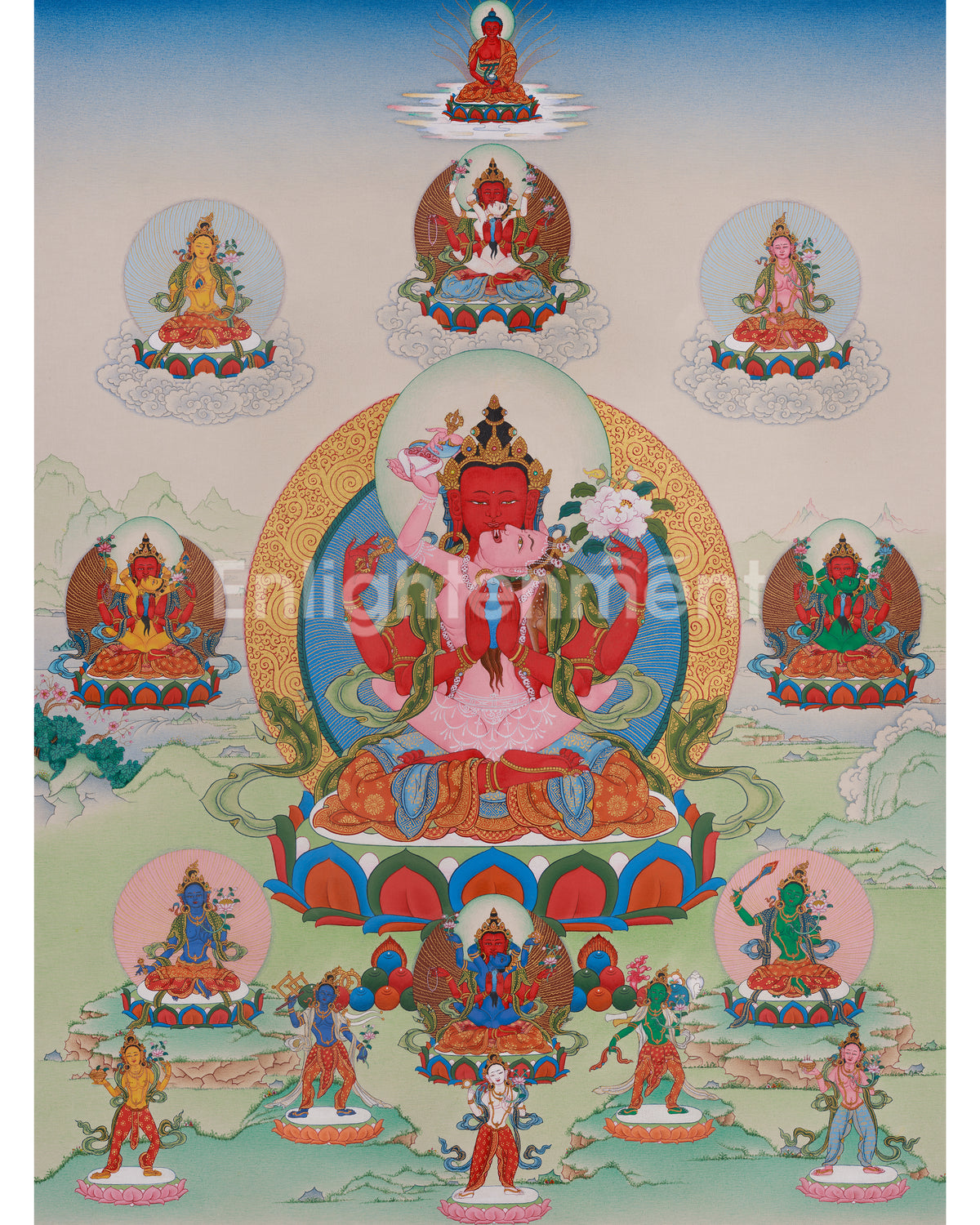


Description
Know More About the Deity
Additional Services
Brocade Mount
We offer traditional brocade mounts upon request. For your final confirmation, we will send available samples and pricing details.
Consecration of Thangka
At the Enlightenment Thangka, the consecration procedure entails a precisely planned set of rituals and ceremonies. As requested for consecration/ blessing, we take the thangka to respective Monasteries.
Please Note: Once consecrated, the Thangka becomes a sacred object and cannot be returned or refunded.
Our Team
We are a team of fully trained Karma Gadri Thangka artists from Nepal. Our lineage roots back to the Venerable Master Jamyang Phunshok of Kham, Eastern Tibet. We are focused on providing accurate iconographic thangka to help your spiritual practice.
Shipping | Refund | Return Policies
Estimated Arrival

Order placed

Order ships

Delivered!