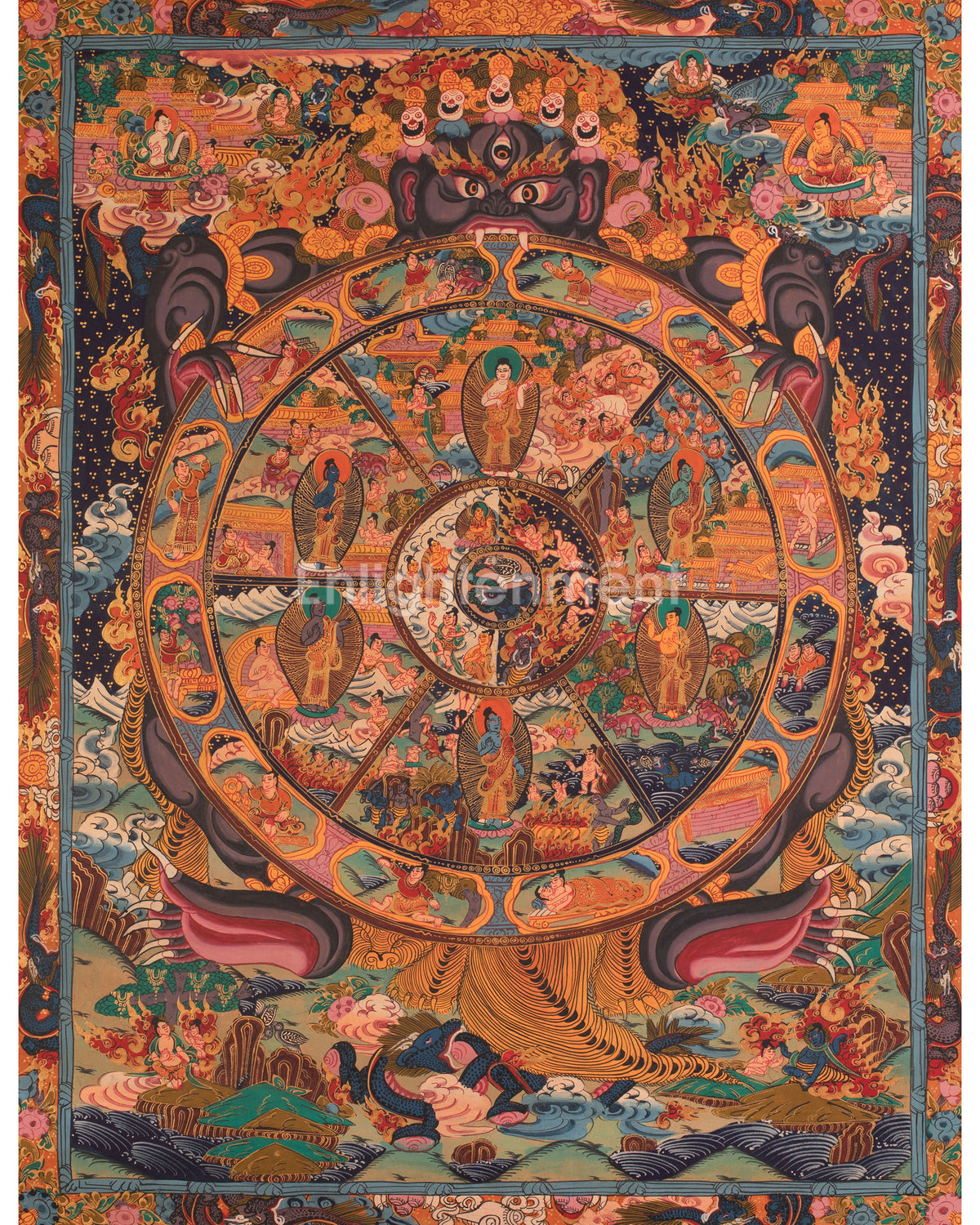
Bhavachakra, commonly known as the Wheel of Life or Wheel of Becoming, represents Samsara, the continuous cycle of birth, death, and rebirth. Within Buddhist philosophy, this cycle continues through ignorance, attachment, aversion, and karmic actions. At its center, a rooster, snake, and pig represent attachment, aversion, and ignorance, the three root causes of suffering that sustain cyclic existence. The surrounding sections illustrate the consequences of wholesome and unwholesome actions, highlighting the influence of karma on the journey through existence. The six realms portray gods, demigods, humans, animals, hungry ghosts, and hell beings, each reflecting different experiences shaped by karmic conditions. Encircling these realms, the Twelve Links of Dependent Origination explain how ignorance, craving, and attachment perpetuate the cycle of suffering and rebirth. Traditionally, Yama, the Lord of Death, holds the wheel within his grasp, symbolizing impermanence and the unavoidable nature of conditioned existence. Outside the wheel, the Buddha points toward liberation, emphasizing that freedom from samsara becomes possible through wisdom, ethical conduct, and the Noble Eightfold Path. This sacred artwork serves as a visual teaching of Buddhist cosmology, encouraging practitioners to contemplate impermanence, understand suffering, and cultivate the wisdom necessary for enlightenment.