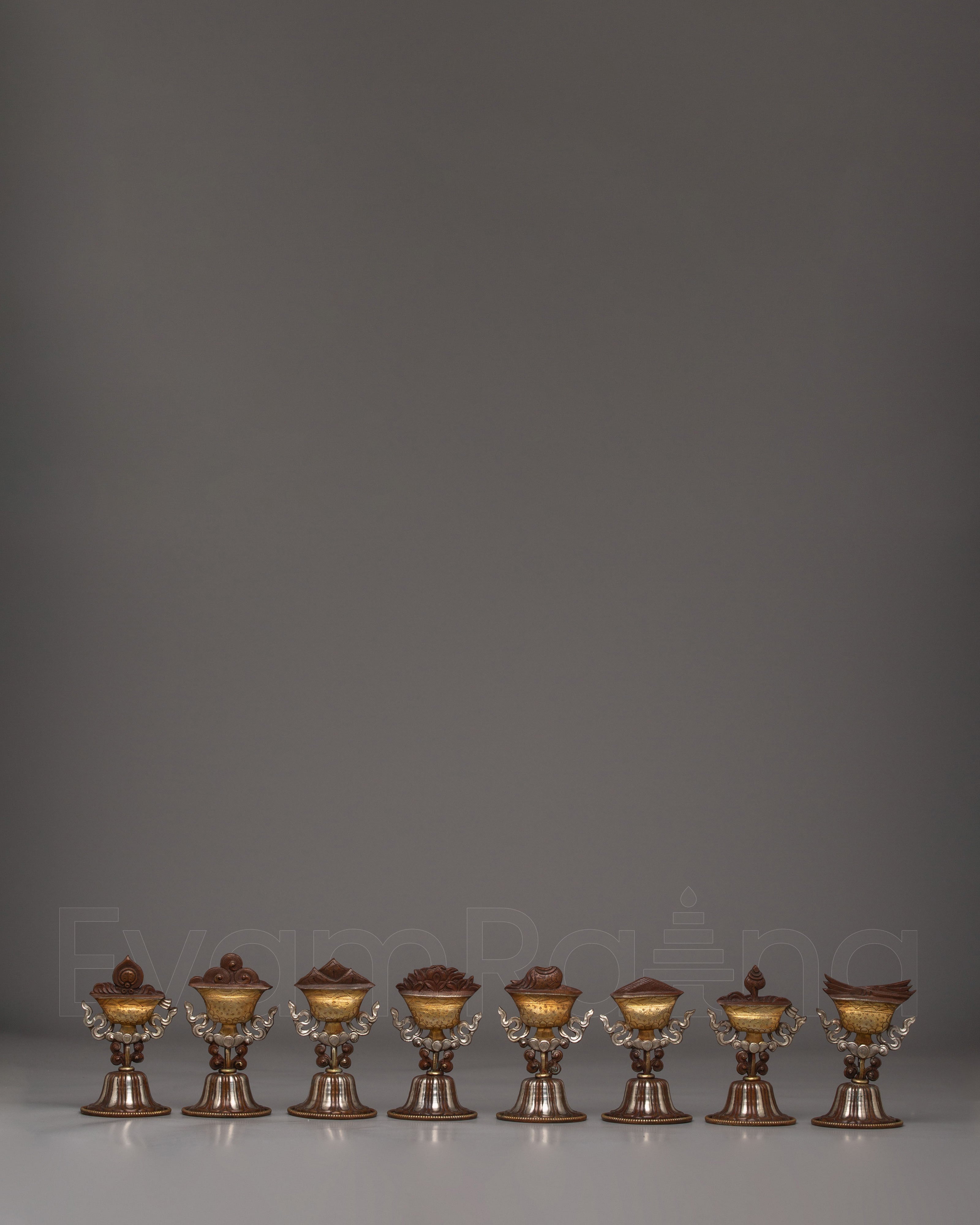
Buddhist Auspicious Offering Set | Sacred Eight Piece Altar Decor
----------------------------------------------
Size: 11.5cm(Height) x 6.5cm(Width)
Single Weight: 0.062 kg
Total Weight: 0.48 kg
Materials: Copper Body, Gold Plated, Silver Plated, Oxidized Copper Body
----------------------------------------------
About Our Product:
This Handcrafted Eight Auspicious Substances Set measures 11.5 cm in height and 6.5 cm in width for each piece, with a single weight of 0.062 kg and a total weight of 0.48 kg. Made from a copper body with gold plated, silver plated, and oxidized copper finishes, the set includes eight individually crafted sacred offering symbols. Each piece is mounted on a matching pedestal with a flared base, central support, and decorative side elements, creating a balanced and unified ritual set.
This Eight Auspicious Substances Set shows the eight sacred offerings of Vajrayana Buddhism: the mirror, gorochana medicine, curds, durva grass, bilva fruit, white right spiraling conch, cinnabar powder, and mustard seed. Each one has its own distinct shape at the top, while all eight share the same matching pedestal base. In Buddhist tradition, these substances are linked with important offerings connected to the life and enlightenment of Shakyamuni Buddha. Together, they symbolize blessings, wisdom, protection, merit, good fortune, and support for spiritual practice.
This Handcrafted Eight Auspicious Substances Set can be placed on a Buddhist altar, shrine, monastery, Dharma center, meditation room, or spiritual display. Its complete eight piece arrangement, sacred symbolism, coordinated pedestal design, and combination of metal finishes make it a meaningful set for ritual use, devotional practice, and spiritual home decor.
Introduction to the Eight Auspicious Substances
The Eight Auspicious Substances are sacred offerings in Tibetan and Vajrayana Buddhism, and each one has its own story connected with Shakyamuni Buddha. The mirror was offered by Prabhavati, the goddess of light, and represents clear vision and awareness. The medicine, known as gorochana, is connected with the elephant guardian of Bodh Gaya and symbolizes health, strength, and protection. The curds represent the milk rice offered by Sujata to Shakyamuni before he meditated beneath the Bodhi tree. The durva grass recalls the grass given by the grass cutter Sotthiya, also called Mangala, which Shakyamuni used as a meditation seat. The bilva fruit was offered by Brahma, while the white right spiraling conch was offered by Indra. Cinnabar, also known as vermilion powder, was presented by a Brahmin king, and mustard seed was offered by the bodhisattva Vajrapani. Together, these eight substances represent blessing, support, good conditions for practice, protection, wisdom, and the path toward enlightenment.