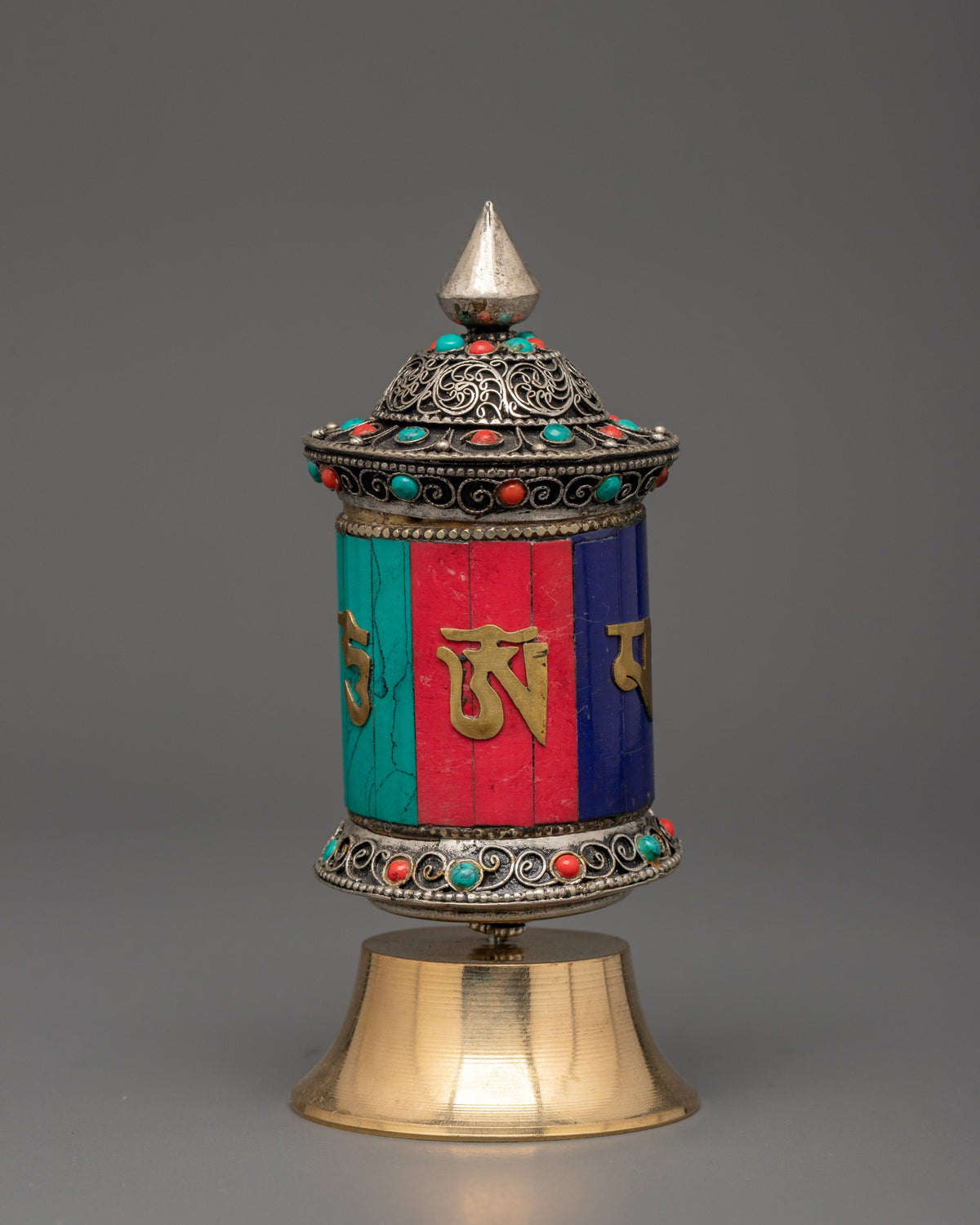
Traditional Tibetan Prayer Wheel with Gemstone Details
--------------------------------------------------------
Size: 13.5cm(Height) x 6.5cm(Width)
Weight: 0.17kg
Materials: Brass, Artificial Stone: Lapis Lazuli, Turquoise, Coral, Silver Plating
--------------------------------------------------------
About our Prayer Wheel
This Handmade Buddhist Spiritual Prayer Wheel is a traditional Tibetan Buddhist practice object handcrafted with a brass body, silver plating, and decorative artificial stones including turquoise, coral, and lapis lazuli. Measuring 13.5cm in height and 6.5cm in width, this prayer wheel weighs 0.17 kg and showcases the detailed craftsmanship of Himalayan artisans.
The prayer wheel features a cylindrical body designed to rotate during Buddhist practice, with engraved decorative patterns surrounding the upper and lower sections. The surface is adorned with colorful gemstone accents and silver-plated detailing, while the traditional mantra inscriptions and ornate crown-like top enhance its spiritual appearance. The pointed finial and balanced base complete the classic form of a Tibetan prayer wheel.
Used in Tibetan Buddhist traditions, prayer wheels are rotated as part of meditation and devotional practice. This handcrafted piece is suitable for Buddhist altars, meditation spaces, monasteries, or as part of a Himalayan spiritual collection. Its combination of traditional design, symbolic elements, and artisan craftsmanship makes it a meaningful representation of Tibetan Buddhist culture.
Introduction to Prayer Wheel
A prayer wheel is cylindrical on a spindle and is used in Tibetan Buddhism. It is typically inscribed with the mantra "Om Mani Padme Hum" and rotated by hand as a form of spiritual practice and to accumulate merit. Spinning the wheel is believed to have the same spiritual benefits as verbally reciting the mantra. The use of prayer wheels is widespread in Tibetan Buddhism and has spread to other cultures.
How does the Buddhist Prayer Wheel benefit us?
The benefits associated with rotating the wheel are numerous. It promotes knowledge, compassion, and bodhicitta in the practitioner and improves siddhis (spiritual powers such as clairvoyance, precognition, etc.). The practitioner can repeat the mantra as often as possible while the wheel is rolling, maintaining a calm, meditative attitude. A Tibetan Buddhist tradition holds that after a practice session, one should dedicate any acquired merits to the benefit of all sentient beings. Then three times Om Ah Hum. This is usually among Tibetans after finishing any Buddhist practice, including the prayer wheel exercise.
How do you set up your own Buddhist Shrine?
• Find a clean, quiet, and uncluttered spot
• Set up an altar table and cover it with an altar cloth that calls to you
• Place your sacred item at the center