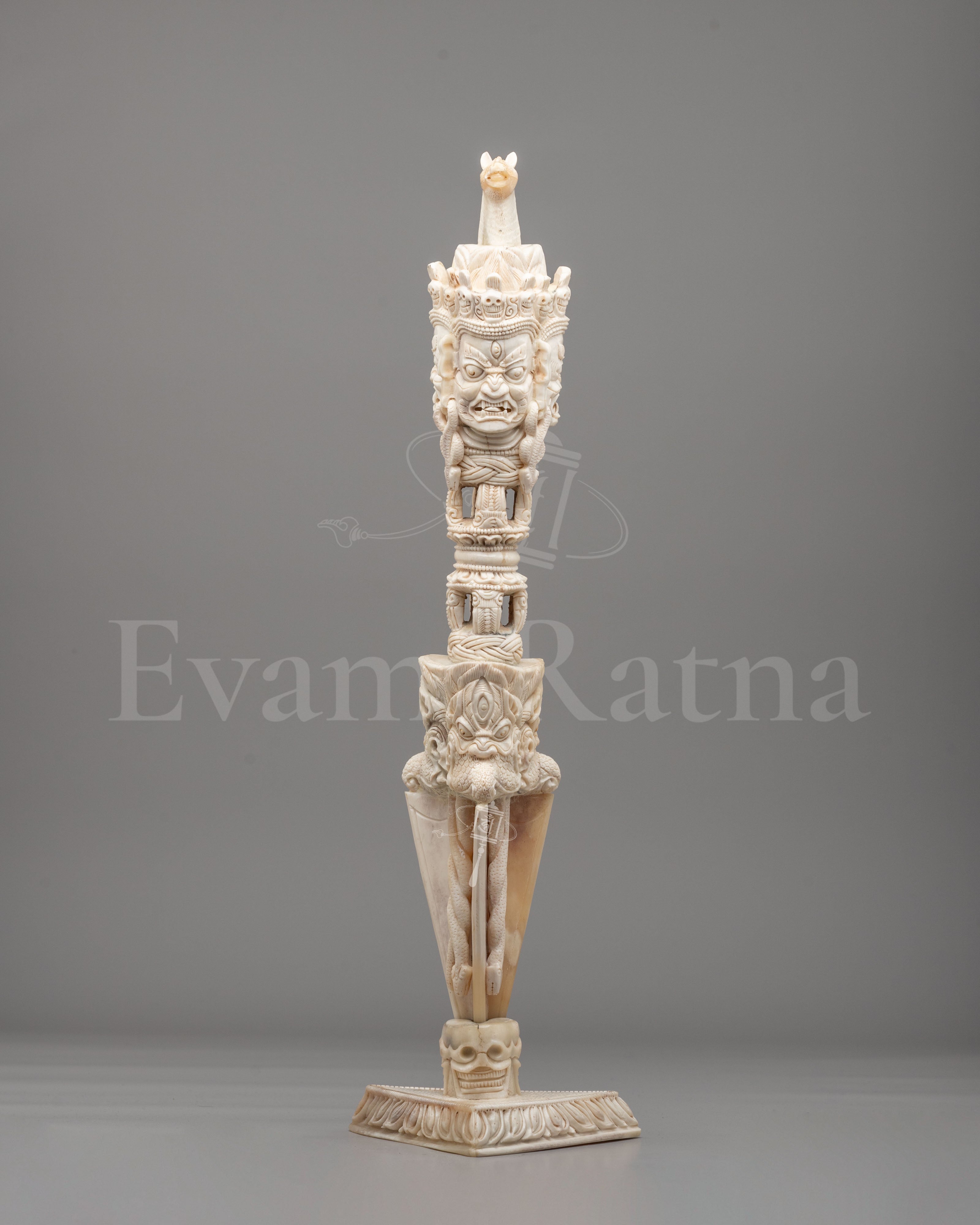
Hand Carved Bone Phurba Dagger | Symbol of Spiritual Protection and Vajrayana Practice
------------------------------------------------
Size: 53.5cm(Height) x 15.5cm(Length) x 13.5cm(Width)
Weight: 1.11 kg
Materials: Ethically Sourced Bone
------------------------------------------------
About Our Product
This Himalayan Altar Buddhist Phurba is a handcrafted ritual dagger carved from ethically sourced bone, featuring intricate details throughout its tall and elegant form. Measuring 53.5cm in height, 15.5cm in length, and 13.5cm in width, with a weight of 1.11 kg, this sacred artifact showcases traditional Himalayan craftsmanship. The elongated three-sided blade, carved handle, decorative base, and detailed upper section reflect the artistic skill found in Tibetan ritual objects.
This Bone Phurba Dagger displays rich Vajrayana iconography through its carefully carved details. The upper section features a powerful wrathful face adorned with traditional ornaments, while the central section includes symbolic figures and intricate patterns representing spiritual guardianship. The three-sided blade of the Phurba symbolizes the overcoming of the three poisons of ignorance, attachment, and hatred, while its pointed form represents the ability to subdue obstacles, negative energies, and inner disturbances. In Vajrayana Buddhism, the Phurba is a sacred ritual tool associated with transformation, protection, and the focused power of enlightened wisdom used to stabilize the mind and remove hindrances on the spiritual path.
This Tibetan Phurba Dagger is ideal for Buddhist art collections, meditation spaces, sacred displays, and practitioners interested in Himalayan ritual traditions. Its carefully carved bone surface and symbolic design make it a meaningful representation of spiritual discipline, protection, and the journey toward greater awareness.
Introduction of Phurba
The ceremonial dagger (Sanskrit: Kila; Tibetan: phurba) is essential for expelling evil and is considered particularly effective in neutralizing the forces obstructing Tantric Buddhist practice. It has ancient origins, first appearing in the Indian Rig Veda as the core blade of the vajra used by Indra to destroy the primordial cosmic snake Vritra. Kila, derived from Sanskrit, was most likely associated with Vedic sacrifices. Meditation on the Vajrakila Tantra, an early Indian scripture first promoted in Tibet in the eighth century by Padmasambhava, one of the founding teachers of Tibetan Buddhism, is used to invoke the three-headed Vajrakila Buddha.