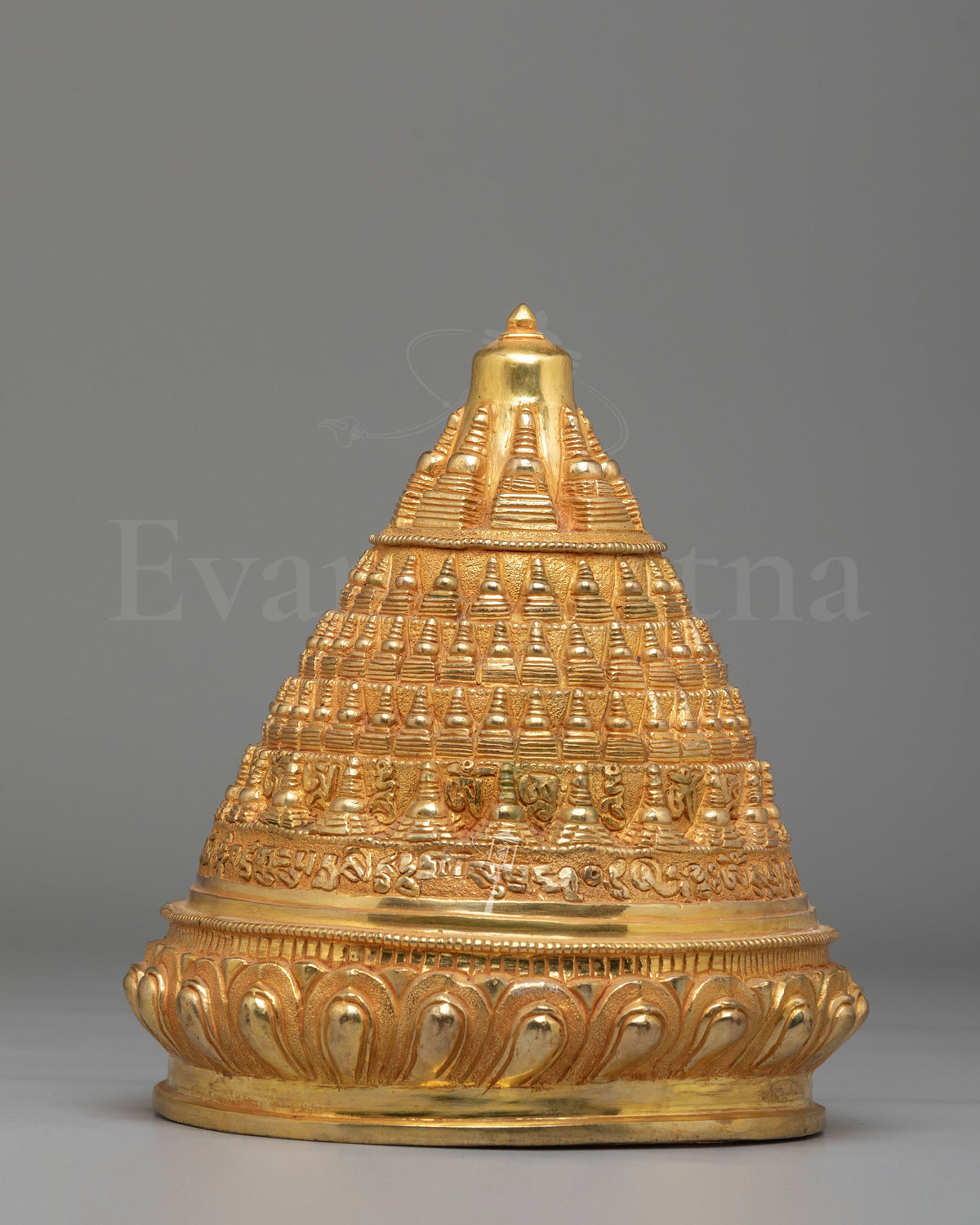
Handcrafted Buddhist Stupa | Traditional Gold Plated Himalayan Meditation Art
------------------------------------------------
Size: 23cm(Height) x 18.5cm(Length) x 18.5cm(Width)
Weight: 2.8 kg
Materials: Gold Plated, Copper
Made Year: 2024
------------------------------------------------
About Our Product
This Himalayan Buddhist Altar Stupa is a handcrafted sacred sculpture created by Gangaram Maharjan, an artisan with over 20 years of experience in traditional Himalayan metal craftsmanship. Made in 2024, this stupa features a finely crafted copper body covered with a radiant gold-plated finish. The sculpture showcases detailed architectural elements, including layered tiers, ornamental carvings, intricate borders, and a beautifully shaped lotus base. The precise detailing throughout the structure reflects the patience, skill, and dedication involved in traditional Buddhist metalwork.
A Buddhist Stupa represents the enlightened mind, the presence of the Buddha’s teachings, and the path toward spiritual awakening. This stupa follows the traditional sacred structure, with each section carrying symbolic meaning. The broad lotus base represents purity and the foundation of practice, while the ascending tiers symbolize the gradual progression toward enlightenment. The carefully carved decorative motifs and harmonious proportions enhance the sacred character of the stupa, making it both a spiritual object and a work of traditional Himalayan artistry.
This Handcrafted Buddhist Stupa is suitable for Buddhist altars, meditation spaces, shrine rooms, spiritual collections, traditional interiors, and decorative displays. Its substantial size, gold-plated copper finish, and detailed craftsmanship make it a striking centerpiece for sacred spaces. The combination of traditional stupa design, gold-plated copper construction, intricate carving, and the expertise of artisan Gangaram Maharjan makes this sculpture a distinguished example of Himalayan Buddhist craftsmanship.
Before Buddhism, great teachers were buried in mounds. Some were cremated, but sometimes they were buried in a seated, meditative position. The mound of earth covered them up. Thus, the domed shape of the stupa came to represent a person seated in meditation, much as the Buddha was when he achieved Enlightenment and knowledge of the Four Noble Truths. The base of the stupa represents his crossed legs as he sat in a meditative pose. The middle portion is the Buddha’s body, and the top of the mound, where a pole rises from the apex surrounded by a small fence, represents his head. Before images of the human Buddha were created, reliefs often depicted practitioners demonstrating devotion to a stupa.