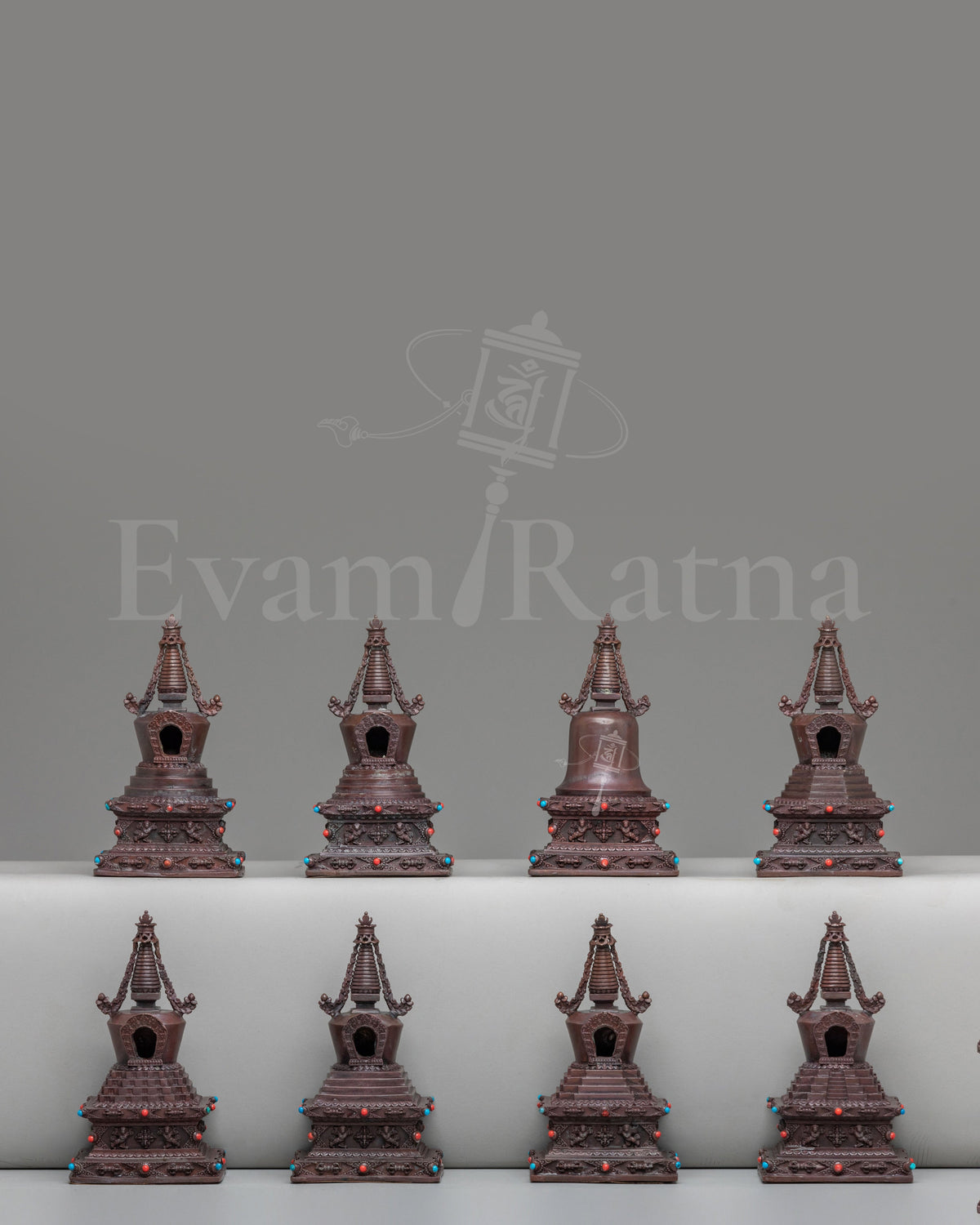
Traditional Sacred Stupa Set | Symbol of Enlightenment and Meditation
------------------------------------------------
Size: 12.5cm(Height) x 7cm(Length) x 7cm(Width)
Single Weight: 0.35 kg
Total Weight: 2.98 kg
Materials: Gemstone, Oxidized Copper Body, Gemstone, Coral, Turquoise, Machine Made
-------------------------------------------
About Our Product
This Machine Made Stupa Set includes multiple miniature Tibetan stupas, each measuring 12.5cm in height, 7cm in length, and 7cm in width, with a single weight of 0.35 kg and a total weight of 2.98 kg. Crafted with an oxidized copper body and decorated with gemstone, coral, and turquoise details, this collection features traditional chorten designs with layered bases, square structures, and detailed upper spires. The set is created through machine production, offering a consistent design while preserving the traditional appearance of Himalayan Buddhist stupas.
This Stupa Set features carefully structured Namgyal Chorten stupas with multi-tiered bases, ornamental carvings, square sections, and pointed spires representing the stages of the Buddhist path toward enlightenment. These miniature chortens follow the traditional Namgyal Chorten design, which is associated with victory over obstacles, spiritual accomplishment, and the preservation of Buddhist teachings. The small openings and architectural details reflect traditional Tibetan stupa forms, while the coral and turquoise accents add symbolic and decorative value inspired by Himalayan artistry. In Buddhist tradition, stupas represent the Buddha’s enlightened mind, wisdom, peace, and the journey toward awakening. They are placed as sacred reminders of the Dharma and the path of spiritual practice.
This Tibetan stupa collection is suitable for a Buddhist altar, meditation room, shrine, Dharma space, home decor, or spiritual collection. Displayed together, the set creates a harmonious sacred arrangement while serving as a reminder of mindfulness, wisdom, inner peace, and spiritual growth.
Before Buddhism, great teachers were buried in mounds. Some were cremated, but sometimes they were buried in a seated, meditative position. The mound of earth covered them up. Thus, the domed shape of the stupa came to represent a person seated in meditation, much as the Buddha was when he achieved Enlightenment and knowledge of the Four Noble Truths. The base of the stupa represents his crossed legs as he sat in a meditative pose. The middle portion is the Buddha’s body, and the top of the mound, where a pole rises from the apex surrounded by a small fence, represents his head. Before images of the human Buddha were created, reliefs often depicted practitioners demonstrating devotion to a stupa.