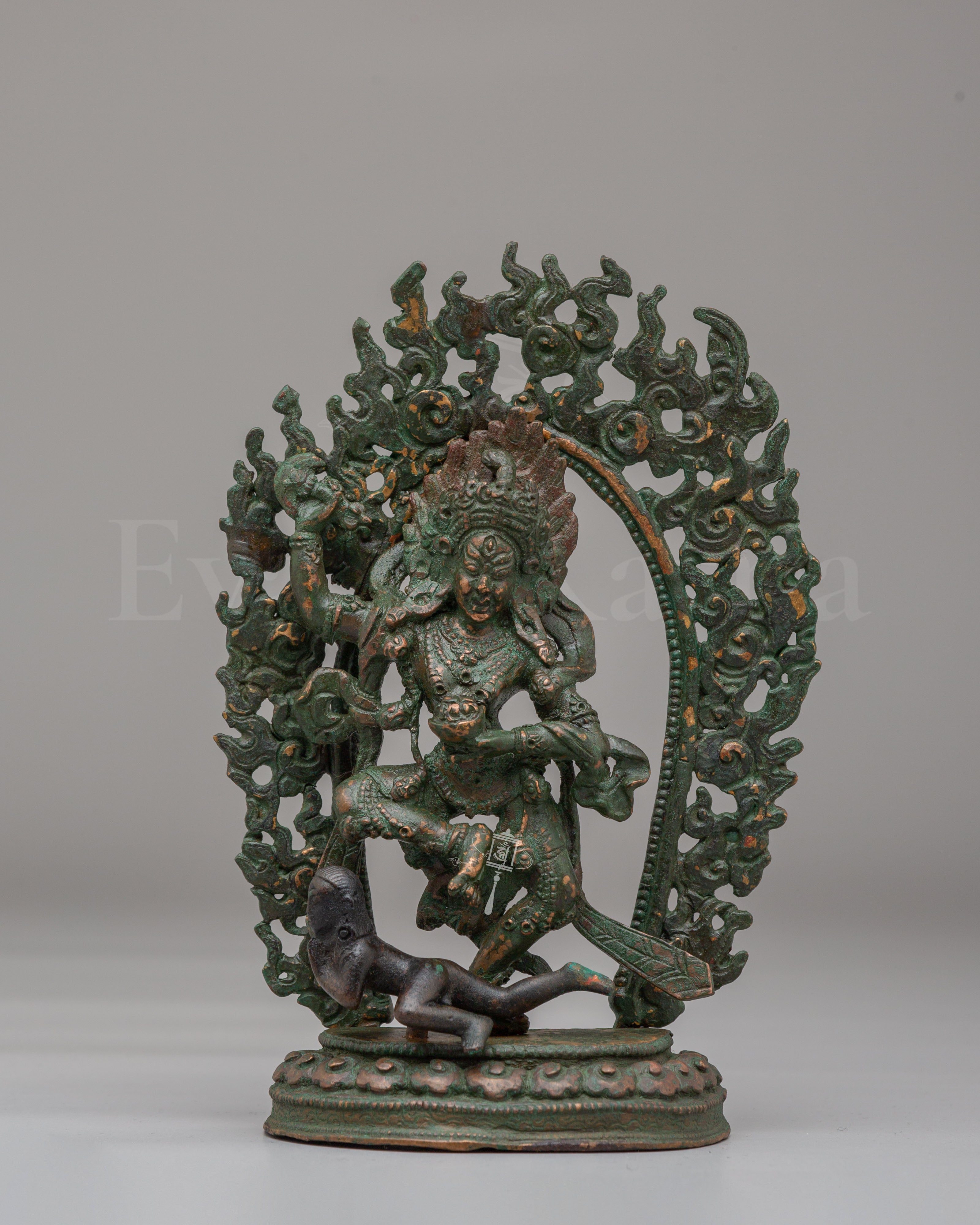
Vajrayana Dakini Sculpture | Tibetan Altar and Meditation Decor
------------------------------------------------
Size: 18cm(Height) x 12.5cm(Length) x 5.5cm(Width)
Weight: 0.72 kg
Materials: Antique Finishing, Copper Body
------------------------------------------------
About Our Product
This Traditional Buddhist Vajravarahi Statue also representing Dorje Phagmo, is a powerful depiction of one of the principal female enlightened figures and wrathful dakinis of Tibetan Buddhism. Measuring 18cm in height, 12.5cm in length, and 5.5cm in width, and weighing 0.72 kg, the sculpture is crafted from a copper body with an antique finish. The aged surface treatment gives depth to the finely worked crown, ornaments, ritual implements, flowing garments, and surrounding flame motifs while preserving the expressive character of the deity. Traditionally Vajravarahi is visualized with a brilliant red body, representing transformative and magnetic enlightened energy, although this particular sculpture is presented in its distinctive antique copper finish. Its compact yet commanding form makes it suitable for Vajrayana altars, meditation rooms, Buddhist collections, and spaces dedicated to contemplative practice.
Vajravarahi appears in her characteristic single faced, two armed dancing form, traditionally depicted with three eyes, exposed fangs, and upward flowing hair that communicate her fierce enlightened activity. Her defining feature is the small sow or boar head positioned beside her head near the crown, from which the name Vajravarahi, or “Vajra Sow,” is derived; it represents the triumph over delusion and ignorance. In her raised right hand she holds a curved flaying knife, or kartika, with a vajra handle, symbolizing the cutting away of ignorance and obstructive states. Her left hand holds a skull cup, or kapala, close to her heart, traditionally filled with symbolic nectar and associated with great bliss and the realization of emptiness. A tantric staff, or khatvanga, rests along her left side, representing the inseparability of wisdom and method and her nondual union with the consort principle. She dances dynamically upon a reclining human figure, signifying the overcoming of ego and dualistic thought, while an elaborate flaming aureole surrounds her awakened form.
Within Vajrayana Buddhism, Vajravarahi is revered as an embodiment of enlightened wisdom, transformation, and freedom from delusion. Her wrathful appearance does not signify ordinary anger; rather, it expresses the force of awakened awareness capable of cutting through attachment, ignorance, and the limitations that obstruct spiritual realization. Her vigorous dancing posture conveys freedom from fixed concepts, while the kartika, kapala, khatvanga, sow head, and subdued figure together communicate central themes of tantric transformation and nondual wisdom. Displayed within a meditation or devotional setting, this Vajravarahi copper statue can serve as a meaningful visual support for contemplation, reminding practitioners that genuine peace arises through the transformation of confusion into wisdom and the progressive realization of enlightenment.
Introduction of Dorje Phagmo
Dorje Phagmo (Vajravarahi) is one of the most potent and revered female deities in Tibetan Buddhism. As a fierce manifestation of Vajrayogini, she embodies transformation, wisdom, and the indestructible power of the Vajra. Often depicted in a dynamic and wrathful form, Dorje Phagmo represents the ability to conquer negative emotions and obstacles on the path to enlightenment. She is a protector and guide for practitioners, cutting through ignorance with fierce compassion. Her image is a profound symbol of inner strength and spiritual awakening, making her an influential figure to include in meditation spaces and shrines.