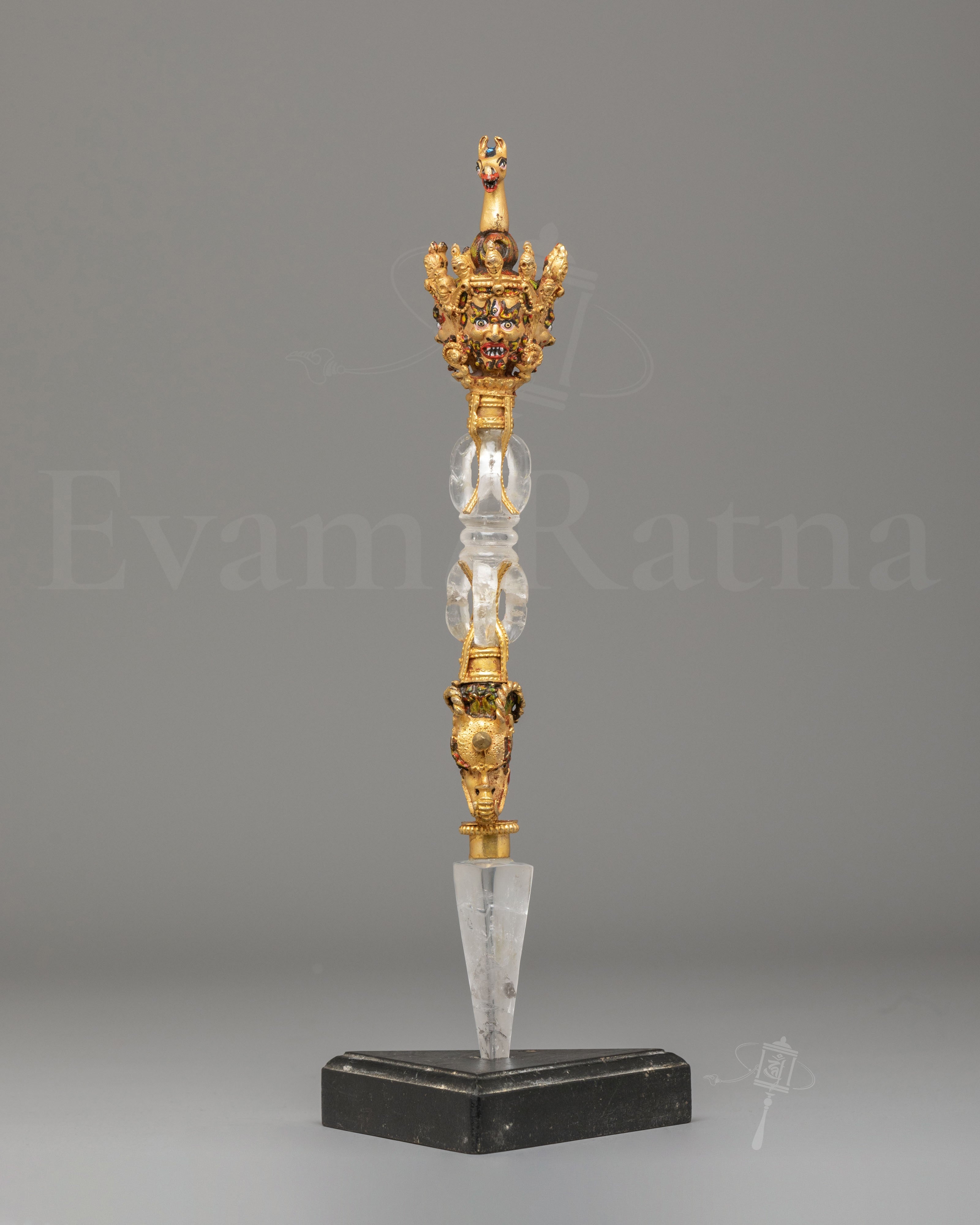
Handcrafted Sacred Phurba | Spiritual Symbol of Protection
------------------------------------------------
Size: 30.5cm(Height) x 11.5cm(Length) x 10cm(Width)
Weight: 0.41 kg
Materials: Crystal, Copper, Gold, Iron
------------------------------------------------
About Our Product
This Traditional Himalayan Buddhist Phurba measures 30.5cm in height, 11.5cm in length, and 10cm in width, with a weight of 0.41 kg. Crafted from crystal, copper, gold, and iron, this Tibetan Ritual Dagger reflects the sacred artistry of Vajrayana Buddhist craftsmanship. The phurba features a crystal blade, an ornate golden handle, and a richly detailed upper section with traditional deity imagery. Created as a sacred ritual object, this piece is suited for Buddhist altars, meditation spaces, and collections of Himalayan spiritual art.
This Vajrayana Phurba represents Vajrakilaya (Dorje Phurba), one of the most revered wrathful deities in Tibetan Buddhism and an important figure within Vajrayana practice. Vajrakilaya is the embodiment of enlightened activity, representing the powerful wisdom that transforms obstacles, removes negative influences, and purifies the mind from harmful emotions. According to Tibetan Buddhist traditions, Vajrakilaya practice is closely associated with overcoming spiritual hindrances and protecting the Dharma. The deity is traditionally depicted with a fierce expression, multiple symbolic ornaments, a crown, and a powerful presence that represents compassionate force rather than anger. In this phurba, the detailed deity form, crystal blade, golden accents, and intricate copper and iron craftsmanship reflect the sacred iconography of Vajrakilaya and the traditional Himalayan approach to creating ritual objects connected with purification, protection, and the journey toward enlightenment.
This Tibetan Phurba is used in Vajrayana Buddhist rituals, meditation practices, and ceremonial activities connected with purification and spiritual transformation. Practitioners traditionally use the phurba as a sacred instrument for focusing awareness, overcoming inner disturbances, and supporting practices related to protection and enlightenment. Displayed on an altar, meditation room, or sacred collection, this Buddhist ritual dagger represents Himalayan Buddhist heritage, the power of awakened wisdom, and the aspiration for peace and spiritual growth.
Introduction of Phurba
The ceremonial dagger (Sanskrit: Kila; Tibetan: phurba) is essential for expelling evil and is considered particularly effective in neutralizing the forces obstructing Tantric Buddhist practice. It has ancient origins, first appearing in the Indian Rig Veda as the core blade of the vajra used by Indra to destroy the primordial cosmic snake Vritra. Kila, derived from Sanskrit, was most likely associated with Vedic sacrifices. Meditation on the Vajrakila Tantra, an early Indian scripture first promoted in Tibet in the eighth century by Padmasambhava, one of the founding teachers of Tibetan Buddhism, is used to invoke the three-headed Vajrakila Buddha.