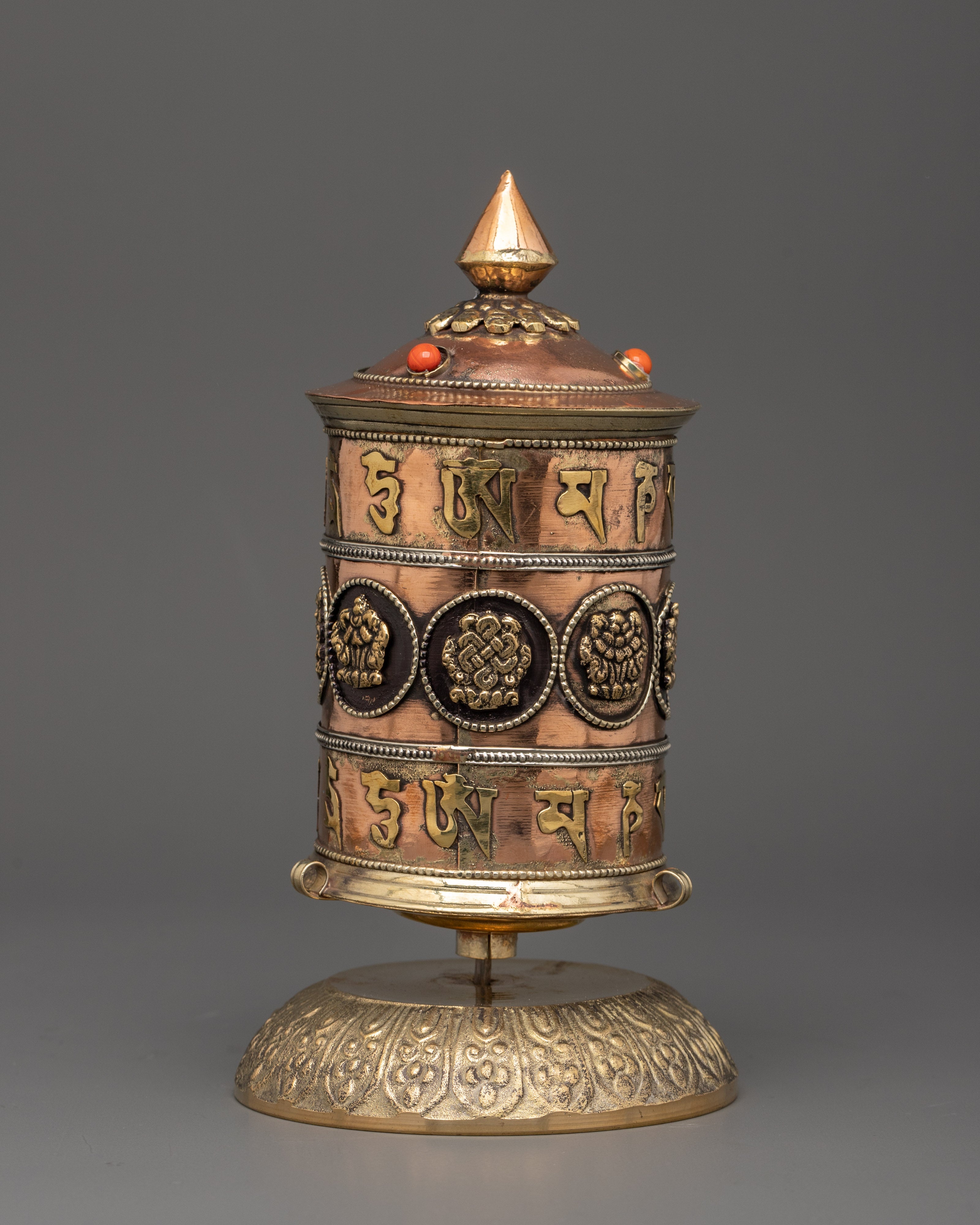
Tibetan Prayer Wheel with Mantra and Auspicious Motifs
--------------------------------------------------------
Size: 18.5 cm(Height) x 10.5 cm(Width)
Weight: 0.32 kg
Materials: Brass, Copper
--------------------------------------------------------
About our Prayer Wheel
This Traditional Tibetan Mantra Prayer Wheel is a handcrafted Buddhist devotional object made from brass and copper. Measuring 18.5cm in height and 10.5cm in width, it weighs 0.32 kg. The cylindrical prayer wheel is mounted on a decorative pedestal and features traditional mantra inscriptions and raised ornamental details across its surface.
The rotating cylinder is decorated with Tibetan mantra characters on the upper and lower bands, while the central section features a series of circular panels containing intricate auspicious motifs. The wheel is topped with a conical finial and finished with small red decorative accents around the upper section. Its broad pedestal base is also richly patterned, giving the entire piece a balanced and ornate appearance.
A prayer wheel is traditionally rotated as part of Tibetan Buddhist devotional practice, with mantra recitation and contemplation accompanying the movement. This piece can be used as part of a Buddhist altar or meditation space, or displayed as a traditional Himalayan ritual object. Its combination of engraved inscriptions, raised motifs, and brass and copper construction makes it an appealing piece for collectors of Tibetan Buddhist art.
Introduction to Prayer Wheel
A prayer wheel is cylindrical on a spindle and is used in Tibetan Buddhism. It is typically inscribed with the mantra "Om Mani Padme Hum" and rotated by hand as a form of spiritual practice and to accumulate merit. Spinning the wheel is believed to have the same spiritual benefits as verbally reciting the mantra. The use of prayer wheels is widespread in Tibetan Buddhism and has spread to other cultures.
How does the Buddhist Prayer Wheel benefit us?
The benefits associated with rotating the wheel are numerous. It promotes knowledge, compassion, and bodhicitta in the practitioner and improves siddhis (spiritual powers such as clairvoyance, precognition, etc.). The practitioner can repeat the mantra as often as possible while the wheel is rolling, maintaining a calm, meditative attitude. A Tibetan Buddhist tradition holds that after a practice session, one should dedicate any acquired merits to the benefit of all sentient beings. Then three times Om Ah Hum. This is usually among Tibetans after finishing any Buddhist practice, including the prayer wheel exercise.